
In a remarkable expedition into the Gascoyne Marine Park off the coast of Western Australia, Australian scientists have brought to light two extraordinary new species from the deep sea. The discoveries include a charming, semi-transparent porcelain crab, no bigger than an almond, and a miniature lantern shark that possesses a fascinating bioluminescent glow.
These findings stem from a research voyage in late 2022, which ventured into areas of Australia’s vast marine territory that remain largely unexplored. Australia is renowned as a global epicentre of biodiversity, boasting over a million unique species, many of which are found nowhere else on Earth. Yet, much like other regions worldwide, significant portions of its waters are yet to be scientifically documented, holding untold secrets of marine life.
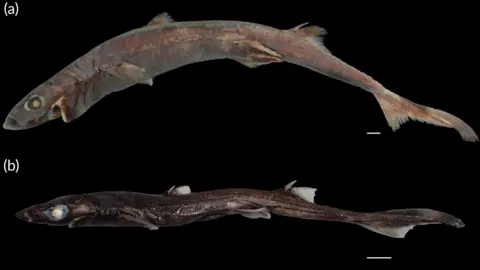
The West Australian Lantern Shark, a newly described species, was found at depths exceeding 600 meters. This small shark, reaching up to 40cm in length, is distinguished by its large eyes and a belly that emits light, a characteristic that gives lantern sharks their name. Dr. Will White, a fish scientist involved in the study, explained, “Lantern sharks are bioluminescent, with light produced by photophores located on their belly and flanks, which is where their common name comes from.”
Another fascinating find is a new species of porcelain crab, measuring about 1.5cm. This small crustacean has a unique feeding method, using fine hairs to filter food from the water rather than relying on its claws. Dr. Andrew Hosie, curator of aquatic zoology at the Western Australian Museum, noted, “Porcelain crabs are known as filter feeders, feeding on plankton by using modified mouthparts with long hairs to sweep the water for small pieces of food such as plankton, rather than the typical crab method of grabbing and pinching food with their claws.”
The expedition has already yielded approximately 20 new species, including the distinctive Carnavon Flapjack Octopus, a small, rusty-red creature. Scientists estimate that many more species, possibly around 600, are awaiting formal description and naming, a process that can take several years to scientifically confirm their uniqueness.
Related Stories
- Vets warn about acorn danger to dogs
- Shelter appeals for reptile fans to rehome snakes
- Boa constrictor found near school by dog walker
More from the BBC
- Root or Smith, Starc or Wood – Vaughan & McGrath pick combined Ashes XI
- US and Australia sign rare earths deal to counter China’s dominance
- Friendly Albanese-Trump meeting masks Australia’s creeping doubts about US
- What is Aukus, the submarine deal between Australia, the UK and US?
- Trump to Australian ambassador: ‘I don’t like you either’