
In a critical update from the world’s leading conservation authority, the International Union for Conservation of Nature (IUCN) announced that Arctic seals and various bird species are facing intensified threats. The primary culprits behind this escalating crisis are climate change and various human activities, as detailed in their latest ‘red list’ of endangered species.
The IUCN specifically highlighted that habitat destruction, largely due to extensive logging and agricultural expansion, is severely impacting bird populations. Meanwhile, seals are primarily endangered by global warming and human disturbances such as increased maritime traffic. This grim assessment was unveiled during the World Conservation Congress in Abu Dhabi by IUCN Director General Grethel Aguilar, who emphasized the pervasive and devastating effects of human activity on both nature and climate.
The updated IUCN Red List now documents a staggering 172,620 species, with 48,646 of them currently facing extinction. Among the most recent reclassifications, the hooded seal’s status has worsened from ‘vulnerable’ to ‘endangered,’ while both bearded and harp seals are now categorized as ‘near threatened.’
A major factor contributing to this decline is global warming, which is rapidly obliterating the natural habitats of animals, particularly those dwelling in the planet’s colder regions. Beyond climate change, other significant risks to these species include escalating maritime traffic, mining, oil extraction, aggressive industrial fishing practices, and hunting.
The Arctic, in particular, is experiencing global warming at a rate four times faster than other regions. This accelerated warming is drastically reducing the extent and duration of vital sea ice cover, which is crucial for many Arctic species. The IUCN underscored that ice-dependent seals are not only a primary food source for other animals but also play a critical ‘keystone’ role in their ecosystem’s food web by consuming fish and invertebrates and facilitating nutrient recycling.
Dr. Kit Kovacs, a scientist at the Norwegian Polar Institute, voiced profound concern over the rapid environmental shifts in the Svalbard archipelago. She remarked on the shocking speed of change, noting that areas that once had five months of sea ice cover just a few decades ago are now winter ice-free.
Bird Populations in Peril
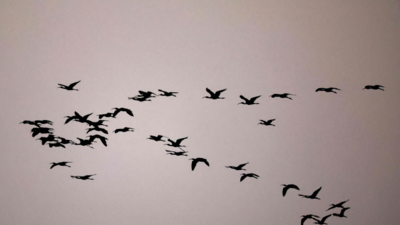
The IUCN’s comprehensive red list for birds, a monumental effort spanning nine years and involving thousands of experts, paints a worrying picture. Alarmingly, 61% of bird species worldwide are experiencing population declines, a significant jump from 44% recorded in 2016. Out of the 11,185 bird species assessed globally, 1,256 (or 11.5%) are now classified as threatened.
This year’s report specifically highlighted regions where the rampant destruction of tropical forests is posing an increasing threat to avian life. For instance, in Madagascar, 14 bird species were newly designated as ‘near threatened,’ with an additional three moving to the ‘vulnerable’ category. West Africa saw five more species join the ‘near threatened’ list, along with one more in Central America.
Amidst these concerning findings, the report did share a rare positive note: the green turtle has been delisted from endangered status. This remarkable recovery, a 28% population increase since the 1970s, is attributed to decades of sustained conservation efforts. Nicolas Pilcher, Executive Director of the Marine Research Foundation, emphasized that this success should serve as motivation for continued action, not a reason for complacency, reminding us that the fight for conservation is far from over.