
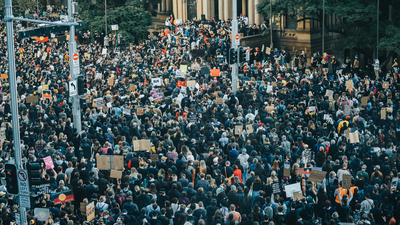
This week, the usual sounds of Alberta’s high schools were replaced by chants echoing power, protest, and principle. On Thursday, thousands of students across the province walked out of their classrooms, filling the streets of Calgary and Edmonton. Their collective action was a direct condemnation of what they perceived as a betrayal of both democracy and the education system. Their anger was aimed at Premier Danielle Smith’s government, which had used the controversial “notwithstanding clause” to compel teachers back to work, effectively ending a nearly month-long strike that had brought Alberta’s public education system to a standstill.
The dispute originated on October 6, when over 46,000 teachers initiated a strike after negotiations with the United Conservative Party (UCP) government failed. Teachers had been advocating for critical improvements, including reduced class sizes, increased staffing, and the abolition of a “two-tier system” they believed unfairly favored private schools with millions in subsidies. For weeks, public school classrooms remained empty, while teachers bravely maintained their picket lines. However, the government’s subsequent implementation of back-to-work legislation on Monday, which was immune to Charter challenges, compelled educators to accept a deal that a staggering 90% had already voted against.
While Wednesday’s return to school was intended to signal a resolution, it instead ignited further protests. By Thursday, student walkouts spread rapidly across the province, from Western Canada High to St. Mary’s and Crescent Heights. Teenagers, who had closely followed the legal and moral battle over their education, quickly mobilized through social media. Within hours, they organized demonstrations and took to public spaces to express their discontent. They voiced exhaustion—tired of feeling like mere pawns in a political game, tired of overcrowded classrooms, and tired of witnessing their dedicated teachers suffer from burnout under unsustainable working conditions.
A Strike Revealing Alberta’s Deep Divisions
The fervent student protests on Thursday were the culmination of months of simmering tension. The teachers’ strike was never solely about salaries; it was fundamentally about Alberta’s commitment to its future generations and the quality of education it was prepared to fund. The government’s steadfast refusal to address class sizes, even amidst increasing student enrollment and dwindling resources, became a critical point of contention.
Reports from various media outlets indicate that persistent underfunding was driving educators to a breaking point. In major urban centers, classrooms were severely overcrowded, leaving teachers struggling to provide adequate attention to their students.
This conflict also brought to light a significant underlying issue: Alberta’s increasing financial support for private education. Funding for private schools escalated dramatically, even as public schools desperately sought more staff and resources. This stark imbalance fostered a growing belief among public educators that the system was being undermined by a particular ideology that prioritized parental choice over the broader public good.
Premier Smith’s deployment of the notwithstanding clause sent a message beyond mere policy; it demonstrated a readiness to bypass constitutional protections to suppress opposition. Legal experts across Canada have criticized this as a concerning pattern, where governments are increasingly misusing the clause as a political instrument rather than upholding its role as a constitutional safeguard. For Alberta’s teachers, this action represented a crushing defeat; for the students, it was the galvanizing spark for their rebellion.
A New Generation Rises: The Student Rebellion
The student-led walkouts, reverberating through Calgary, Edmonton, and beyond, signify a defining moment for this generation. Their complaints closely aligned with those of their teachers: larger class sizes, inadequate support systems, and a government seemingly disconnected from the escalating crisis within schools.
Many students carried handmade signs, boldly condemning the UCP’s controversial decision. This powerful wave of walkouts was not orchestrated by unions or political factions; rather, it was a spontaneous demonstration of solidarity. It powerfully illustrated the profound gap between the government’s official statements and the difficult realities experienced daily in classrooms. Despite this, Education Minister Demetrios Nicolaides downplayed the movement as a minor, noisy disturbance, claiming that the majority of students simply wished for things to return to normal. Yet, Thursday’s widespread protests painted a different picture, showcasing an undeniable surge of civic engagement from a generation frequently characterized as politically indifferent.
Beyond the Classrooms: A Broader Reckoning
This prolonged standoff has evolved into a critical examination of Alberta’s fundamental education priorities. While teachers have returned to their classrooms and students to their desks in the short term, the underlying anger and discontent suggest a deeper, unresolved tension. The province’s education crisis is intricately linked to a wider ideological struggle within Alberta—a battle between fiscal austerity and essential investment, between the demands of parental choice and the principles of public accountability, and between constitutional safeguards and political opportunism.
Premier Smith’s decision to invoke the notwithstanding clause, while effectively ending the strike, inadvertently sparked a more profound discussion about the boundaries of democracy and the repercussions of suppressing public dissent. As teenagers marched through the chilly streets of Alberta, they brought this crucial debate to life, giving it a tangible face and a hopeful future. What initially began as a teacher’s strike has now blossomed into a collective reckoning over the fundamental question: who truly holds the power to shape Alberta’s educational landscape, and by extension, its societal values?