
The University of Pennsylvania (UPenn) has delivered a pointed rebuff, formally declining to sign President Donald Trump’s controversial ‘Compact for Academic Excellence in Higher Education.’ This proposed funding-preference plan would have required universities to freeze tuition, cap international enrollment, and formalize protections for conservative speech.
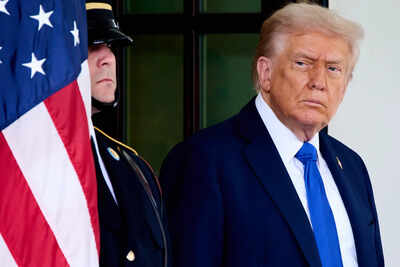
Penn’s refusal marks the fourth from a prominent campus to date. However, this rejection carries particular weight as Trump himself is an alumnus, having earned a Bachelor of Science in economics from UPenn’s Wharton School in 1968. For a figure who frequently highlighted the Wharton brand as a testament to his intellect and accomplishments, the symbolism of his alma mater rejecting his signature higher-education policy is striking. It creates a moment laden with irony—the institution that once bestowed prestige now withholds its endorsement from his political crusade.
UPenn Takes a Stand
On Thursday, President J. Larry Jameson issued a brief statement on the university’s official website and submitted a letter to the US Department of Education, confirming Penn’s decision not to sign the compact. “Since receiving the Compact for Academic Excellence in Higher Education on October 1, I have sought input from faculty, alumni, trustees, students, staff, and others who care deeply about Penn,” Jameson wrote.
“Earlier today, I informed the US Department of Education that Penn respectfully declines to sign the proposed Compact. As requested, we also provided focused feedback highlighting areas of existing alignment as well as substantive concerns,” his statement continued. This announcement came just days before the October 20 deadline for providing feedback on the proposal.
USC Joins the Opposition
The University of Southern California (USC) followed suit on the same day. Interim president Beong-Soo Kim explained in a letter to the department that USC already appeared to adhere to the principles outlined in the compact, rendering a formal signature unnecessary.
A Growing Chorus of Rejection
Penn’s decision makes it the fourth institution to publicly reject the compact. Brown University announced its refusal on Wednesday, while the Massachusetts Institute of Technology (MIT) did the same last Friday. To date, no college has agreed to sign the controversial proposal. Following MIT’s initial rejection, the Trump administration reiterated that the compact remains open to all willing colleges and universities.
Understanding Trump’s Education Compact
The compact itself is a nine-page document requesting institutions to voluntarily commit to sweeping changes. These include overhauling or abolishing departments deemed to punish or belittle conservative ideas—a definition left ambiguous. It also calls for rejecting foreign applicants who “demonstrate hostility to the United States, its allies, or its values,” refusing to recognize transgender women as women, and freezing tuition rates for American students for five years. In return, signatories would purportedly receive priority funding and invitations for White House collaboration, though specific details remain vague. Critics have largely interpreted the compact’s language as an implicit threat to existing federal funding for institutions that do not comply.
Why Elite Institutes Are Pushing Back
America’s leading universities are not rejecting the White House’s “Compact for Academic Excellence in Higher Education” due to a disdain for funding. Instead, they are pushing back because the financial incentive is coupled with what they perceive as a loyalty oath and a fiscally unsound proposal. The draft explicitly links preferential federal access to a five-year tuition freeze (during persistent inflation), a cap on international undergraduates (who often subsidize labs and scholarships), and an ideological litmus test designed to ‘protect’ conservative viewpoints, alongside rigid sex/gender definitions that clash with established campus policies and state laws. Essentially, it demands fiscal strangulation, reduced enrollment diversity, and speech policing in exchange for a promise of funding that isn’t actually guaranteed in writing. MIT, Brown, USC, and now Penn have all publicly cited academic freedom and institutional autonomy as their primary reasons for refusal, recognizing the potential for federal leverage over admissions, pricing, and curriculum to quickly escalate into political micromanagement.