
The enchanting story of my journey to watch Dilwale Dulhania Le Jayenge at the famed Maratha Mandir cinema began with Kunjappan chettan’s delectable appams, sold from his teashop in Mazhuvannur, Muvattupuzha. These soft, cloud-like delicacies, priced at a mere rupee, often came with delightful chutney and were a staple of my childhood errands. It was a newspaper snippet used to wrap these very appams that first sparked my dream: a piece of news announcing DDLJ‘s unprecedented 500-week run at the Maratha Mandir.
The headline declared a cinematic first: Dilwale Dulhania Le Jayenge, starring Shah Rukh Khan and Kajol, had achieved an incredible 500-week theatrical run at its original release cinema. Even as a child, I was acquainted with Hindi films, particularly Shah Rukh Khan’s works like Baazigar, Chamatkaar, and Kabhi Haan Kabhi Naa, regularly broadcast on Doordarshan. My fondness for Shah Rukh Khan had already begun to blossom.
Though the concept of a film running for “weeks” was beyond my seven or eight-year-old understanding, a firm resolution took root: “Someday, when I’m older, I will watch Dilwale Dulhania Le Jayenge at Maratha Mandir!”
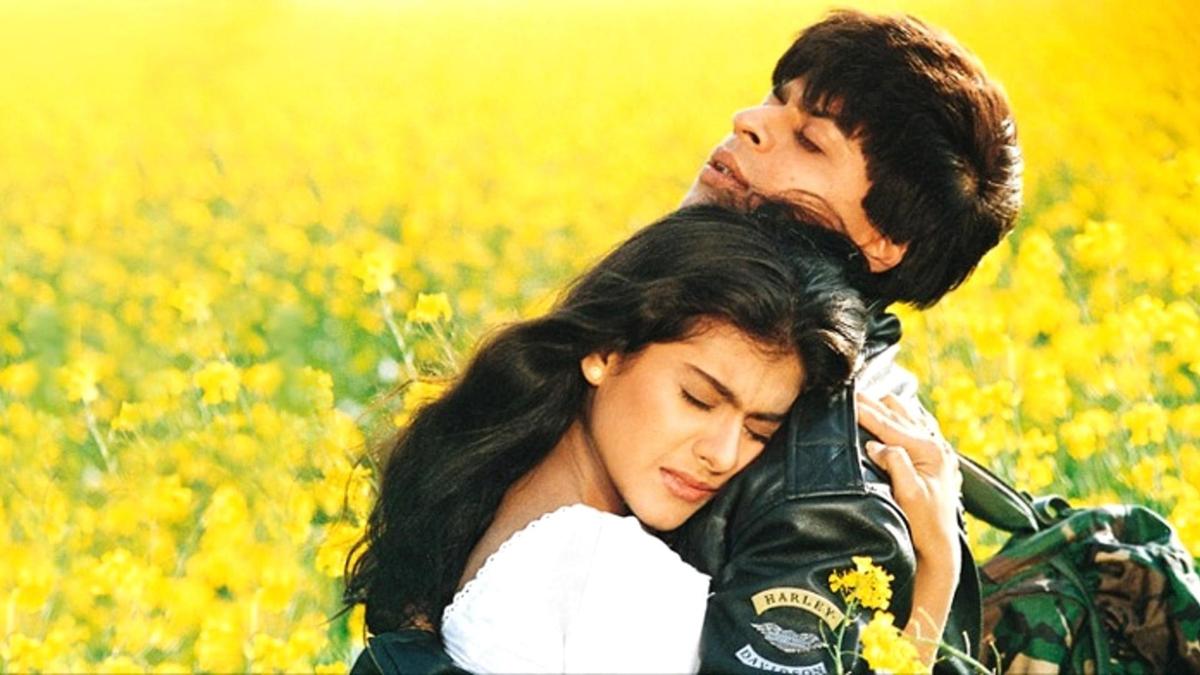
Kajol and Shah Rukh Khan in a still from ‘Dilwale Dulhaniya Le Jayenge’
Years passed, and I watched DDLJ countless times – on television, and on CD and DVD. Yet, the promise I made to my younger self remained vivid. I even managed to acquire the Maratha Mandir’s phone number, a testament to my unwavering intent.

Reese Thomas
Later, while attending film school in Kochi, I encountered news of DDLJ celebrating an astounding 1,000 weeks at Maratha Mandir. Whispers circulated that its legendary run might finally conclude. Sharing my long-held dream with friends, I met with a mix of playful ridicule and enthusiastic suggestions to “Go to Mumbai next Friday!” However, as plans began to form, the film was re-released closer to home at PVR, Lulu Mall in Kochi, and for a moment, the Mumbai pilgrimage was set aside as we celebrated it there.
Leaving the cinema, a friend’s comment—”What’s so special about a film running this long?”—struck a chord. It solidified my conviction: a movie that captivated audiences for two decades was truly remarkable, and I was determined to witness its magic firsthand at Maratha Mandir. My childhood dream, it seemed, was more persistent than ever, and I knew time was of the essence.

FILE – The 1995 Bollywood love flick titled Dilwale Dulhaniya Le Jayenge or “DDLJ”, as the movie is commonly known in India, is the longest-running movie in Indian cinema history and clocked a successful run of 1000 weeks at the Maratha Mandir movie theatre on December 12, 2014
Soon after, while on a work trip in Hyderabad, an impulsive decision seized me: I would finally go to Mumbai to see DDLJ. On January 30, 2016, I boarded a bus, commencing a 24-hour journey towards the city of dreams.
As the legend goes, Shah Rukh Khan once declared he would “rule Bombay one day,” a prophecy he certainly fulfilled in his own unique way. For me, this was my inaugural and only trip to Mumbai, undertaken solely to witness his iconic film.
My journey culminated with my arrival in Mumbai on February 1st.

FILE – Indian movie buff and ardent Shah Rukh Khan fan, Jigar Desai, poses with special handmade memorabilia celebrating the 1000 weeks of screening of the popular Bollywood Hindi film ‘Dilwale Dulhania Le Jayenge’ at the Maratha Mandir movie theatre on December 12, 2014
Maratha Mandir, situated in Mumbai Central, was not directly on my bus route. My transportation options were limited to the local train or a taxi. Unfamiliar with Mumbai’s intricate local train network, I dismissed that idea. A sense of anxiety grew as I realized my lack of knowledge about the sprawling city. Thankfully, a kind fellow passenger advised me to alight at Sion and take a cab, assuring me Maratha Mandir was a mere ₹40 ride away. The first taxi driver quoted an exorbitant ₹500, which was out of the question. With time ticking, I eventually found a driver willing to take me for ₹200.
The 11:30 AM showtime was fast approaching, and it was already 10:00 AM.
This journey transcended mere hero worship; it was about immersing myself in a piece of cinematic history. While many had made the pilgrimage to watch DDLJ at Maratha Mandir, for me, it was the realization of a deeply personal dream. Facing the fears and uncertainties of solo travel to an unknown city for the first time made the experience even more profoundly special.

Maratha Mandir
By 11:00 AM, I finally arrived at Maratha Mandir. Standing across the street, I gazed in awe at the iconic cinema hall, a landmark I had first encountered on Kunjappan chettan’s appam wrapper so many years ago.
After a brief wait, the gates swung open, and I hurried to the ticket counter. I anticipated a balcony seat would cost around ₹50, but to my surprise, it was only ₹20. As I waited to enter, I admired the classic DDLJ posters, gracefully aged by time. The atmosphere was thick with romance, with several couples even reenacting iconic scenes from the movie.
Stepping inside, I was mesmerized; the theater’s ornate interiors felt like a journey back in time to an ancient palace. Although not completely packed, very few seats remained empty. It was astonishing to consider this film was in its twenty-first year of continuous screening!
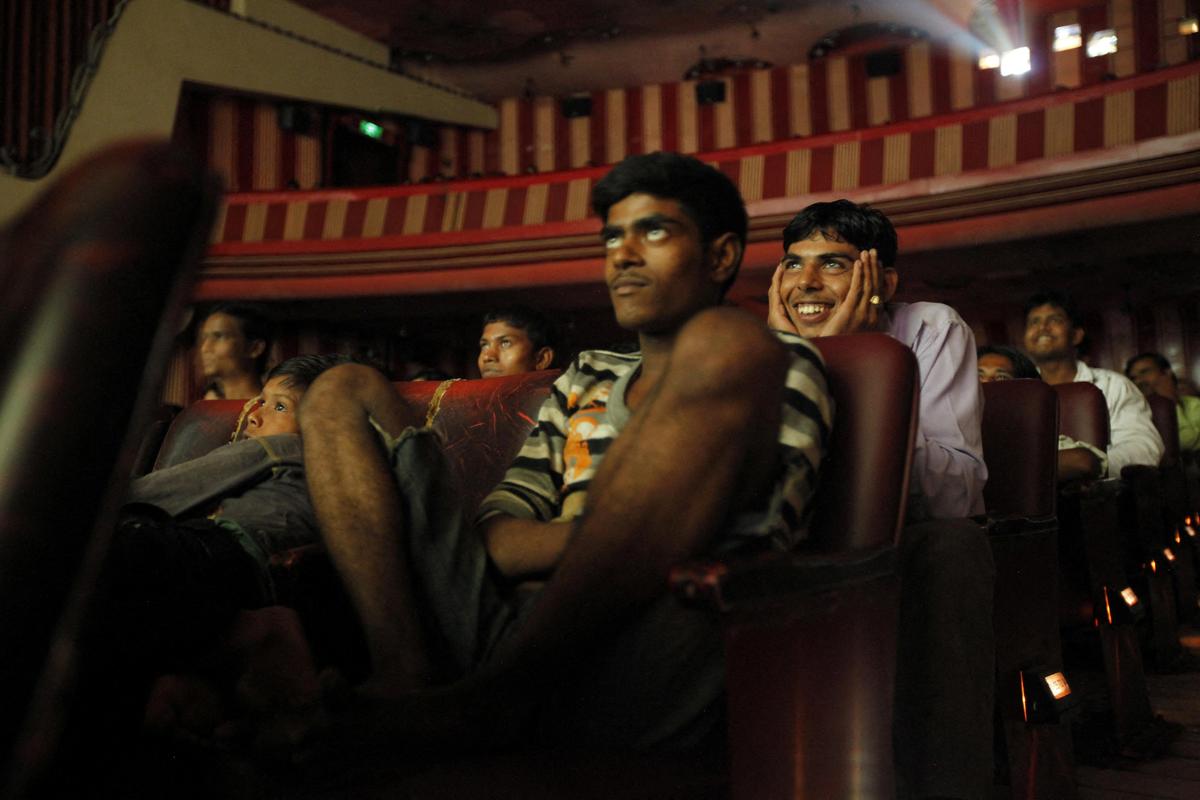
FILE: Cinema goers watch the Bollywood movie “Dilwale Dulhania Le Jayenge” (The Big Hearted Will Take the Bride), starring actor Shah Rukh Khan, inside Maratha Mandir theatre in Mumbai, July 11, 2010.
As the film began, Amrish Puri’s appearance on screen left me utterly wonderstruck! The moment Shah Rukh Khan graced the screen, Maratha Mandir erupted in an explosion of cheers, feeling exactly like a premiere day celebration.
Raj’s (Shah Rukh Khan) iconic dialogue, “Bade bade deshon main…” brought a wide smile to my face. And his declaration, “main aa raha hoon Simran,” just before the interval, vividly recalled my own childhood promise from Muvattupuzha: “main aa raha hoon Maratha Mandir” (I am coming, Maratha Mandir). I still keep the ticket from that unforgettable show as a cherished memento.

Reese’s DDLJ ticket
The film ended and when the line ‘Come fall in love’ came on screen I leapt up applauding.
Leaving the theater, I found myself humming “Tujhe dekha toh ye jaana sanam…,” Raj’s mandolin seemingly providing an imaginary soundtrack to my departure. I paused for one final glance at Maratha Mandir, already making a silent vow to return and “fall in love” with the magic once more.

Kajol and Shah Rukh Khan in the Hindi film “Dilwale Dulhaniya Le Jayenge”.
My next destination was the railway station, where I would catch my train back home to Kerala that same evening.
Recall the memorable scene from Ayan Mukherji’s Yeh Jawaani Hai Deewani, where Bunny (Ranbir Kapoor) and Naina (Deepika Padukone) humorously debate the greatest experiences, both Indian and international?
While Bunny championed “Broadway’s Phantom of the Opera,” Naina’s ultimate retort was “Maratha Mandir mein DDLJ with popcorn.” This perfectly encapsulates what experiencing DDLJ at Maratha Mandir truly signifies for many Indians: it’s not just a film, but an integral piece of our cultural fabric.
Reese Thomas is an author and an assistant director in the Malayalam film industry. As told to Shilpa Nair Anand.