
The highly anticipated fourth edition of Vaggeyakara Bharatham, conceptualized by Natyarangam, unfolded as a magnificent collaboration between the gifted Carnatic vocalist Aishwarya Vidhya Raghunath and the acclaimed dancer Parshwanath Upadhye. Together, this dynamic duo embarked on an artistic journey, delving into a selection of compositions from the rich and extensive canon of songs often heard in classical concerts.
The evening commenced with a captivating blend of solo and ensemble performances. Kicking off the program was ‘Sree Maha Ganapathi ravathumam’, a revered composition by Muthuswamy Dikshitar set in Gowla raga. Students from Parshwanath’s Punyah Dance Company brought this piece to life through dance, skillfully weaving in the compelling story of Sundaramurthy Nayanar’s earnest prayers and Lord Ganesha’s divine intervention. The precision of their movements and the elegant formations showcased remarkable clarity and artistic discipline.
Next, Shruthi Gopal graced the stage with her performance of the Kapi varnam ‘Chalamela’, a composition by Vadivelu from the renowned Tanjore Quartet. Her interpretation beautifully established the exalted status of Brahadeeshwara, as she navigated through various sancharis while maintaining a consistent sthayi bhava. However, a slight repetitiveness in the nritta patterns, while technically sound, somewhat diminished the overall impact of the piece.
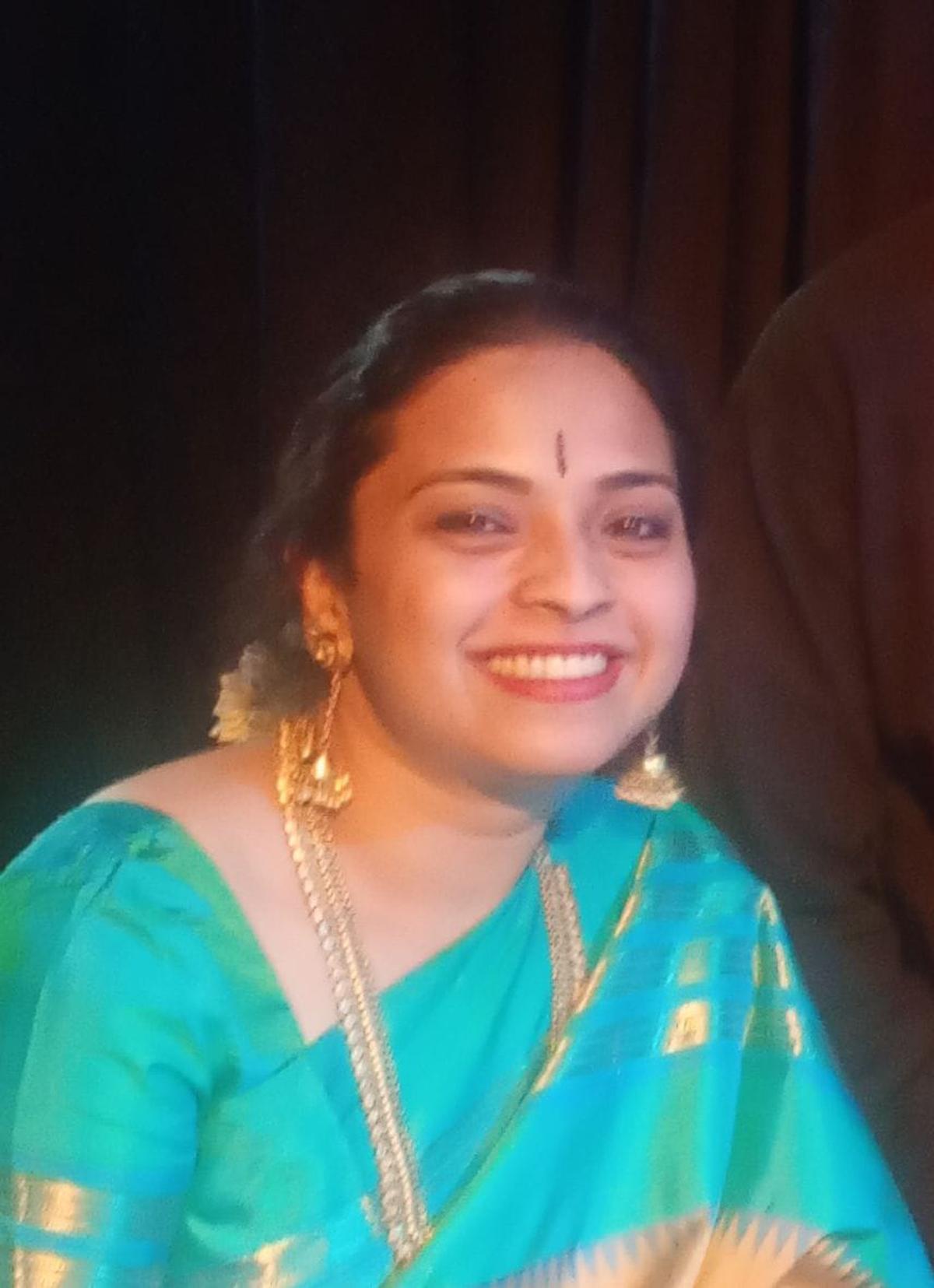
Carnatic vocalist Aishwarya Vidhya Raghunath. Photo Credit: V.V. Ramani
Following this, Parshwanath Upadhyaye, accompanied by Aditya P.V. and Shobith Ramesh, presented Dikshitar’s profound composition ‘Sri viswanathan bhajeham’, ingeniously set across 14 ragas. Aishwarya’s vocal rendition was a highlight, marked by her seamless transitions between ragas and her ability to beautifully articulate their diverse nuances. The dancers complemented this with meticulously coordinated movements and sharp footwork, enriched by compelling narrative segments that sustained the energy. However, the dancers’ responses to the swara passages occasionally felt repetitive, causing a slight dip in the performance’s dynamism.
Adithya delivered a poignant solo performance of Kshetrayya’s exquisite padam ‘Rama rama prana sakhi’, choreographed by Bragha Bessel. This piece eloquently portrayed Krishna’s profound heartache for his beloved, drawing parallels with Rama’s intense emotional suffering during Sita’s abduction. Adithya’s portrayal, seamlessly transitioning between Krishna and Rama, and his depiction of their respective bhavas, were handled with sensitivity. Yet, a deeper immersion and personal connection to these divine narratives could have imbued the performance with even greater emotional resonance.
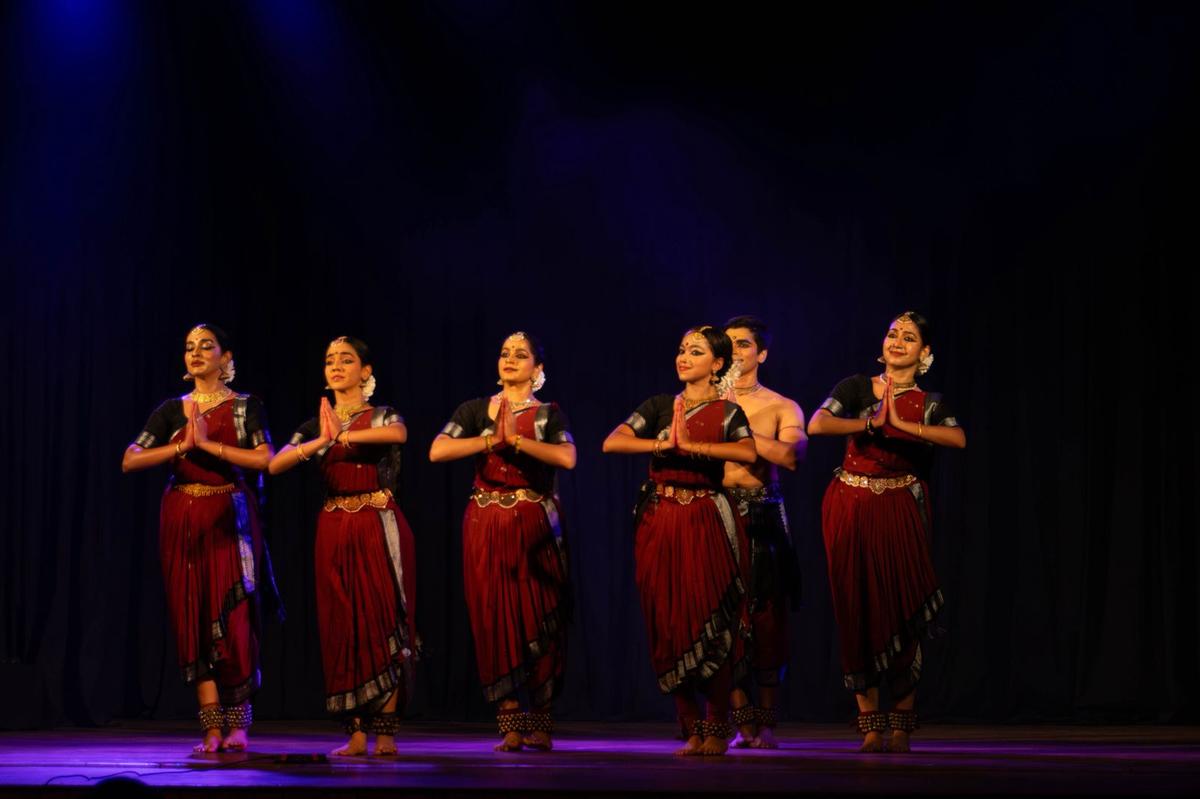
Members of Punyah Dance Company. Photo Credit: Courtesy: Natyarangam
The evening culminated with the most impactful composition: Periyazhwar Thirumozhi’s ‘Manickam Katti’. Tuned by R.K. Shriramkumar, this piece traversed beautiful ragas including Nilambari, Hamirkalyani, Khamas, and Surutti. Parshwanath and his talented disciples infused this lullaby-like composition with profound emotion and vitality, while Preeti Bharadwaj’s choreography featured exquisitely graceful movements and elegant formations.
Despite the individual brilliance, a recurring observation was the limited interplay between the music and dance, which could have elevated the collaborative experience to a truly integrated and enriching level.
The stellar orchestra provided exceptional support, featuring Gayatri on violin, Praveen Sparsh and Harsha Samaga on mridangam, Preeti Bharadwaj on nattuvangam, and Kalyani Vaidhyanathan on tambura. The full dance ensemble included Navya Bhat, Dhanyashree Prabhu, Mahalakshmi, Sarveshan, Vibha Raghavendra, and Akshada Vishwanath, with Anand’s thoughtful lighting design enhancing the overall presentation.