
Ever wondered which divine and mortal beings you’ll encounter on your perilous journey through the underworld in Hades 2? As you delve deeper, a vibrant cast of characters awaits—some eager to test your mettle, others offering guidance, valuable goods, or powerful boons to enhance your combat prowess.
With each new descent into the dungeons or passage through a gateway, you’ll find yourself interacting with a randomly appearing sigil, typically linked to a specific Greek deity. These divine blessings, known as Boons, offer a choice of buffs to your attacks or defenses, each reflecting the unique power and personality of the god providing assistance. But who are these intriguing gods, titans, and NPCs, and how do their ancient myths weave into the rich narrative of Hades 2? Let’s explore!
All Hades 2 Gods
Greek mythology, with its rich tapestry of stories and characters, has always been an evolving narrative, passed down and reinterpreted over millennia. Supergiant Games, with their renowned storytelling, successfully modernized these ancient tales in the first Hades. Expect similar captivating twists and fresh perspectives on familiar myths in Hades 2.
The Greek gods who appear in Hades 2 are:
- Melinoë
- Hades
- Aphrodite
- Apollo
- Ares
- Artemis
- Charon
- Chaos
- Chronos
- Circe
- Demeter
- Eris
- Hecate
- Hephaestus
- Hera
- Heracles
- Hermes
- Hestia
- Hypnos
- Lord Moros
- Medea
- Narcissus
- Nemesis
- Odysseus
- Poseidon
- Zeus
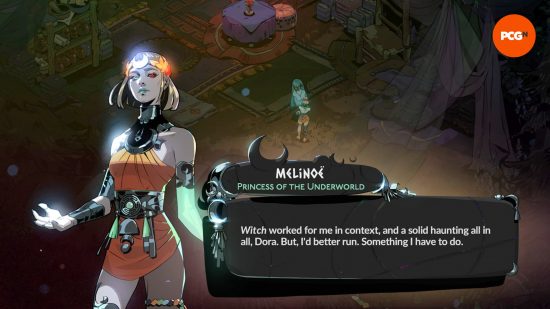
Melinoë
Melinoë, the game’s captivating protagonist, is introduced as Zagreus’ sister and Hades’ daughter in Hades 2. Her ancient history is shrouded in some mystery, but an Orphic Hymn from two millennia ago sheds some light: with limbs black on one side and white on the other, she was the goddess responsible for offerings made to the spirits of the deceased.
This striking duality—black and white limbs—is often interpreted as representing her connection to both the dark underworld and the luminous heavenly realm. What we primarily know of Melinoë from myth is her identity as the daughter of Persephone and Hades (or sometimes a variant of Zeus), and her deep association with the ghosts of the dead. Interestingly, some scholars believe Melinoë was an Orphic epithet for Hecate, though in Hades 2, she is presented as a distinct deity.
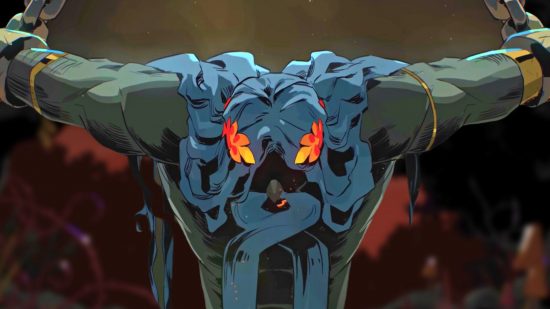
Hades
While Hades is the name of the underworld itself, he is also known as the God of the Underworld and, supposedly, Melinoë’s father. All relationships in Greek mythology are intricately woven, but Hades’ are particularly complex, connecting him to most other Hades 2 Gods and characters.
Spoiler alert: in Greek mythology, Hades is not actually Melinoë’s biological father. Zeus was known to take Hades’ form in various myths, including to deceive Melinoë’s mother, Persephone. Melinoë appears unaware of this, so the role Hades himself will play and whether this truth will emerge in Hades 2 remains to be seen.
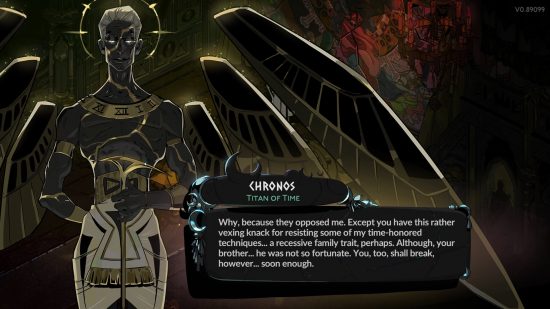
Chronos
Chronos is the formidable villain among the Hades 2 Gods, shown chained at the end of the trailer and acting as the central antagonist of the narrative, referred to as “time itself.”
The god of time and King of Titans, Chronos famously devoured his own children, fearing a prophecy that he would be overthrown by one of them. Only Zeus escaped this fate, later saving his siblings and imprisoning Chronos. Though he was eventually released and made ruler of the Elysian Islands (which inspired the third floor of the original Hades), where heroes were sent after death, Chronos is likely still quite resentful of his past imprisonment. As the father of Zeus, Hades, Poseidon, Hera, and Hestia, the god of time is undoubtedly seeking revenge, and his connection to time could play a crucial role in the roguelike element of Hades 2 runs—perhaps even time travel. This aspect is yet to be fully explored, as Chronos does not appear in the technical test.
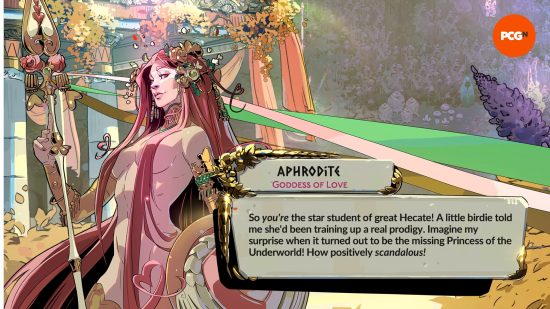
Aphrodite
Aphrodite’s mythology is widely recognized. As the Goddess of love and fertility, she is famously said to have been born from the suggestive substance that emerged from Uranus’ severed genitals, which Cronus, Uranus’ son, cast into the sea. This origin also earned Aphrodite her association as a goddess of the sea. In Hades 2, however, her more famous role as the Goddess of Love is emphasized, with Aphrodite appearing as a stunning, nude woman with pink-toned skin and luxurious pink hair elegantly covering her body.
Aphrodite was also famously betrothed to Hephaestus, another character confirmed for Hades 2. Given the mismatched nature of their union, Aphrodite reportedly engaged in an affair with Ares, the God of War. With Aphrodite’s historical ties to Cronus and Hephaestus, it’s possible that elements of her dramatic story with these two Hades 2 characters will unfold. While Ares was present in the first Hades, it is not yet confirmed if the God of War will make an appearance in Hades 2.
Apollo
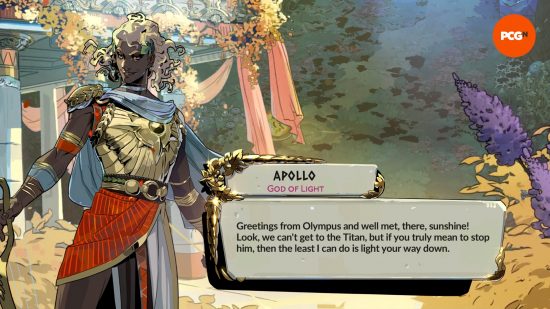
In Hades 2, Apollo is introduced as the God of Light. In traditional mythology, however, he is a multifaceted deity, overseeing numerous domains (as was common for many gods). He has appeared countless times in ancient Greek culture, frequently depicted with a lyre, a quiver and bow, and a raven. Supergiant Games seems to be merging his association with the bow and lyre for their interpretation, as Apollo is shown in-game wielding a bow with multiple strings, visually reminiscent of a lyre.
Artemis
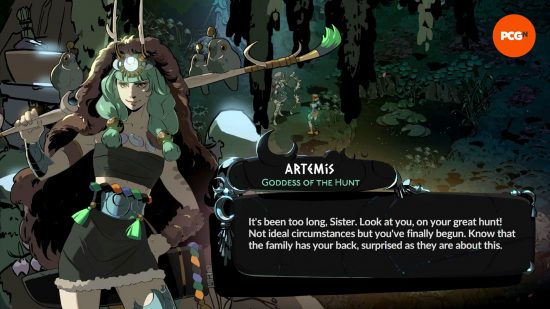
While Artemis is also known as the Goddess of chastity and childbirth in some Greek myths, Supergiant has more fittingly chosen to highlight her widely recognized status as the Goddess of the Hunt for Hades 2.
Greek mythology also portrays Artemis as Apollo’s twin sister, primarily in connection with her role as the childbirth goddess, as she was born first and then helped her mother, Leto, deliver Apollo. Whether this sibling dynamic will be explored in Hades 2 remains to be seen, but it’s not expected to be a central focus given her depiction as a huntress. No other confirmed Hades 2 characters are particularly close to Artemis, but as Zeus’ daughter, she is paternally linked to most other characters. Interestingly, as seen in a screenshot, Artemis immediately addresses Melinoë as “sister,” though whether this is literal is a mystery. As Zeus’ daughter, she technically is, but Melinoë, as far as we know, does not believe Zeus to be her father.
Charon
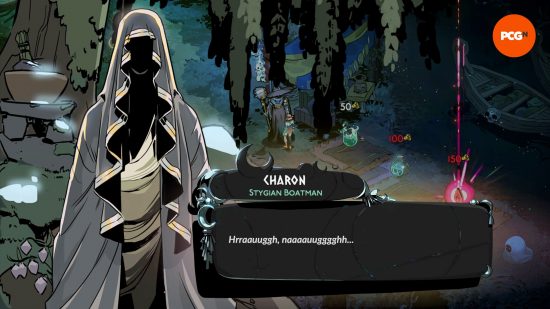
Charon is famously known as the Stygian Boatman, the ferryman who guides the dead into the underworld. According to Greek myth, passage across the river required payment, and those unable to pay were condemned to wander the shores for eternity. This is why ancient Greeks often placed a coin in the mouth of the deceased, ensuring their journey to the afterlife.
This theme of payment is highly relevant to Charon’s character in Hades 2, where he operates as a merchant. In the game, you can purchase items, including Boons, from Charon in exchange for gold, a departure from the Obols used as payment in the first game.
Chaos
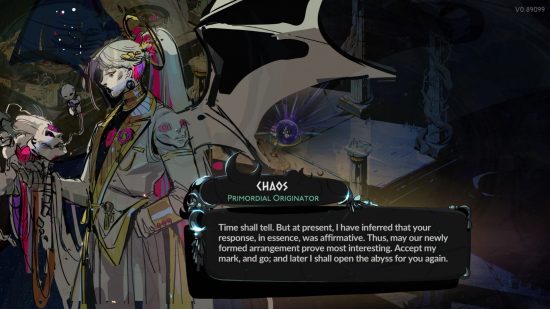
Chaos, a confirmed non-binary character in the Hades series, has undergone an appearance change from the original game to Hades 2. They now feature a pink and purple undercut, long gray hair, and flowing robes. Despite this visual refresh, their purpose remains the same: to inject unpredictability into Melinoe’s journey, offering potent Boons that defy normal conventions.
Chaos originates from “untold aeons ago,” said to have given birth to Night and Darkness, and is believed to be the progenitor of all living things.
Demeter
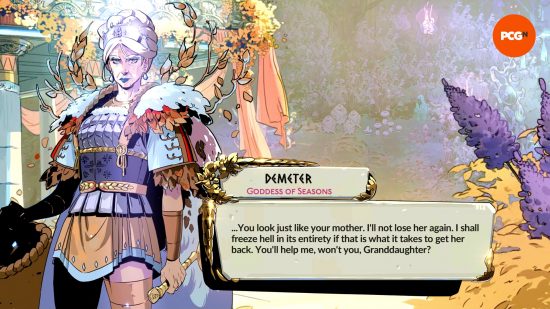
Demeter is renowned as the Goddess of the Harvest, or Goddess of Seasons, and is referred to as the latter in Hades 2. However, the game’s thematic focus seems to lean more towards Winter and its impact on agriculture, judging by the names and effects of Demeter’s Boons.
As one of Hades’ and Zeus’ siblings, her familial ties become a bit intricate, as Demeter is also Melinoë’s Grandmother, being Persephone’s mother. Her connection to Melinoë’s paternal lineage is complicated by Zeus’ known interfamilial relations. This is significant because, as previously mentioned, Hades is not Melinoë’s biological father in myth, despite what Melinoë and the game imply. Like all of Chronos’ children, Demeter is undoubtedly invested in his downfall.
Eris
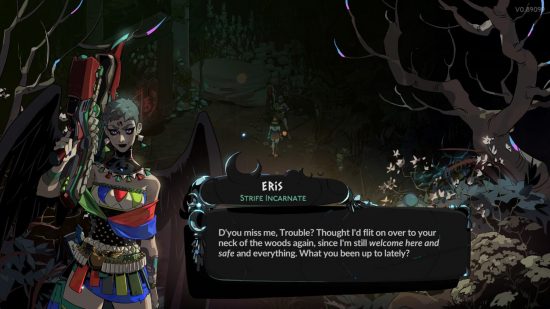
Eris embodies the very essence of strife, resisting any form of order, whether it arises naturally or is imposed by gods and goddesses. Despite her chaotic nature, Melinoe often finds herself drawn to Eris throughout Hades 2.
Eris also serves as the formidable final boss of the Ascent to Olympus, offering a challenging fight. She was once the wielder of Exagryph, the Adamant Rail, a weapon featured in the original Hades game, resembling a gun adorned with an eagle motif.
Hecate
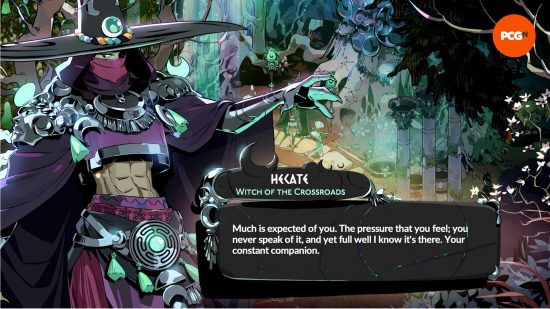
If we consider Hecate as distinct from Melinoë, as Supergiant Games presents her in Hades 2 as the woman cloaked in black, she is the goddess of magic, spells, the moon, and the night. In Hades 2, Hecate plays a pivotal role in Melinoë’s quest against Chronos, training her in the arts of witchcraft and combat.
Historically, shrines to Hecate were placed at home entrances to ward off witchcraft and evil, as depicted in ancient plays by Euripides and Aristophanes. We might also see connections to other gods from the first Hades, as Hecate helped Demeter search for her daughter Persephone in myth after Hades abducted her. The Homeric Hymn to Demeter also states that Hecate then accompanied Persephone when she journeyed to the underworld to spend a third of each year with Hades (Greek myth is indeed complex, so don’t dwell on it), with Hecate’s guidance often symbolized by the iconography of a torch.
Hera
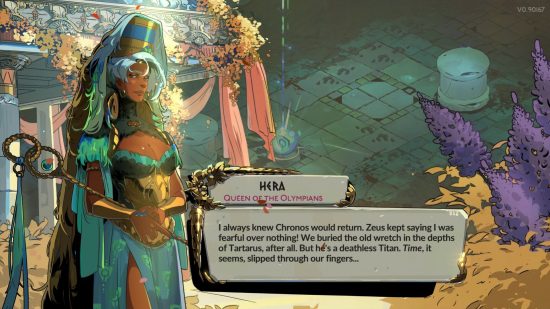
Hera, the esteemed Queen of Olympus and Zeus’ wife, is charged with maintaining order within the realm of the gods. You may encounter her on your descent to Tartarus or your ascent to the surface, and she will bestow powerful Boons upon you.
As the goddess of marriage and the daughter of the titans Hyperion and Theia, her siblings include Hestia, Demeter, Helios, Selene, and Eos. Whether they share the same parentage is another matter entirely. Are you learning not to scrutinize Greek mythology’s convoluted familial ties by this point? You probably should.
Heracles
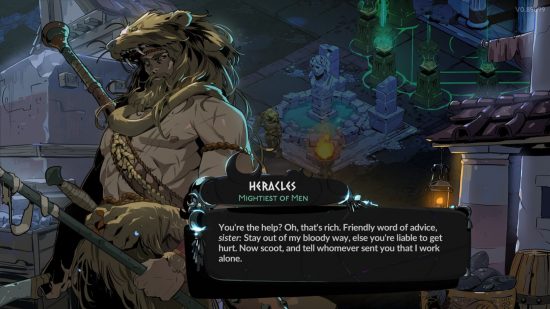
Heracles appears as an NPC in various encounters, similar to Artemis and Nemesis. He will present challenges, such as defeating more enemies than he does within a specific timeframe, in exchange for greater rewards. You can offer him Nectar to receive his keepsake, but your relationship with him can only reach a maximum of three hearts, with the final heart unlocking after significant story progression.
Heracles is depicted as a “monster of a man,” sporting an impressive mane and beard, and covering his head with a bear skin. He expresses disapproval of witchcraft and poses a danger not only to those he encounters but also to himself. You will primarily cross paths with him during your journeys to the surface.
Hephaestus
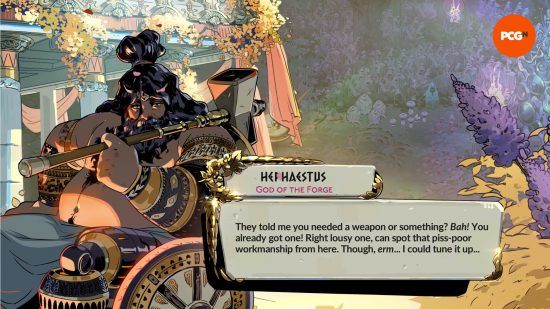
Hephaestus, the God of the Forge, is celebrated for his craftsmanship and metalwork, and fittingly, he is associated with these talents in Hades 2, offering Melinoë boosts to her defense and weaponry.
As Aphrodite’s ill-fated husband, there could be interesting interactions between these two characters in Hades 2, though a friendly one is unlikely, given Aphrodite’s affair with Ares. In mythology, Hephaestus was born lame, and in the game, he is depicted in a wheeled chair. He also appears to have a metallic prosthetic leg, presumably crafted by his own skilled hands.
Hestia
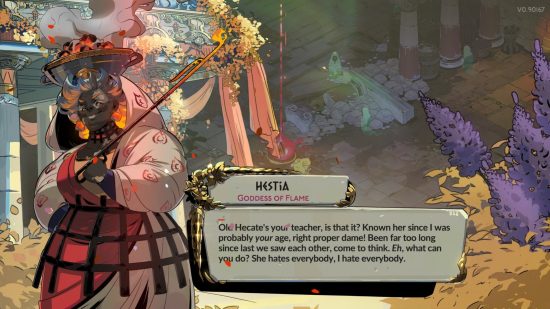
As the Goddess of the Flame, Hestia naturally bestows fire-themed Boons upon Melinoë. She boasts a wonderfully warm personality, playfully calling Melinoë “hot stuff” and peppering her dialogue with other fire-related puns. The Goddess also refers to herself as “elderly,” hinting at her status as one of the older Hades 2 Gods. This aligns with her mythology, as she is another sibling of Hades, making her Melinoë’s aunt.
The name Hestia directly relates to the hearth, and her most common interpretation involves her connection to the home hearth, symbolizing warmth and family. This may explain her casual and jovial demeanor with Melinoë, a member of her own family.
Hestia is also one of Chronos’ five children, alongside Zeus, Hades, Hera, and Poseidon, making her another Hades 2 God who is sure to be instrumental in bringing her father, the primary Hades 2 villain, to justice.
Hypnos
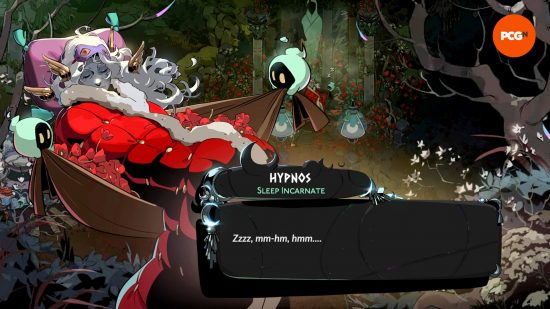
Hypnos, also known as Sleep Incarnate, is a god many can relate to. He has, unsurprisingly, been found fast asleep in Hades 2. This continues from the ending of the first game (another spoiler alert!) where Hypnos falls into a deep slumber. His role in Hades was to greet Zagreus after death, a role seemingly filled by Lord Moros in Hades 2. According to Greek mythology, Hypnos is the twin brother of Thanatos, the God of Death, who one might also expect to be connected to death in Hades 2. Thanatos did appear in Hades but has not yet been confirmed for Hades 2.
In the Iliad, Hypnos has a contentious history with Zeus, having put him to sleep multiple times at Hera’s request, making Zeus a victim of trickery. Naturally, Zeus was furious upon awakening, and presumably still isn’t Hypnos’ biggest fan. Regardless, how Hypnos’ story will unfold in Hades 2 remains a mystery, as we haven’t been able to rouse him from his sleep in the Crossroads yet, but his presence surely serves a purpose.
Lord Moros
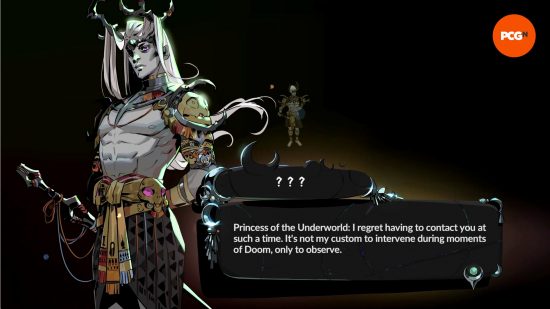
The Greek god Moros, or “Doom Incarnate,” appears to Melinoë after multiple deaths, a fitting connection to his mythology of doom, demise, and immortality. Moros is also the son of Nyx, Zagreus’ adoptive mother from the original Hades, making his assistance to Melinoë less surprising, given their likely pre-existing relationship. Ares helped inflict the Doom effect in the first game, but it’s unclear if Moros will be tied to that in Hades 2. So far, we know that Moros is linked to incantations and can be summoned using Doomed Beckoning at the cauldron.
Nemesis
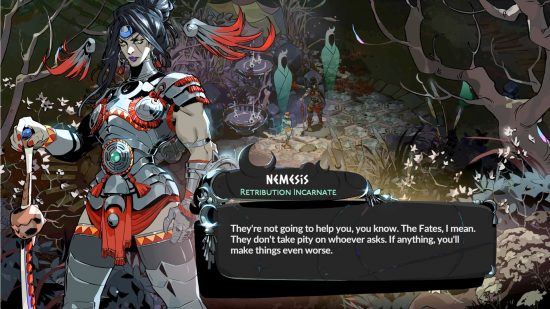
Nemesis, who undoubtedly gives Lady Dimitrescu fan artists a challenge, is described as Retribution Incarnate in Hades 2. As the goddess of revenge and retribution, Nemesis embodies classic comeuppance.
While sometimes debated, she is widely believed to be a child of Nyx, potentially further connecting Nemesis to the first Hades’ narrative. One of the most famous myths involving Nemesis is that of Narcissus, a handsome hunter who treated his admirers terribly. Nemesis lured him to a pool where he fell in love with his own reflection, ultimately dying because he couldn’t bear to look away (a relatable mood). With multiple ties to Nyx among the gods and goddesses in Hades 2, the ancient consort of gods from the first game will likely play some role in the sequel, even if she doesn’t appear directly.
Poseidon
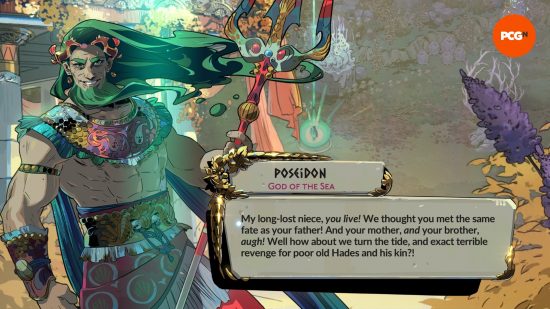
Poseidon, the powerful God of the Sea, is the final sibling of Zeus confirmed for Hades 2, joining Hades, Demeter, and Hestia. It is believed that Poseidon assumed his dominion over the sea when he and his siblings overthrew their father, Chronos. Following this victory, the sea, sky, and underworld were divided among Chronos’ three sons: Poseidon, Zeus, and Hades. Naturally, given their tumultuous past, Poseidon, like his siblings, is eager to aid in Chronos’ defeat once more.
In his Hades 2 introduction, Poseidon refers to the disappearance of Zagreus, Persephone, and Hades, all missing at the beginning of the second game. He is Melinoe’s uncle, occasionally known as the “Earthshaker” due to his boisterous nature.
Selene
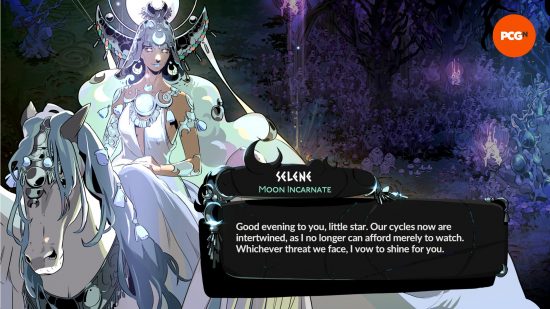
The radiant Goddess of the Moon, Selene, appears to Melinoë atop a magnificent white, winged horse with a silver mane. This depiction stays true to her Greek mythology, where Selene traveled either side-saddle on her horse, as in Hades 2, or in a chariot pulled by two horses, itself drawing the moon across the sky.
So far, Selene is surprisingly solitary in Hades 2, although the in-game guide notes that she was “fostered by Nyx herself.” She is related to Helios and Eos, neither of whom appear in Hades 2. However, Selene does have relationships with other gods, notably Zeus, who granted her beloved mortal, Endymion, the gift of eternal youth and life.
Zeus
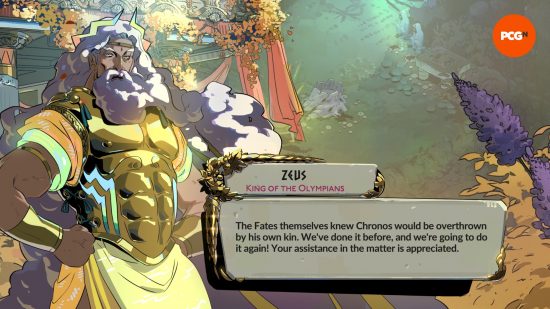
Zeus is arguably the central figure connecting all the Hades 2 Gods. Father to many, brother to some, and king of all, Zeus is, technically, Melinoë’s true father according to Greek myth. Whether this truth will be revealed to Melinoë, who believes Hades is her father, remains to be seen.
This narrative twist is faithful to the myth, where Zeus disguised himself as Hades to deceive Melinoë’s mother, Persephone. Through various mothers, Zeus is also the father of Hephaestus, Artemis, Apollo, and even Persephone herself—don’t ask, it’s Greek myth—along with many other gods and goddesses not featured in Hades or Hades 2. In the game, Zeus is stated to have claimed Olympus after “deposing” his own father, Chronos.
Other Hades 2 characters
The other Hades 2 NPCs who make an appearance in various areas are:
- Arachne
- Cerberus
- Dora
- Odysseus
- Polyphemus
- Schelemeus
- Scylla
- Icarus
- Frinos
- Hecuba and Gale
Arachne
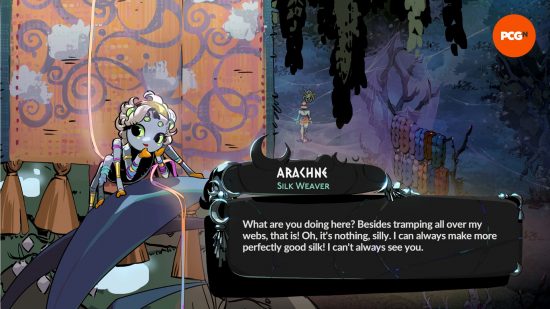
Arachne is arguably one of the most endearing Hades 2 characters, depicted as a small spider with the beautiful head and blonde curls of a woman. This form visually represents Arachne’s mythological fate: the mortal weaver was transformed into a spider after a fateful confrontation with Athena.
Gifted in weaving, Arachne was a mortal whose talent was so extraordinary that many believed it to be magical. However, her exceptional skill led to overwhelming hubris. According to her lore, Arachne became so arrogant that she claimed her ability surpassed that of the gods, particularly her mentor, Athena, and challenged Athena to an artistic duel. Her pride did not stop there; her weaving depicted the gods’ infidelities and wrongdoings, ultimately leading Athena to transform her into a spider.
Cerberus
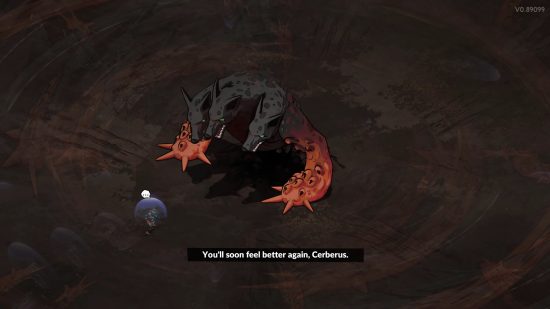
When you first encounter Cerberus, he appears in an altered state as a formidable boss guarding the descent to Tartarus. Melinoe suspects this transformation is Chronos’ doing, and we are inclined to agree. He will be known as “Infernal Cerberus,” but upon defeating him, you will witness him revert to his original form.
Dora
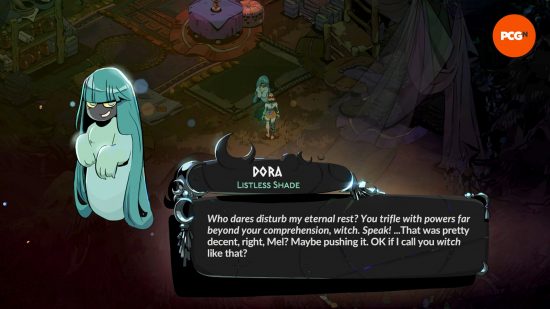
Dora, also known as the Listless Shade, manifests in Hades 2 in two forms: one as an adorable mint-green ghost-girl with flowing turquoise hair, and the other as a seemingly malevolent shade, with only glowing facial features visible beneath a cloak.
It is widely believed that Dora is inspired by Pandora. While there is no direct connection to her ghostly form, Pandora was mythologically responsible for unleashing all the evils of humanity upon the world by opening Pandora’s Box. Despite this association, Dora seems far from evil in Hades 2, though her darker form clearly has the capacity to unnerve people. She doesn’t act this way around Melinoë; the two appear to be good friends, with Dora’s haunting in her darker form seemingly just a method of practice. However, her interactions with Melinoë are often cheeky and a little chaotic, suggesting Supergiant may have interpreted her “evil” in this mischievous manner.
Odysseus
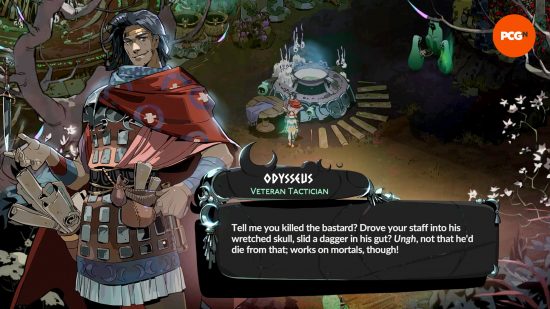
Odysseus is a Greek King who appears alongside many of the kings, queens, gods, and goddesses of Hades 2, as he does in the Iliad, but he is primarily known as the eponymous hero of The Odyssey. As a human, his interactions with the gods are somewhat indirect, but he is depicted as having a favorable relationship with Zeus and Athena, who intervened to save his life from vengeful enemies. Conversely, in a conversation with Melinoë in Hades 2, Odysseus reveals that Poseidon is not quite as fond of him.
Odysseus makes his series debut in Hades 2, appearing in the Crossroads as the Veteran Tactician.
Schelemeus
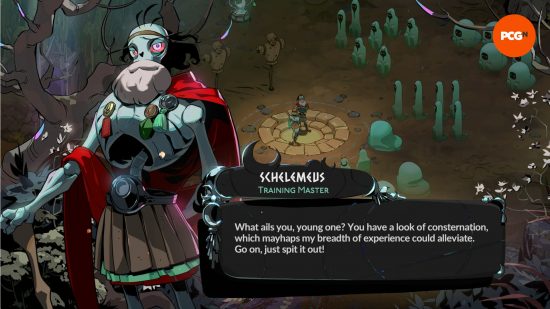
Schelemeus, previously known as Skelly, reprises his role as your combat trainer in Hades 2, found in the Crossroads. Little is known about Schelemeus’ true backstory, and with Odysseus’ appearance in the sequel, many fans are hoping to uncover more. Odysseus did not appear in the first game, and there has long been a fan theory that Skelly was actually Odysseus. While some believe this has now been disproven, the pair share a similar stance, armor, and both wear a gold band around their head, alongside their matching black locks. Perhaps Hades 2 will finally shed light on Schelemeus’ identity and his connection to Odysseus.
Polyphemus
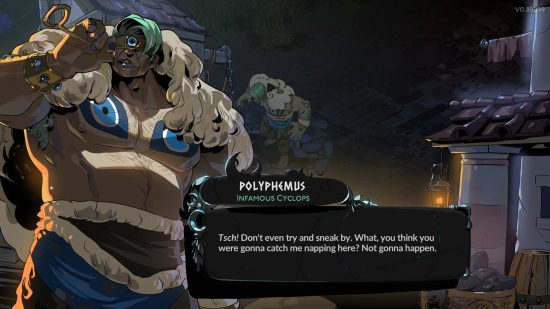
Polyphemus is a formidable, sightless Cyclops you’ll encounter during your expeditions to the surface. He resides with a flock of sheep, which he occasionally consumes by accident, believing in his blind fury that he has captured Melinoe.
After a lifetime of devouring people, he chose to become a shepherd, finding the lifestyle less exhausting. When you face him as a boss after leaving the City of Ephyra, he will likely welcome the nap you provide when you finally defeat him.
Scylla
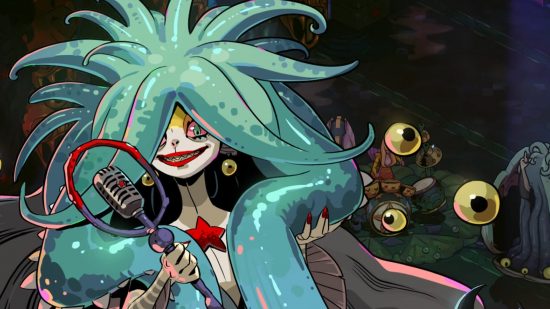
Cursed by a witch, destined to possess long tendrils of aqua blue hair and a ghoulish pale complexion, Scylla awaits players at the bottom of the ocean as the final boss of the Oceanus area during the descent. Unsurprisingly, she harbors a strong dislike for witches.
She roams the sea with two other daughters of the deep, who are surprisingly talented vocalists. If you’re struggling to overcome this tricky performer, consider consulting a guide for the Scylla and the Sirens boss fight.
Frinos
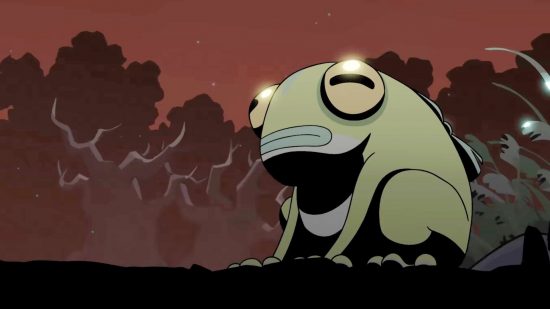
Frinos is the sole character on this list without a direct mythological counterpart; the word “frinos” simply means “toad” in Greek. This adorable little companion patiently awaits Melinoë whenever she fails her task and returns to her room. Here, you can interact with the creature, sharing your thoughts or simply enjoying a comforting nuzzle—an activity we highly recommend!
Icarus
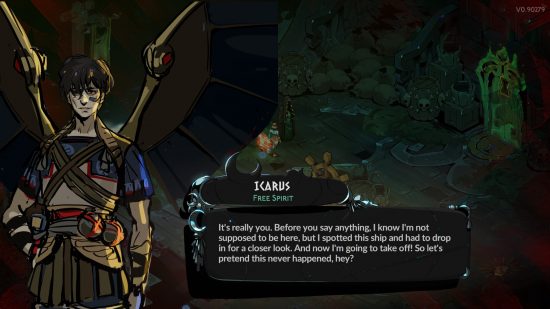
Icarus is a free-spirited character in Hades 2, whom you’ll encounter on your journeys to the surface. Voiced by Asa Butterfield (known from Sex Education and Ender’s Game), this surprise appearance will grant you powerful boons to aid your run. We anticipate uncovering more about Icarus and his role in the game as we venture further towards Olympus.
In Greek mythology, Icarus is famously known for perishing after flying too close to the sun with his waxed wings. He is also the son of Daedalus—a name familiar to Hades players through the powerful Daedalus Hammer Boon found in encounters.
Hecuba and Gale
In Greek mythology, Hecuba is the Queen of Troy, whose stories often involve interactions with various Greek gods and kings, including Apollo, Zeus, and Odysseus. She even bore a son with Apollo, Troilus, who was later killed by Achilles.
It appears that Hecuba’s interaction with Odysseus is referenced in Hades 2, as she appears as a Dobermann with whom Melinoë can interact in The Crossroads. In this specific myth, Hecuba was taken as a slave by Odysseus and reacted by barking and growling at the king. As a consequence, the gods transformed her into a dog, allowing her to escape—the form in which we find her in Hades 2.
Next to Hecuba, you’ll also find Gale, a small, brown polecat. In mythology, Gale also began as a human and had a particularly contentious history with Hecate. Due to the witch’s supposedly abnormal desires, Hecate transformed her into a polecat, a creature subsequently thought by the Greeks to have an affinity with magic.
Now that you’re familiar with the Hades 2 characters to keep an eye out for as you traverse the underworld, remember that RNG plays a role in which gods you’ll encounter. May fortune favor your journey! You might also be interested in exploring Hades 2 Arcana Cards, learning how to overcome the Hades 2 bosses, and discovering the best Hades 2 builds to enhance your gameplay.