
Sony’s Bravia Theatre System 6 presents itself as a comprehensive 5.1-channel home theatre package, including a soundbar, subwoofer, and rear speakers, all conveniently packed into a single box. Sony markets this as a premium, all-in-one solution designed to eliminate the complexities of combining individual audio components. In India, the system is priced at ₹49,990 and boasts an impressive 1,000W power output. Considering its specifications, features, and the included hardware, the Bravia Theatre System 6 enters a price bracket above basic soundbars but remains an attractive alternative to building a custom 5.1 system. The crucial question is: does it truly deliver on performance, ease of use, and immersive sound to justify its cost? Let’s delve into this review to find out.
Sony Bravia Theatre System 6: Design and Setup Considerations
- Soundbar – 907 x 64 x 90mm (2.6kg)
- Subwoofer – 275 x 388 x 388mm (11.6kg)
- Rear Speaker size – 106 x 216 x 98mm (0.89kg)
- Amp box size – 175 x 52 x 175mm (0.76kg)
Sony has designed the Bravia Theatre System 6 with a minimalist and unified aesthetic in mind. The package comprises a three-channel soundbar, a substantial subwoofer (which doubles as the system’s central hub), two rear surround speakers that connect via an amplifier to the subwoofer, a remote control, and all necessary cables for connection. All components feature a sleek black finish with metal grilles and discreet styling, ensuring they blend seamlessly into your home theatre environment rather than drawing undue attention.
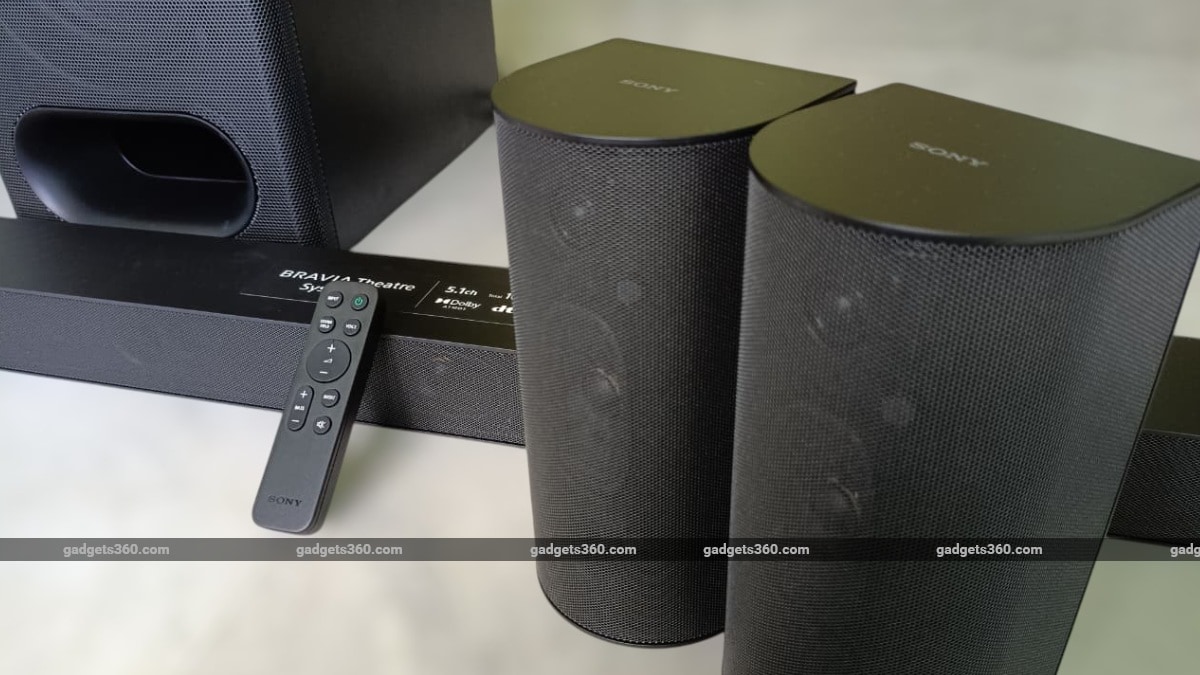
The rear speakers require power, though they don’t need audio cables to connect directly to the subwoofer.
A notable design aspect is that the subwoofer functions as the primary control unit. All your audio sources plug into the subwoofer, which then channels power and signals to the soundbar (via a fixed cable) and the wired amplifier for the surround speakers. This arrangement simplifies wiring between your video sources and the subwoofer, allowing the soundbar to primarily function as a speaker rather than a connection hub.
While the rear speakers are marketed as “wireless” in terms of audio signal to the subwoofer, they still require a small amplifier box, which itself needs a power source and must be located relatively close to the subwoofer. Overall, the design prioritizes functionality and subtlety over elaborate visuals. The key takeaway is the need for careful planning regarding speaker and power outlet placement to optimize the system’s potential.
The Bravia Theatre System 6 truly excels in moderately sized rooms, with an ideal viewing/listening distance of approximately seven to ten feet. It can also accommodate larger spaces, but in smaller rooms, the subwoofer’s impact can sometimes feel overwhelming. For the rear speakers, positioning them slightly above waist level is recommended. Even if direct placement behind you isn’t feasible due to power cable constraints, situating them further to the sides can still create a convincing immersive soundstage.
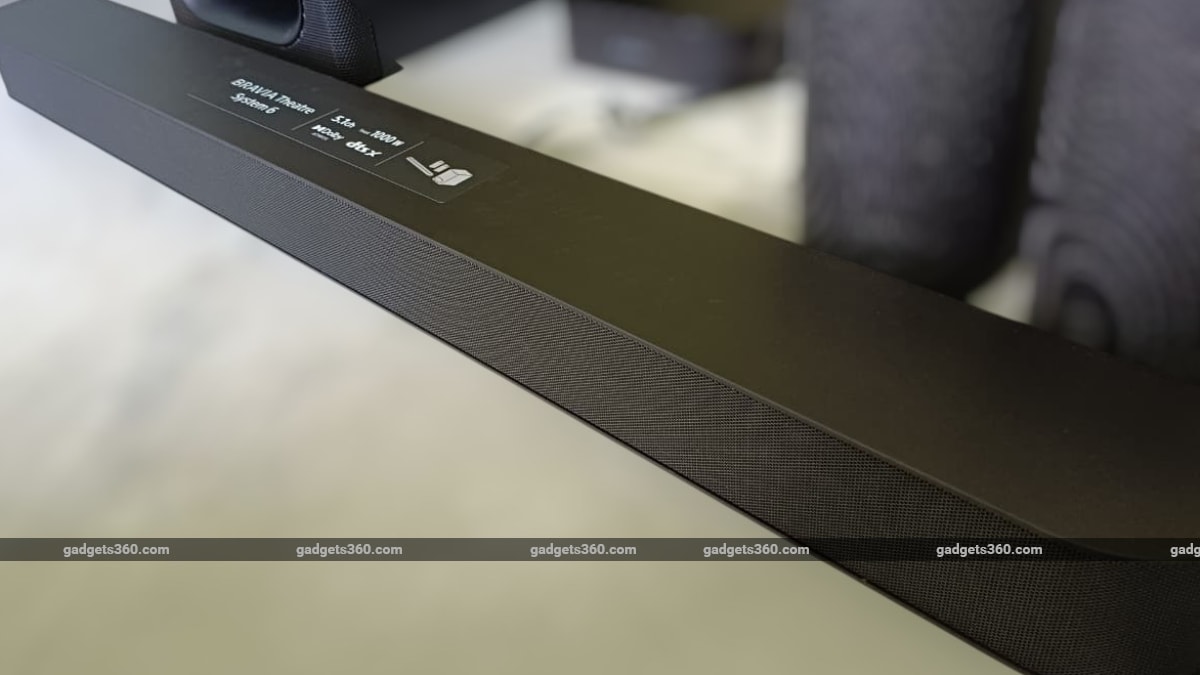
The soundbar of the Sony Bravia Theatre System 6 boasts a sleek profile.
Sony Bravia Theatre System 6: Specifications and Connectivity – Functional but Not Flawless
- Connectivity – Bluetooth 5.3 (SBC, AAC)
- Input/Output Terminals – Optical audio input, analogue audio input
- Audio Formats – Dolby Atmos and DTS:X
The Sony Bravia Theatre System 6 features a 5.1 channel configuration with ten speaker units, delivering an advertised 1,000W output. It supports Dolby Atmos and DTS:X, leveraging virtualisation and soundfield effects. Connectivity options include HDMI-ARC/eARC, digital optical, analogue input, and a USB port on the subwoofer, along with Bluetooth 5.3 for wireless audio streaming. Control is managed via the Bravia Connect app, although its more advanced integration primarily benefits owners of Sony Bravia TVs.
Available audio modes include soundfield processing for simulated spatial effects, a Multi-Stereo option for expansive room-filling sound, and Voice Zoom for enhanced dialogue clarity. While these features are beneficial, they also highlight the system’s reliance on digital enhancements rather than purely acoustic speaker placement. The soundbar itself is quite slender, and the subwoofer is reasonably sized for most living spaces, though not truly compact. Overall, it stands as a capable mid-range option, but those expecting authentic cinematic surround sound might find the virtualisation less convincing.
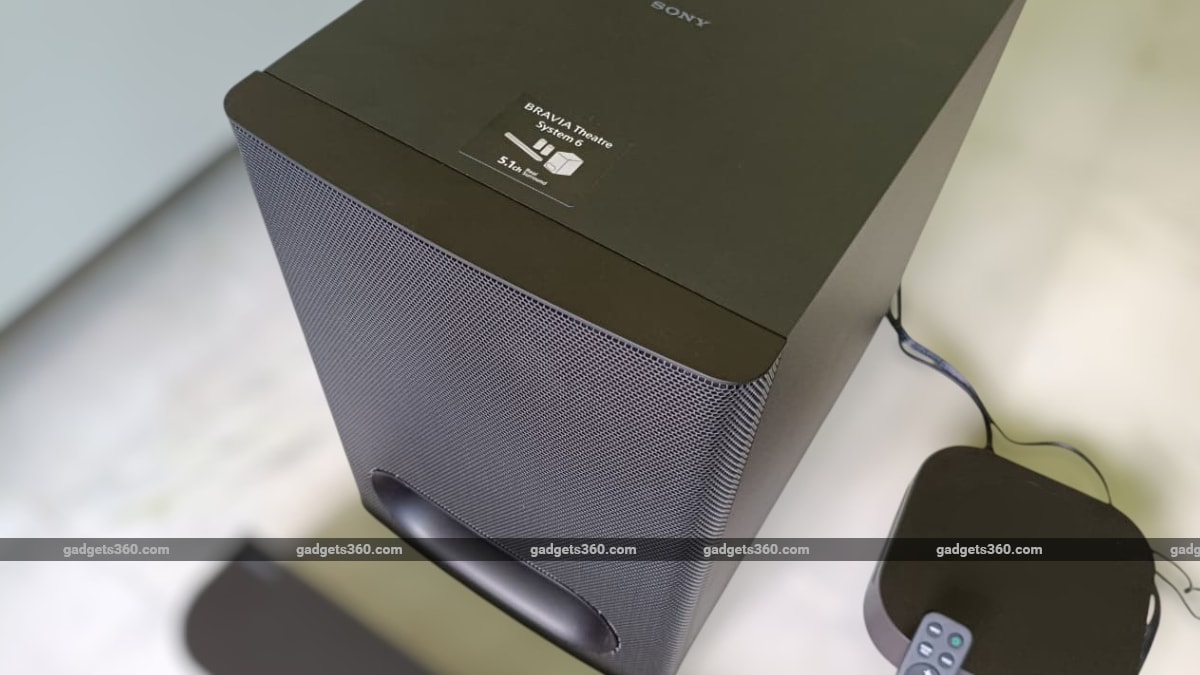
The subwoofer is quite large, taking up a considerable amount of floor space.
It’s important to note that while the Sony Bravia Theatre System 6 supports Dolby Atmos and DTS:X, it achieves this through virtualisation and soundfield processing, not dedicated up-firing height channels. This means you experience simulated 3D audio rather than discrete overhead effects. The inclusion of Soundfield or virtual surround modes aims to disperse sound more widely than a standard 5.1 setup would naturally achieve. Meanwhile, the subwoofer is powerful and significantly influences the system’s overall sound profile, with its placement, volume, and tuning playing a critical role.
Setting up the Sony Bravia Theatre System 6 is generally straightforward but requires some forethought. I placed the soundbar directly below the television, with the subwoofer nearby and clear of obstructions for optimal bass performance. The rear speakers were positioned to the sides, slightly above ear level and well-spaced, which enhanced the depth and natural feel of the surround effects.
Next, I connected the soundbar’s fixed cable to the subwoofer and linked my audio source (a Sony Bravia 2 TV unit) via HDMI. The two surround speakers were then connected to the wireless amplifier, which, once powered on, automatically paired with the subwoofer. Finally, I used the Bravia Connect app or the remote control to select desired sound modes, adjust subwoofer levels, and activate voice or center channel enhancements.
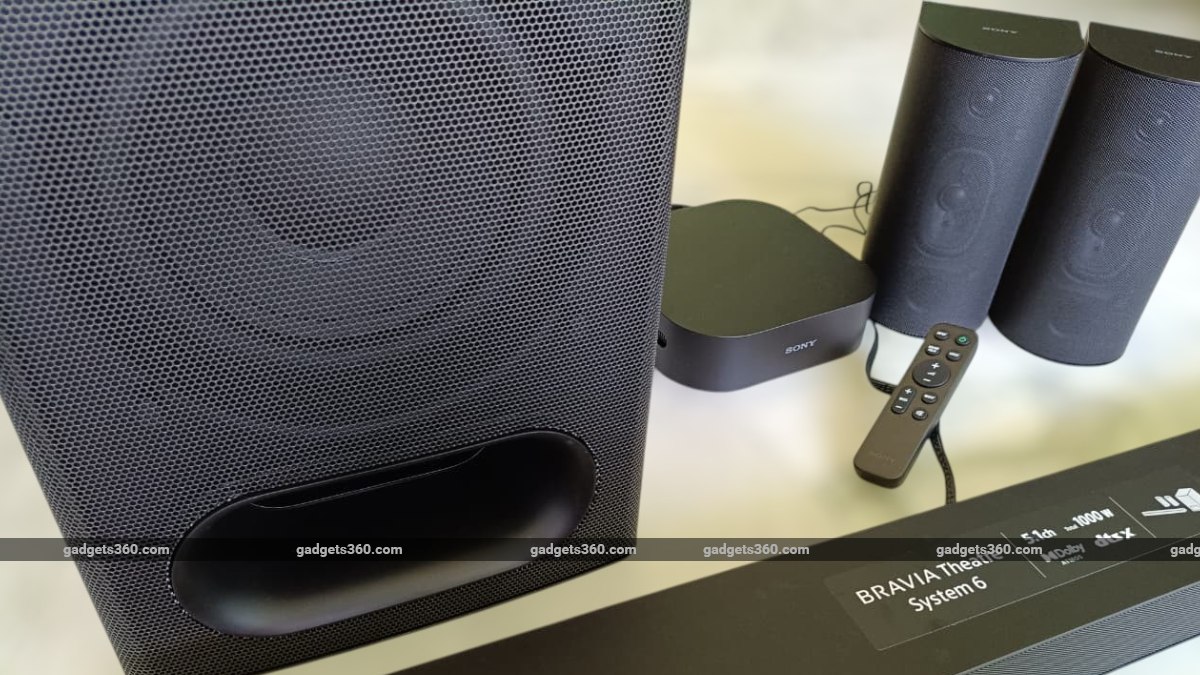
During intense action sequences, the subwoofer can sometimes overwhelm the audio mix.
Sony claims that the Bravia Theatre System 6 can be set up in minutes. With the subwoofer acting as the central hub, you avoid having to wire every source to multiple devices, which simplifies cable management. However, since the rear speakers still need their own power supply and a local cable connection to the amplifier, you’ll need to ensure power outlets are conveniently located nearby.
One minor inconvenience is the absence of Wi-Fi or network connectivity, meaning any firmware updates must be performed offline via USB or similar methods. Some users might also find the lack of Wi-Fi and popular streaming features like AirPlay or Chromecast to be a drawback. Without meticulous cable organization, the setup can appear somewhat untidy and visually imposing. That said, once all connections are made, the daily user experience is quite seamless.
Sony Bravia Theatre System 6: Performance – Bringing Theatre Home
- Total Power Output – 1,000W
- Power Consumption – 60W (Subwoofer); 30W (Amp)
- Amplifier Channels – 5.1
The Bravia Theatre System 6 truly excels when used for movies, streaming series, and live sports that feature multi-channel audio, though it’s not without its limitations. The dedicated center channel ensures dialogue remains consistently clear and easy to follow, while the harmonious interaction between the subwoofer and soundbar prevents voices from being lost amidst loud effects or music. This effective balance enhances the viewing experience, eliminating the constant need to adjust volume levels.
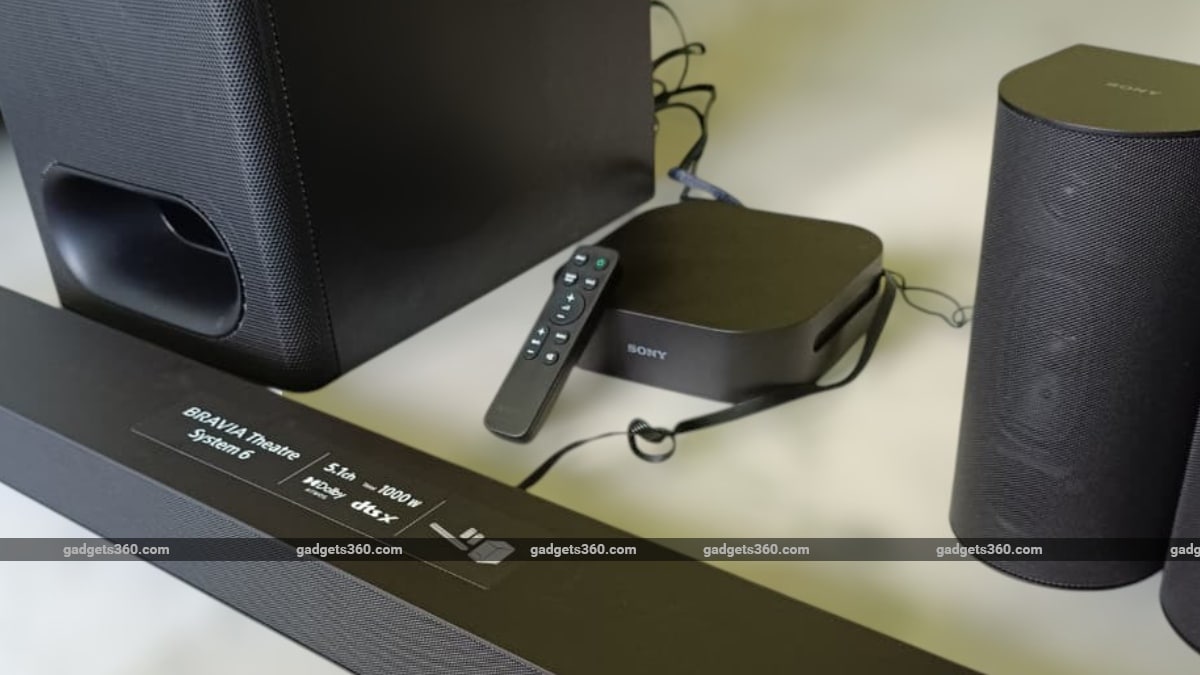
The amplifier box requires power and must be placed relatively close to the subwoofer.
The rear speakers significantly enhance the depth of ambient sounds and surround effects, contributing to a more immersive atmosphere. In action sequences, live sporting events, or nature documentaries, this spatial awareness can be quite convincing, even if it occasionally lacks a truly natural feel.
The bass delivery is robust, imbuing explosions, musical scores, and cinematic effects with a dramatic and powerful presence. While it undeniably adds excitement, the bass doesn’t always maintain optimal sharpness. At times, it can sound loose or boomy rather than tight and controlled, which might detract from the overall audio balance. For height effects, the system relies solely on virtual soundfield processing for Atmos and DTS:X. While this technology creates a sense of sounds originating from above, it never quite achieves the accuracy or realism of dedicated overhead speakers.
Despite its slender appearance, the Sony Bravia Theatre System 6 soundbar is expertly tuned to deliver a surprisingly full sound. The center channel provides vocal power and clarity, ensuring dialogue is always easily intelligible. The soundbar adeptly handles higher frequencies, while the subwoofer firmly anchors the lower end with considerable force. For everyday use, such as watching TV shows, dramas, or dialogue-heavy films, the system performs admirably. Voices are crisp, background sounds are present without being distracting, and there’s seldom a need to fiddle with treble or bass settings.
However, when the action intensifies or the soundtrack becomes particularly bass-heavy, the system’s weaknesses become apparent. The subwoofer can sometimes overwhelm the rest of the audio mix, and the soundbar may struggle to maintain pristine clarity with music and effects. These instances serve as a reminder that this isn’t a top-tier setup. Nevertheless, for its price point, it offers strong performance in most scenarios and manages to feel more immersive than many comparable systems.
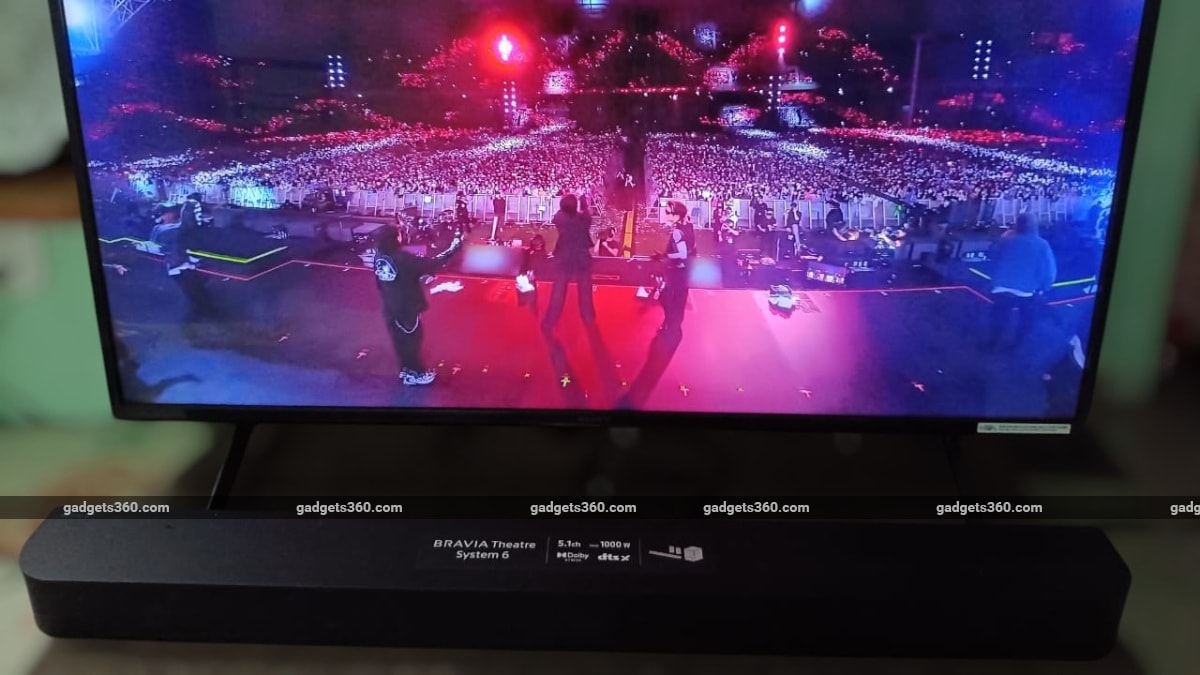
This system offers a clean, powerful, and easy-to-use surround sound experience.
While the Bravia Theatre System 6 excels with movies, it exhibits clear limitations when it comes to music playback. Stereo audio streamed via Bluetooth or analogue connections is adequate, but the system simply cannot replicate the depth, intricate layering, or precise tonal balance of a dedicated hi-fi audio setup. Bass-heavy genres like EDM, electronic music, or hip-hop can push the subwoofer too hard, occasionally resulting in a somewhat bloated or exaggerated low-end sound.
Without specific height channels or upward-firing speakers, spatial effects in music feel flat and lack the immersive quality experienced with films. For casual listening of pop, acoustic, or vocal-centric tracks, the system performs enjoyably well. However, discerning audiophiles seeking precise, high-fidelity sound will quickly identify its shortcomings. Ultimately, the Bravia Theatre System 6 is unequivocally engineered for cinematic experiences first and musical enjoyment second.
Sony Bravia Theatre System 6: The Final Verdict
The Sony Bravia Theatre System 6 emerges as a compelling and complete home theatre solution for those seeking immersive 5.1 sound without the complexity of assembling numerous separate components. In the competitive landscape of “all-in-one” sound systems, it strikes an impressive balance between performance, user convenience, and the polished quality associated with the Sony brand.
If your primary desire is an impactful cinematic sound for movies, TV shows, and immersive content, and you’re comfortable with some cabling and a lack of advanced smart or streaming features, the Bravia Theatre System 6, priced at ₹49,990, offers superior value compared to many rivals in its class. Conversely, if you are a dedicated music enthusiast demanding ultra-high-fidelity audio, or if seamless streaming with robust network integration is a top priority, you might find its compromises somewhat restrictive.
Overall, for many home theatre enthusiasts desiring a clean, powerful, and straightforward plug-and-play surround system, this is undeniably one of the stronger options available in 2025. While it’s not without its flaws, when it hits its stride, it genuinely possesses the ability to transform your living room into a captivating private cinema.