
As evening descends and monsoon clouds drift over Kolkata, a captivating transformation unfolds across the city. Its iconic British-era buildings are gently bathed in the warm, inviting glow of yellow LED lights. Structures that once lay dormant, veiled by years of soot, rain, and age-old plaster, now awaken. The intricate clock tower of Magen David Synagogue, the majestic domes and minarets of Burhani Masjid, and the graceful ‘Angel of Victory’ atop Victoria Memorial – among many others – begin to tell their stories anew, their narratives illuminated by a soft, golden luminescence.
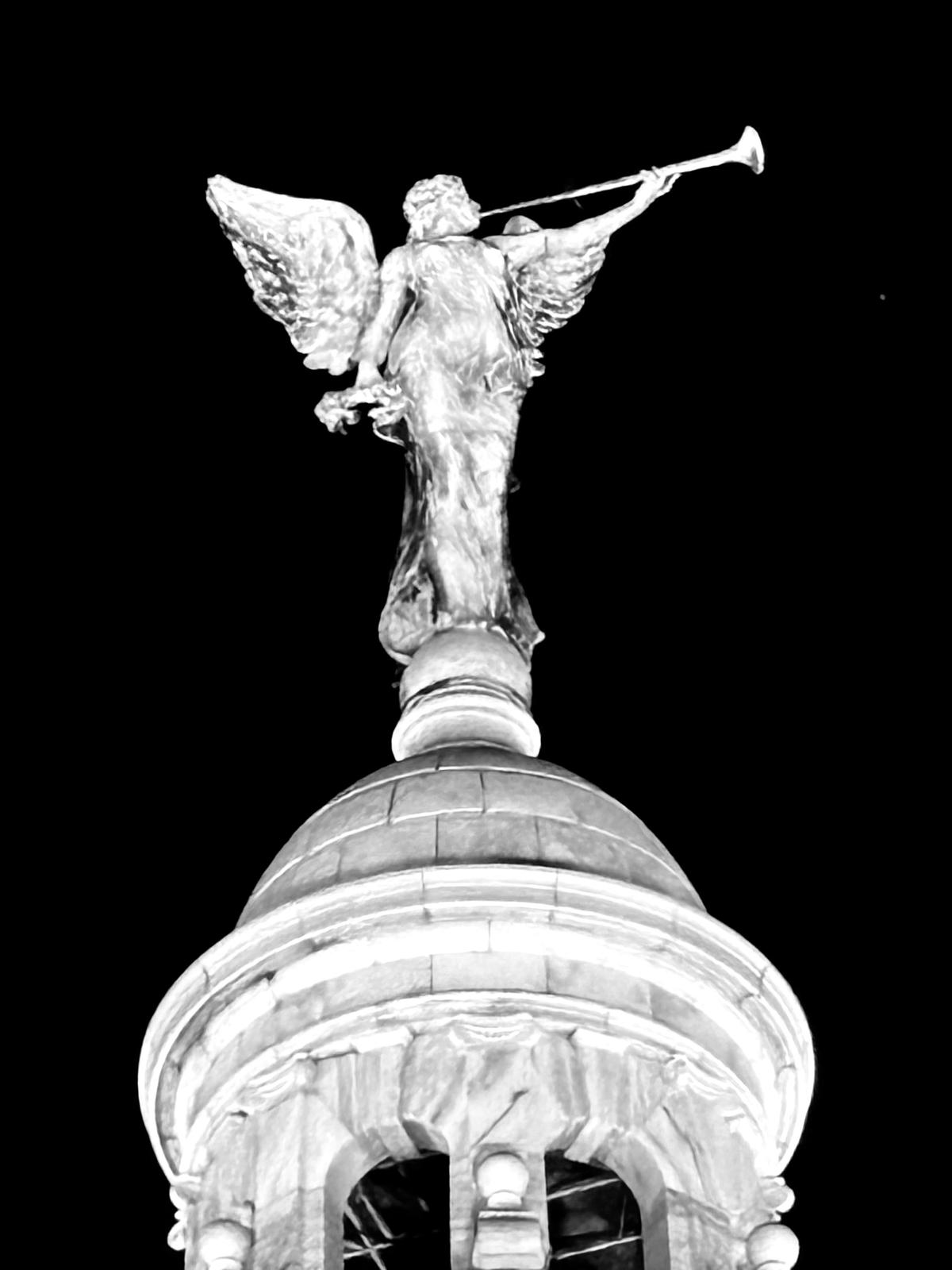
The Angel of Victory is a 4.9-meter tall, 3.5-tonne bronze statue at the Victoria Memorial Hall in Kolkata | Photo Credit: Special arrangement
This brilliant idea to drape the city’s historic British-era facades in light struck heritage conservationist Mudar Patherya quite by chance. One day, while driving along Acharya Prafulla Chandra Road, he noticed the Maniktala Market dome, looking forlorn and scarred by a large advertisement. Mudar arranged for the building to be freshly painted, but its renewed beauty vanished with the night. Illumination, he realized, was the perfect solution.
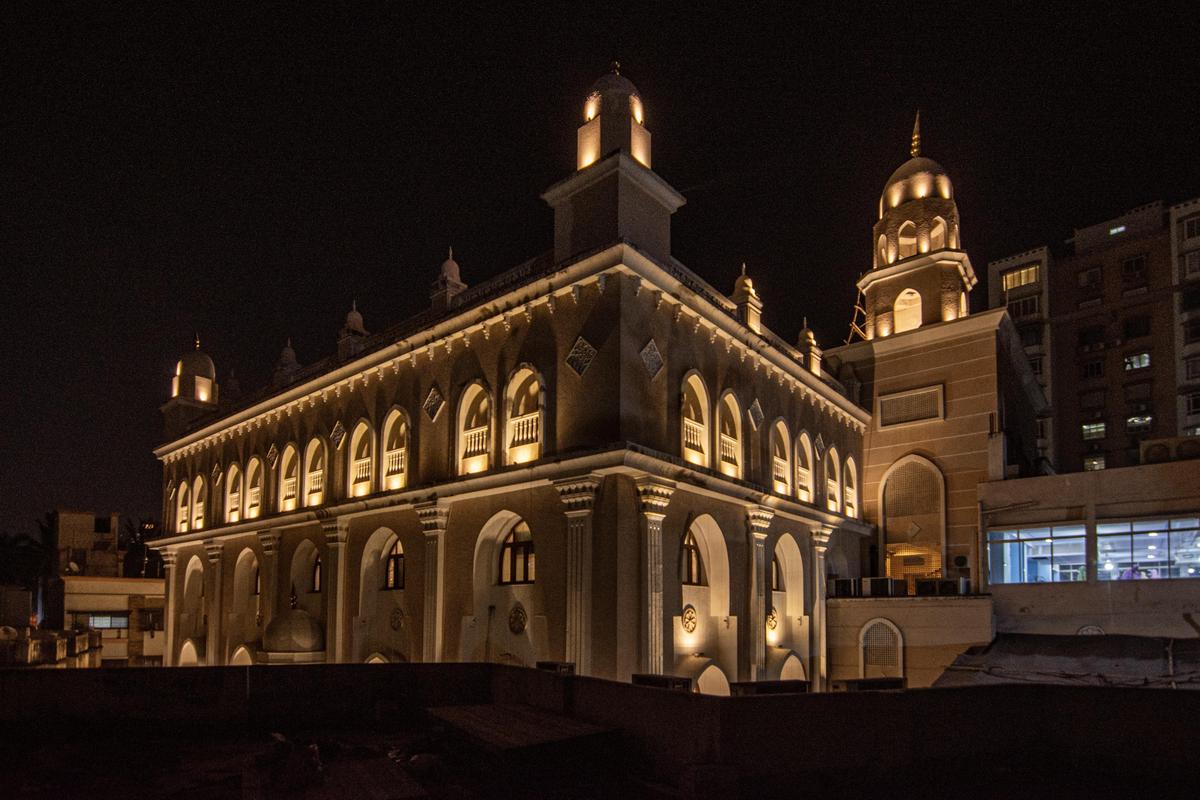
Burhani Masjid | Photo Credit: Special arrangement
That initial lighting revealed an unexpected charm, igniting a grander vision: to bring more of Kolkata’s forgotten landmarks into the spotlight. “I collected funds from friends and industrialists to finance my illumination project,” Mudar recounts. “We needed a name that resonated with both the city and our mission, so ‘Kolkata Restorers’ was born. And that’s how this movement began. Kolkata Restorers isn’t a formal organization; it’s simply a WhatsApp group. No president, no chairman, no official roles. Just a broadcast thread. We’ve kept it remarkably simple, functional, effective, and relevant.”
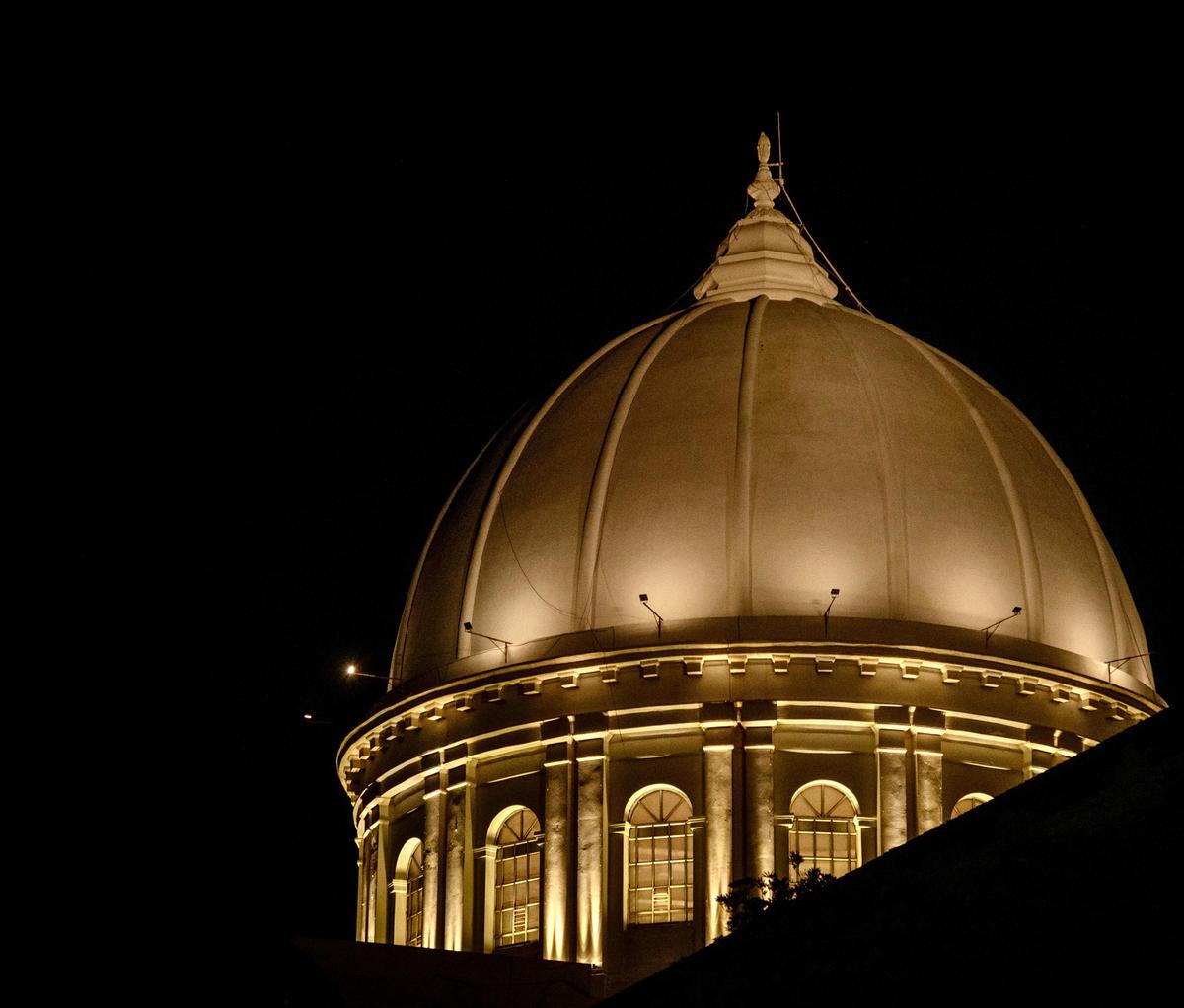
The General Post Office, Kolkata | Photo Credit: Special arrangement
In just under two years, Kolkata Restorers has brilliantly illuminated 95 buildings. This impressive list includes private homes, the General Post Office, Raj Bhavan, Queen’s Mansion, the Central Methodist Episcopal Church, New Market’s Clock Tower, the Geological Survey of India, Standard Life Assurance Building, Burhani Masjid, Ishwar Kalachand Jiu Temple, the Returned Letter Office, and many more.
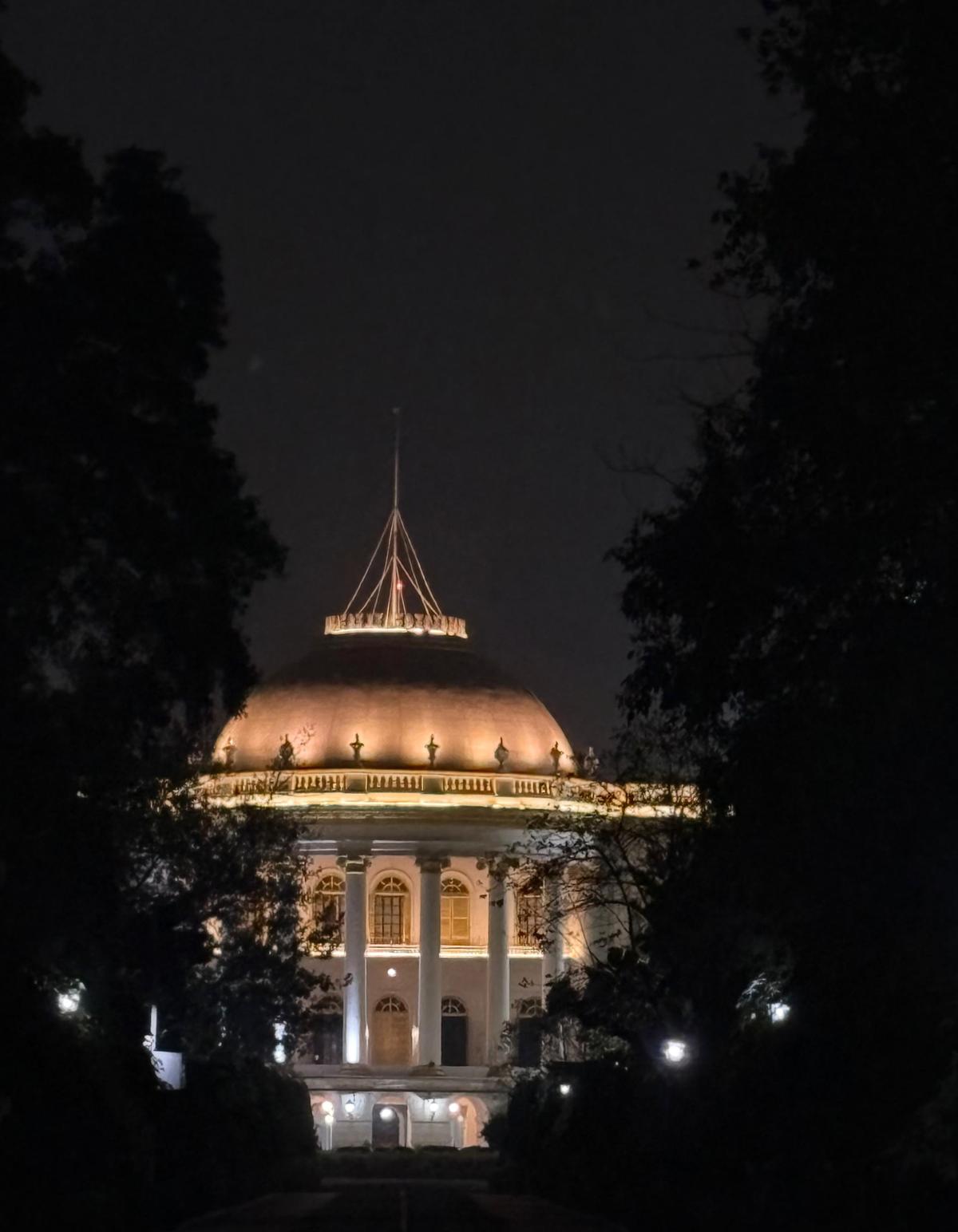
Raj Bhavan is the official residence of the Governor of West Bengal | Photo Credit: Special arrangement
Suyash Narsaria, founder of Optiluxx Electricals LLP and the light designer for the project, explains their philosophy: “The structures themselves guide us. We never impose light; instead, we aim to accentuate the grandeur an architect envisioned a century ago. When the illumination feels so natural that it seems the building has always radiated light, we know we’ve succeeded. Our goal is to honor the heritage, not overshadow it.”
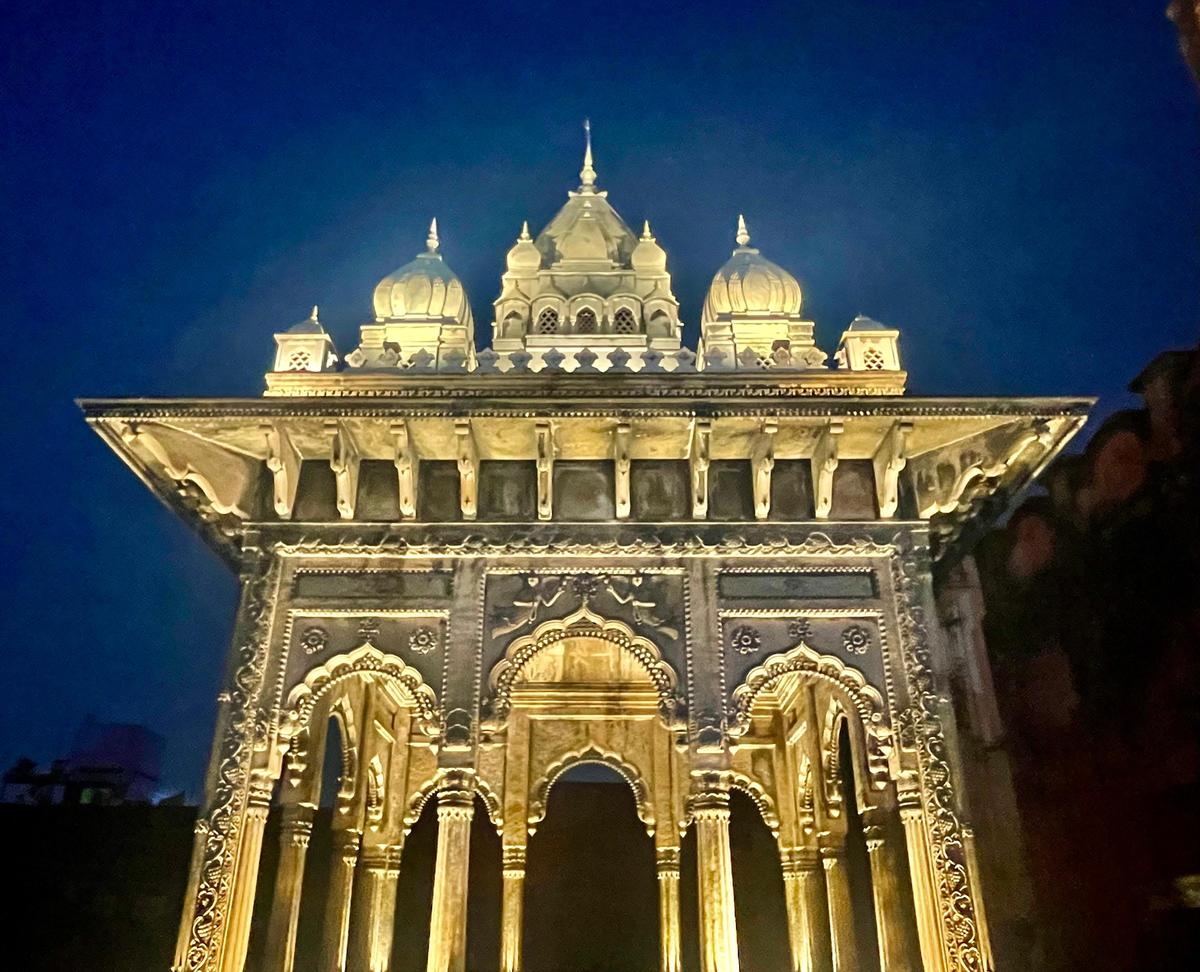
Kalachand Temple | Photo Credit: Special arrangement
Cost-effective LED technology has proven to be an invaluable asset for the lighting team. “With smart controls, timers, and dimming features, we ensure the buildings look spectacular while consuming minimal power,” Suyash notes. Elaborating on color choices, he adds, “For heritage structures, we favor warmer tones. They enhance the rich textures of stone and brick, imbuing the building with a timeless glow. Cooler tones are used sparingly, typically to create striking contrasts or add visual depth.”
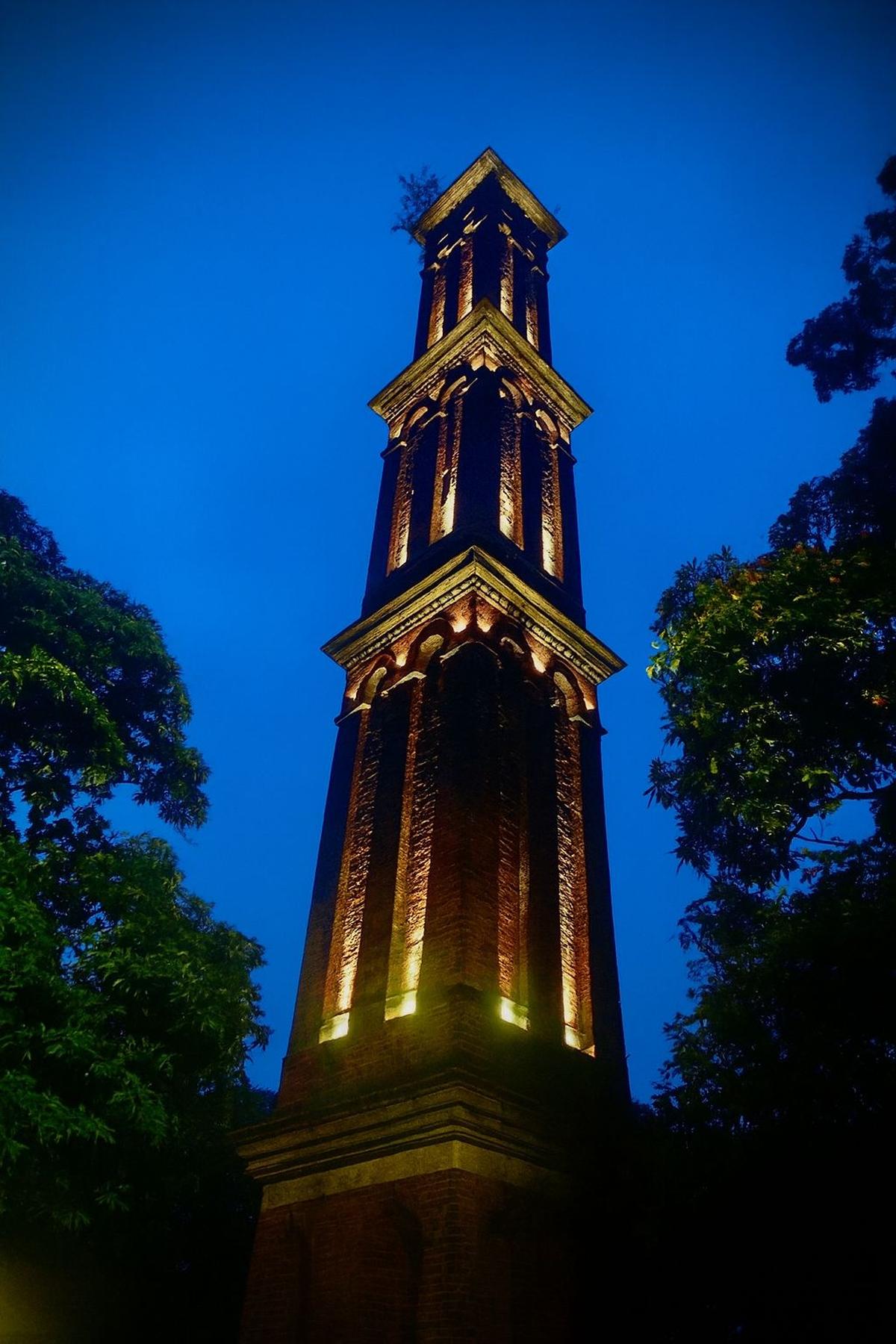
Palmars Bridge Pumping Station Office | Photo Credit: Special arrangement
Suyash highlights that their biggest hurdle was ensuring the lighting left no permanent traces. “We employ non-invasive mounting techniques, avoiding drilling whenever possible, and collaborate closely with conservation specialists. It’s akin to restoring a priceless painting – you illuminate it without ever disturbing the canvas itself,” he explains.
Among all the structures, Suyash holds a special fondness for illuminating the majestic angel atop the Victoria Memorial. “However, the building that truly astonished me was the Office of the Director General of Audit near Eden Gardens. Now, as you pass by it at night, it feels as if the entire street is bathed in its light,” the designer fondly recalls.
A Community’s Generosity
Mudar describes Kolkata Restorers as a dynamic, open, and ever-growing community. He clarifies, “If you consider the team, my colleague who handles the accounts is also part of it. He’s the backbone, and I’m the public face. Then there are our nearly 250 donors.”
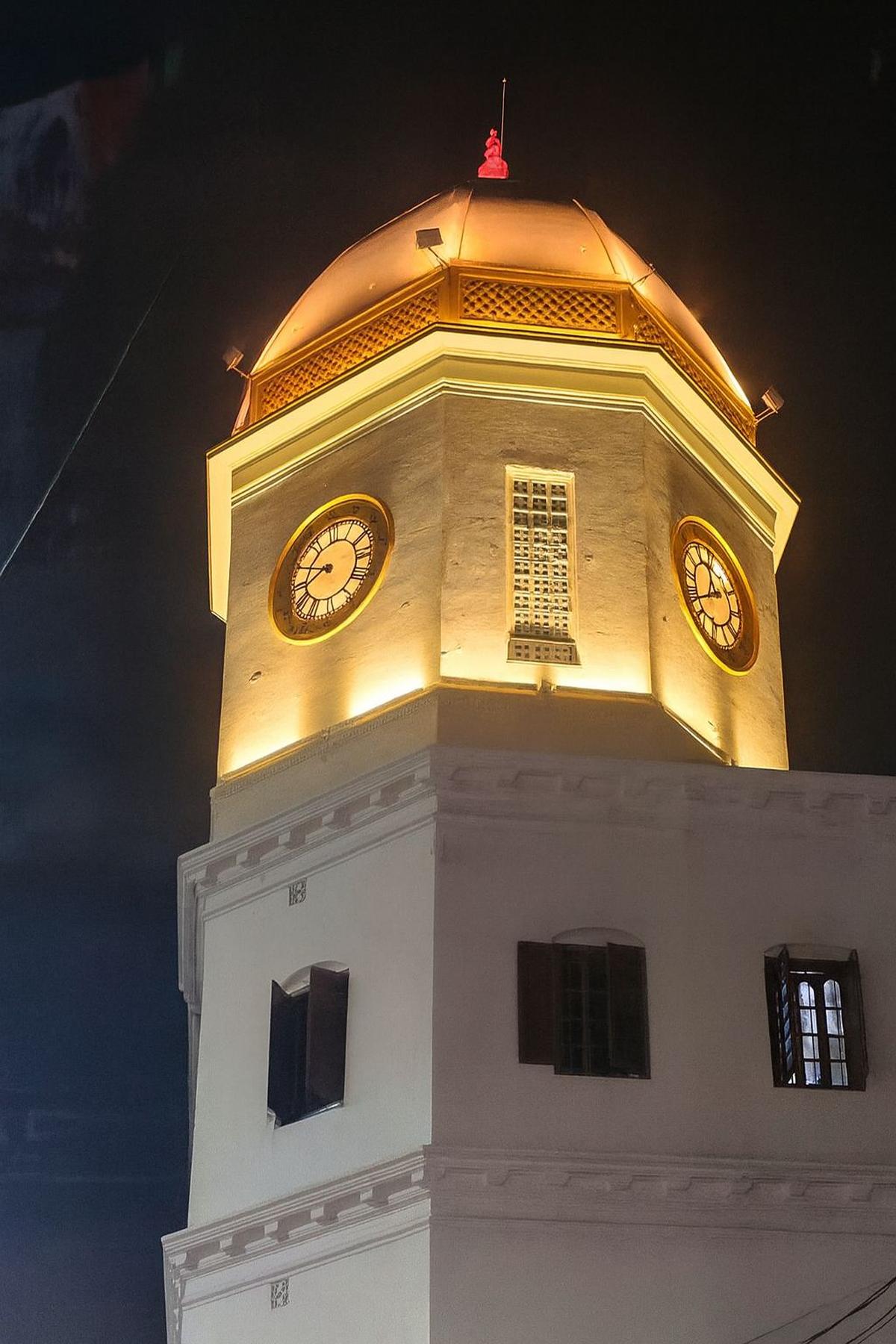
The Maniktala Market Clock Tower, officially known as Maniktala Ghori Bari | Photo Credit: Special arrangement
Discussing the citizen crowdfunding aspect, he elaborates, “I collect contributions ranging from ₹1,000 to ₹40 lakh. So, anyone who takes pride in our city and is passionate about its restoration and revival is a potential contributor.”
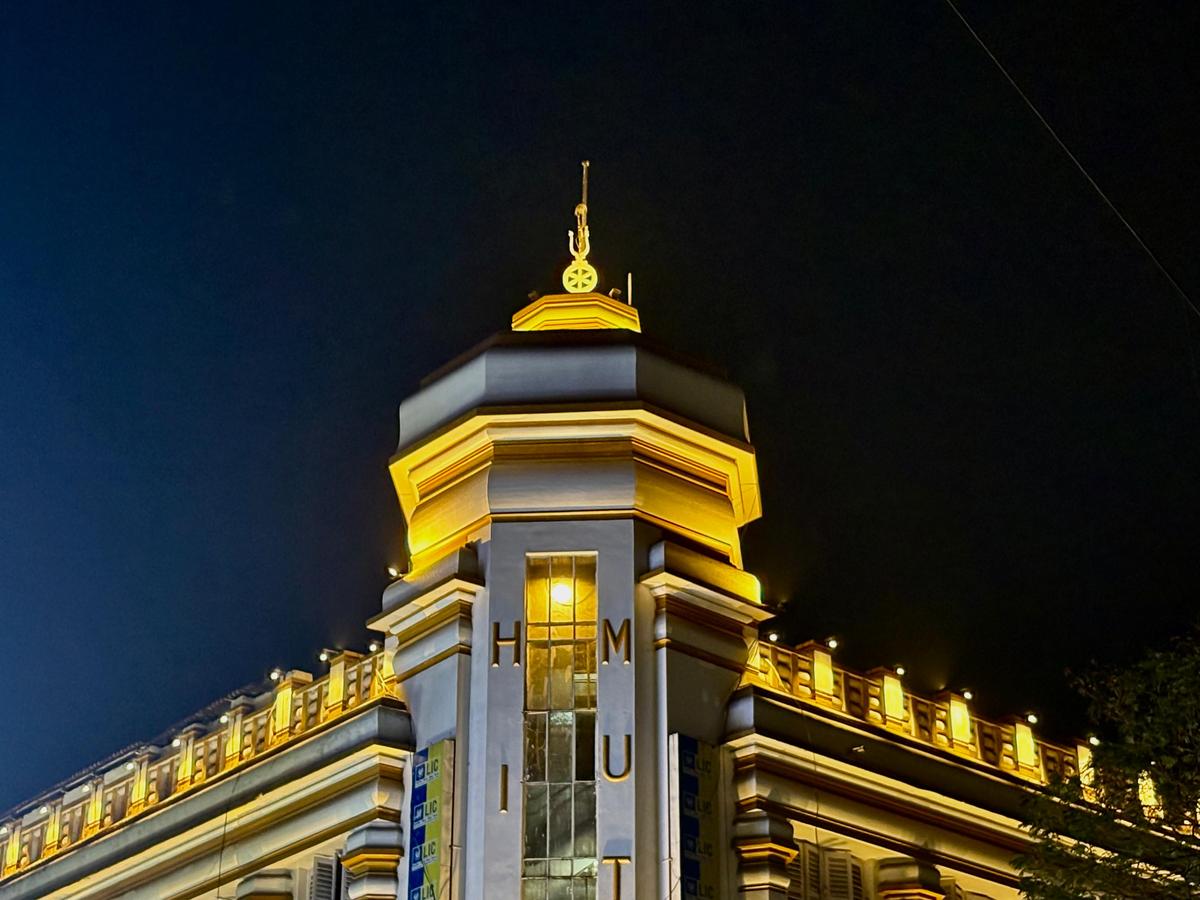
Hindu Mutual Building near Hindustan Building on Chittaranjan Avenue | Photo Credit: Special arrangement
Mudar assures that maintenance costs are kept low. He explains, “We approach each project backward. We consider the location and the building owner’s financial capacity, then design the lighting accordingly. I cover the cost of light replacements, while the building owner handles the electricity bill.” He adds, “Out of the 95 buildings we’ve illuminated, I’ve only encountered one significant refusal. When the owners faced financial difficulties, I stepped in to cover the electricity costs for that building.”
A Spark of Pride
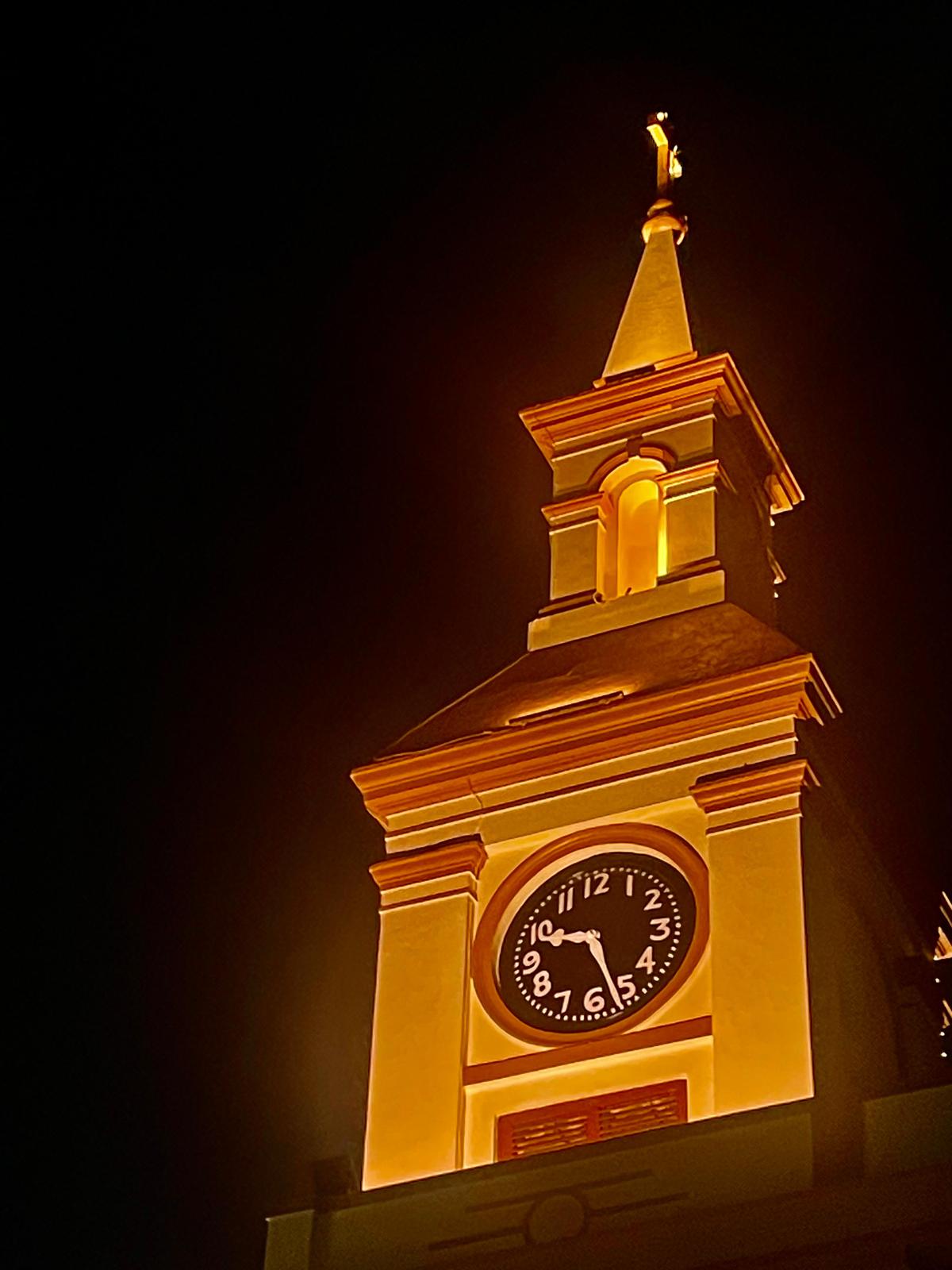
Church of Our Lady of Dolours | Photo Credit: Special arrangement
Mudar vividly recalls the initial reactions from those closest to the project. “The building owners are always the first to notice a renewed sense of pride,” he shares. For instance, after the barrister Pradeep Ghosh’s private residence on Harish Mukherjee Road was illuminated, neighbors frequently stopped him on the street, exclaiming, “Ki korecho, Pradeep? Khub e bhalo lagche (What have you done, Pradeep? It looks wonderful).”
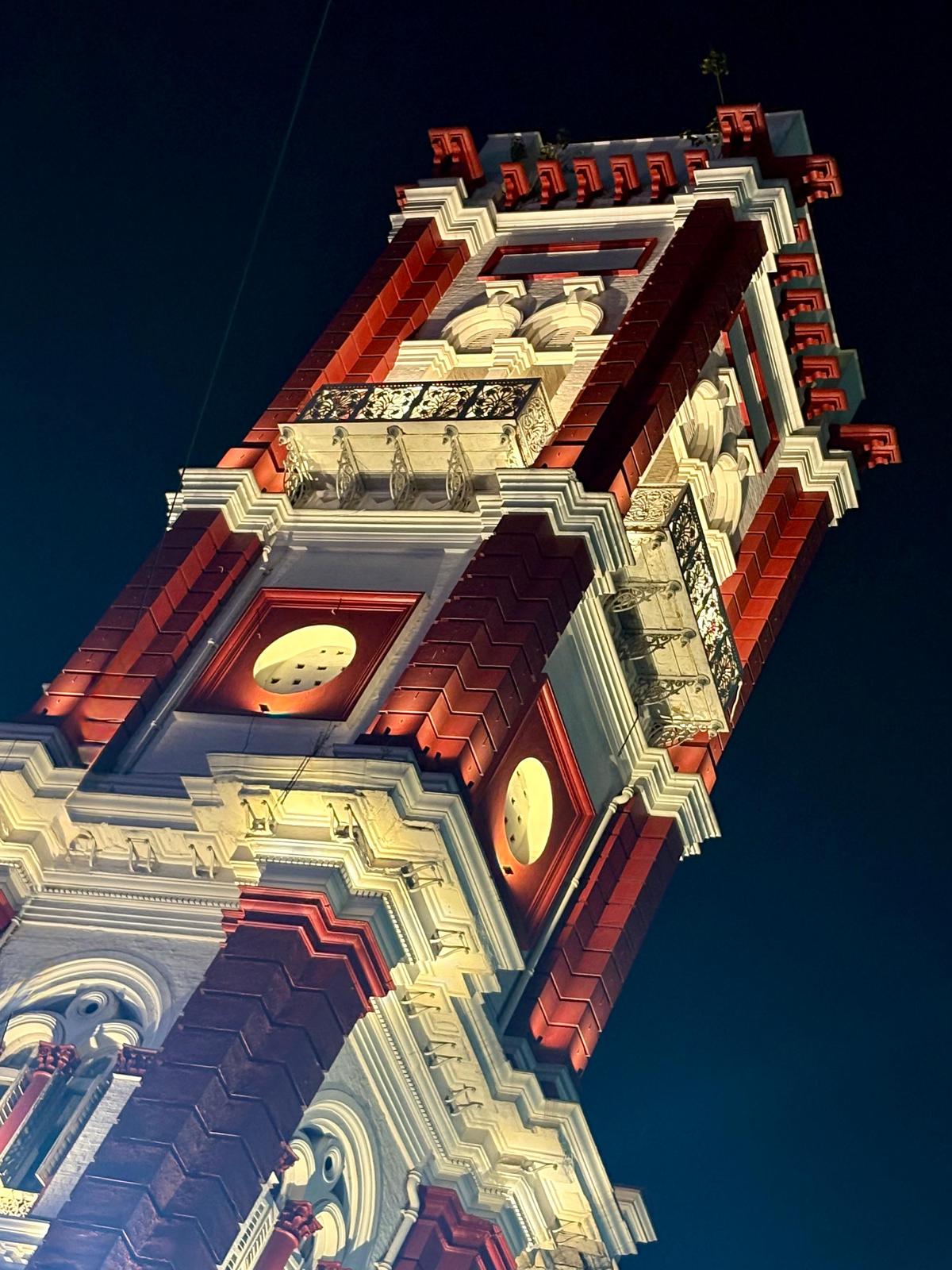
The Returned Letter Office (RLO) in Kolkata, also known as the Dead Letter Office | Photo Credit: Special arrangement
The project has also sparked the rise of night tours. Sujoy Sen, who leads the tour company Travel Together Everywhere, now organizes special night excursions that guide visitors through the beautifully illuminated buildings. Mudar anticipates that in the coming months, even more such tours will be featured every other Saturday.
A Bright Future Ahead
Mudar shares his vision for the future: “Some event organizers are considering hosting neighborhood festivals centered around my illuminated structures. We need to go beyond just lighting; otherwise, these places will remain merely illuminated buildings. We should combine illumination with performances, or even introduce night cuisine events.”
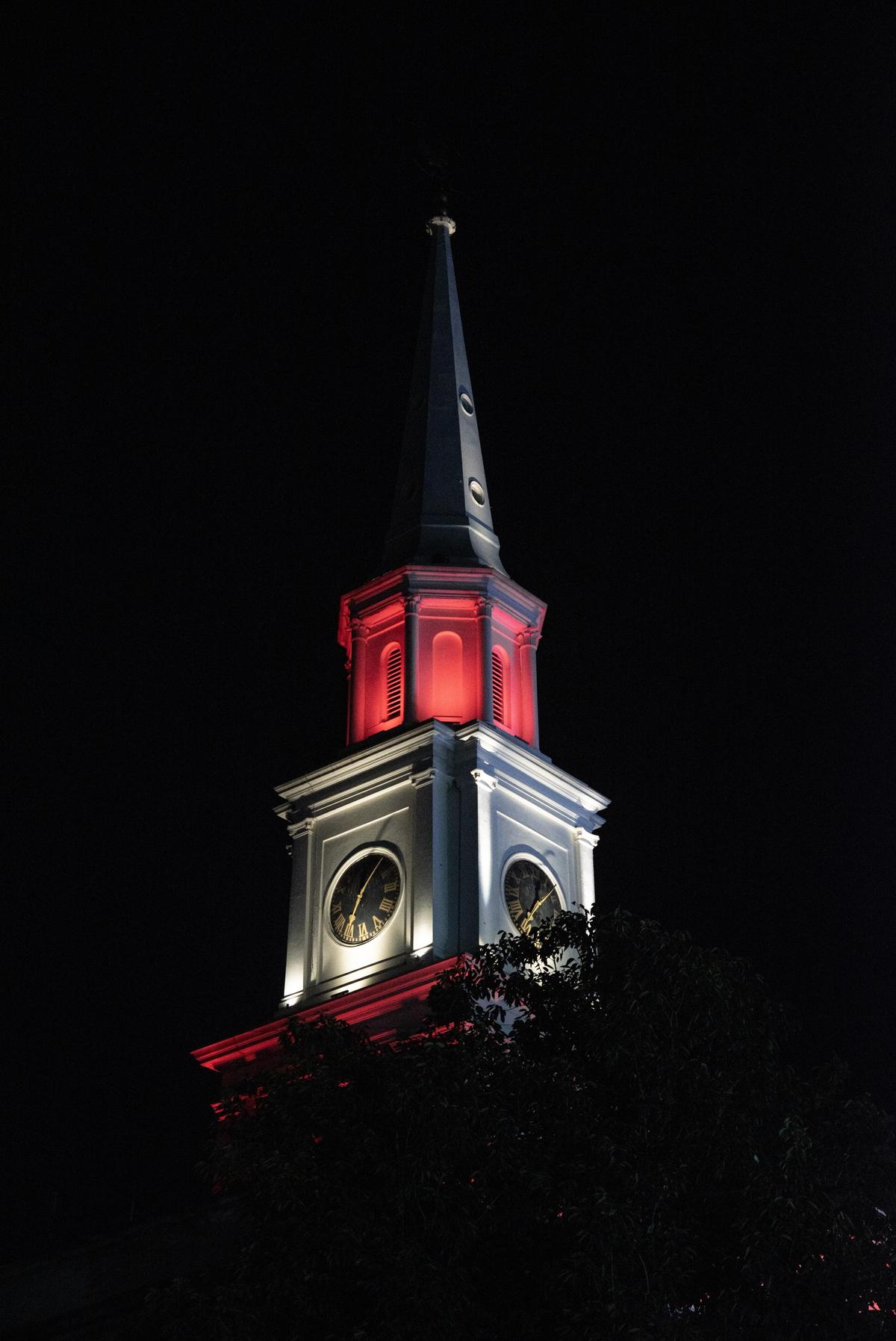
St. Paul’s Cathedral, Kolkata | Photo Credit: Special arrangement
His wish list is ambitious. The next building he hopes to light up is the iconic Writers’ Building. “Illuminating the Writers’ Building would be a landmark achievement. I also have plans to light up the Indian Museum and Howrah Station, though the feasibility for these grand structures still needs to be thoroughly assessed,” explains Mudar, who ultimately envisions illuminating a total of 200 structures.
As the city streets quieten, the LED lights diligently stand guard through the night. What the day’s smog and hurried pace conceal, the night’s gentle wattage reveals. Look closely, and you’ll feel the ancient soul of Kolkata softly treading through the illuminated darkness.