The vibrant sounds of rush hour in Zhuhai, a coastal city in southern China, have been drowned out by the relentless force of Typhoon Ragasa. Fierce winds howl, and sheets of rain lash down, painting a picture of nature’s formidable power.
On Wednesday, as the typhoon made its approach, streets usually bustling with activity were eerily empty. Flying debris, from tree branches to what appeared to be metal fragments from buildings, swirled along the roads, a stark reminder of the storm’s intensity. Police vehicles patrolled with megaphones, urging residents to seek shelter indoors, but their warnings were often lost amidst the roaring gusts, which reached speeds of up to 100mph (160km/h).
Despite the powerful display of nature’s fury, most of Zhuhai’s nearly three million inhabitants heeded the warnings, bringing the city to an unprecedented standstill. The only exceptions were a few determined cyclists, perhaps compelled to brave the elements for essential reasons.
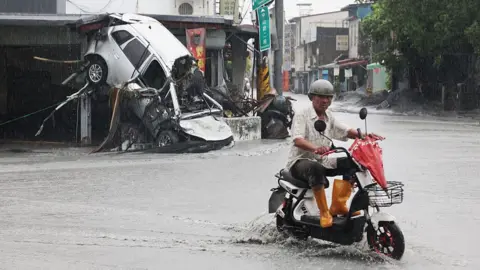
Typhoon Ragasa, described as the strongest storm globally this year, has already left a trail of devastation across the Philippines and Taiwan. Tragically, at least 15 lives were lost in Taiwan when a mountain lake overflowed due to the intense rainfall.
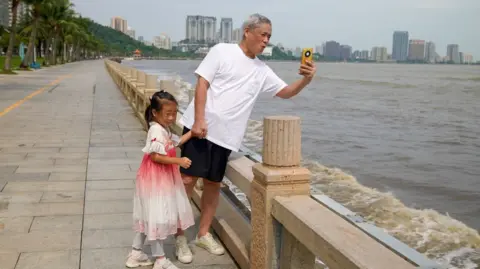
Even as the storm grazed Hong Kong, its impact was significant. Powerful winds and rain caused steep waves to crash ashore, inundating coastal areas and leaving over 60 people injured.
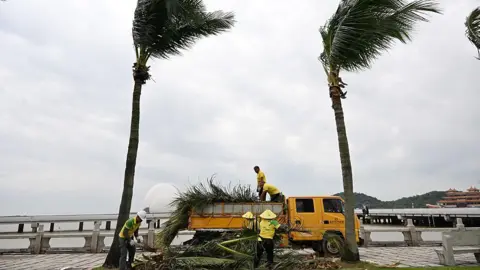
Ragasa made landfall in China at 17:00 local time (09:00 GMT). Even before its arrival, authorities in Guangdong province, a major Chinese manufacturing hub, had initiated a large-scale evacuation, relocating nearly two million people from low-lying areas. Red alerts were also issued for potential high tides and coastal surges.
As the eye of the storm moved closer, the relentless rain battered Zhuhai’s skyscrapers, and the wind, already formidable, intensified in powerful waves. Residents taking refuge in a newly opened hotel reported that even the windows of their rooms creaked under the immense pressure of the storm.
The hotel, like many other evacuation centres across the province, became a temporary home for families displaced by the storm. Amidst the uncertainty, children found moments of joy, dancing in the hallways, perhaps relieved to have an escape from school.
Zhuhai, a city known for its golf resorts and theme parks and situated on the Pearl River Delta, is no stranger to typhoons. However, the level of preparation this time was exceptional. Homeowners secured their windows with tape, and businesses received sandbags to fortify their doorways against the rising waters.
The local sentiment seemed to be one of resignation rather than panic. Officials had been proactive, with neighbourhood watch teams going door-to-door to ensure compliance with evacuation orders. Resistance was minimal, with only a few restaurant owners expressing reluctance to close early and lose business hours.
Authorities in China have honed their disaster preparedness, taking storm warnings very seriously to avoid criticism following past natural disasters where preparedness was questioned.
This year has been particularly challenging for China, marked by a series of extreme weather events, including heatwaves, droughts, floods, and crop failures. Typhoon Ragasa adds another formidable challenge to the nation’s resilience.
The alerts for heavy rain and potential landslides in mountainous regions continue, underscoring that the impact of Typhoon Ragasa is far from over.