
Within traditional Chettiar homes, the pettagam, a grand wooden chest or strongbox, serves as a repository for family treasures. More significantly, it safeguards generations of precious jewellery. These intricately designed chests often feature complex locking mechanisms, some so elaborate that they have remained untouched for years, waiting for a future generation to decipher their secrets.
However, a cheerful, bright yellow building adorned with green windows in Karaikudi now invites visitors on a captivating journey into the rich, multifaceted history of Chettinad jewellery. This is Pettagam, India’s inaugural private museum dedicated to the region’s distinctive ornaments, a vision brought to life by acclaimed jewellery designer Meenu Subbiah.
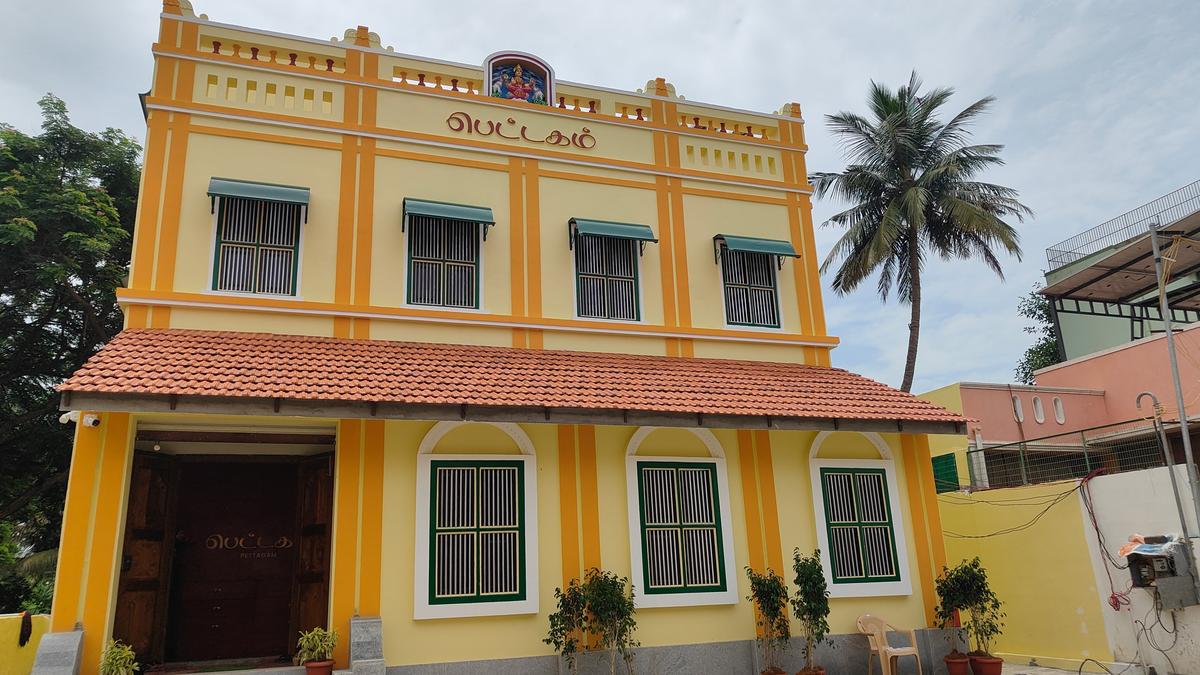
The exterior of Pettagam, India’s first private museum for Chettinad jewellery, located in Karaikudi.
As one of South India’s pioneering graduates from the Gemological Institute of America, Meenu has dedicated her career to the art of traditional Chettinad jewellery. Since co-founding Meenu Subbiah Jewellery with her father in 1993, she has continuously innovated, blending classic designs with contemporary aesthetics.
Meenu emphasizes that Chettinad, renowned for its grand mansions, distinctive cuisine, and exquisite textiles, also boasts a jewellery tradition rich in symbolism and history. “Every motif holds deep meaning, yet this captivating legacy has been largely undocumented,” she states. This realization spurred her nearly two-decade-long research into the Natukottai Nagarathar community’s profound connection with trade, precious gems, and jewellery. Her extensive travels took her across India, and to Singapore, Malaysia, and Sri Lanka, engaging with community elders, historians, and anyone who could offer valuable insights.
At Pettagam in Karaikudi, visitors encounter the fruits of Meenu’s comprehensive research. The museum’s first floor meticulously chronicles the history of the Nagarathar community, to which Meenu belongs. She highlights how the ancient Tamil epic, Silappadhikaram, records the Nagarathars’ prowess as traders of rubies, emeralds, sapphires, and pearls as far back as the 2nd Century.
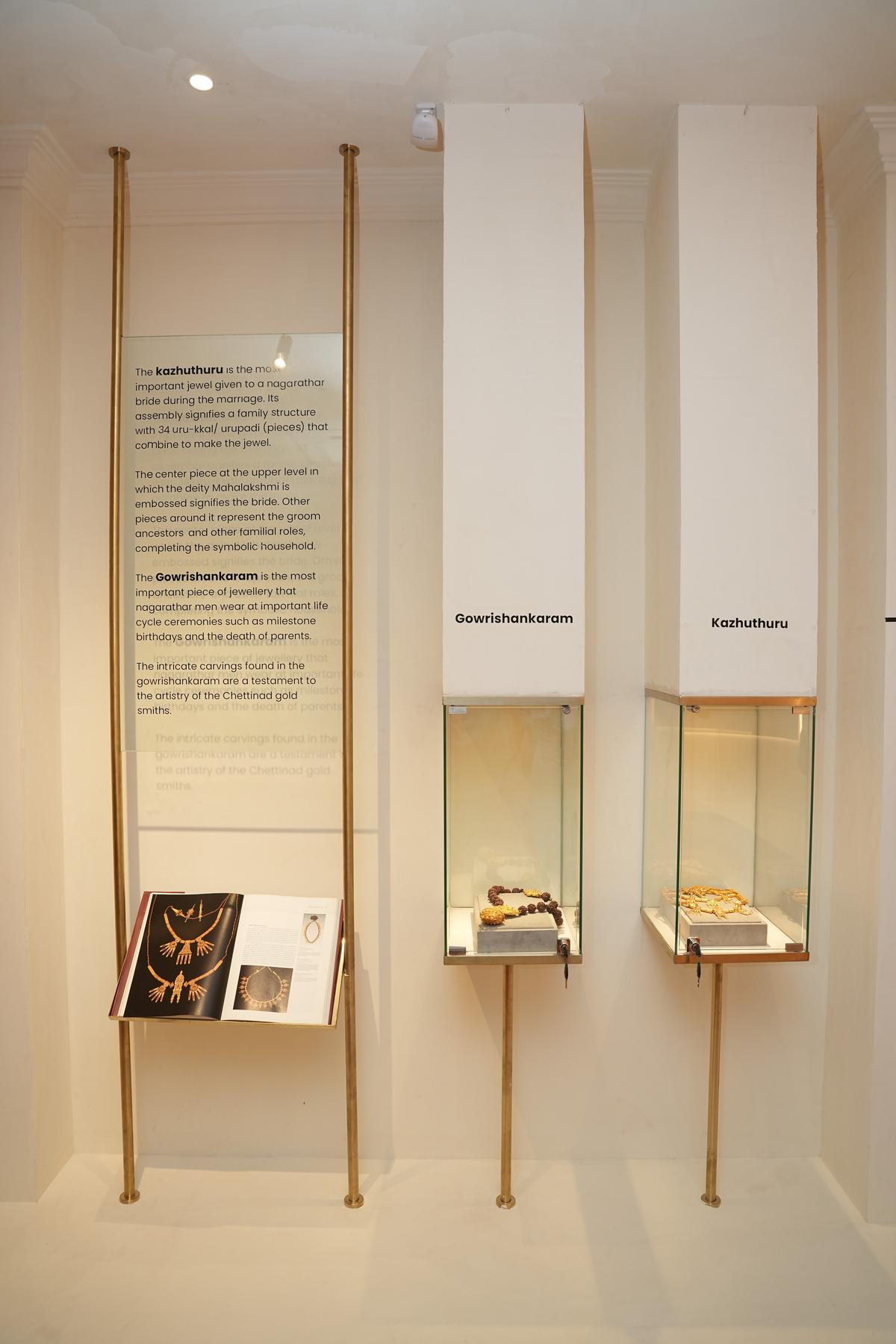
An intricate display of jewellery at Pettagam museum. Photo Credit: Special Arrangement
The museum’s exhibits feature unique community jewellery, including the kazhuthuru, traditionally gifted to Nagarathar brides, and the gowrishankaram, a significant adornment for men during ceremonies like weddings. These pieces exemplify the rare and declining ‘close-setting technique’. Used in less than 10% of traditional jewellery, this intricate method meticulously encases diamonds or other precious gems, securing them from the sides and back within the chosen metal.
Meenu laments the complexity and time-intensive nature of this art, noting, “Unfortunately, we have a dwindling number of artisans still practicing it. At Pettagam, we are passionately committed to reviving this dying craft.” She explains that pieces created with this technique are not only robust but also carry profound sentimental value, “They are truly pieces of the heart, impossible to replicate by machine.” A dedicated section at Pettagam thoughtfully displays the specialized tools involved in this intricate close-setting process.
Meenu also draws attention to the distinctive motifs frequently seen in Nagarathar jewellery, such as crabs, peacocks, bows, laces, and conches. She explains, “It’s believed that Nagarathar traders followed crab migration routes during their journeys, which is why the crab holds such prominence in many designs, including our sacred thirumangalyam (marriage ornament).” The presence of bows and laces, she adds, is thought to be an influence from their interactions with the English royal family.
The museum’s ground floor features an AV room presenting a film that illustrates the significant role of jewellery in Nagarathar culture. The first floor, meanwhile, is exclusively reserved for stunning jewellery showcases. Meenu shares her vision: “Beyond the heirloom pieces my family possesses, I plan to feature a rotating collection of exquisite traditional ornaments borrowed from various families across the region. Additionally, jewellery from my own brands will be displayed and available for purchase.”
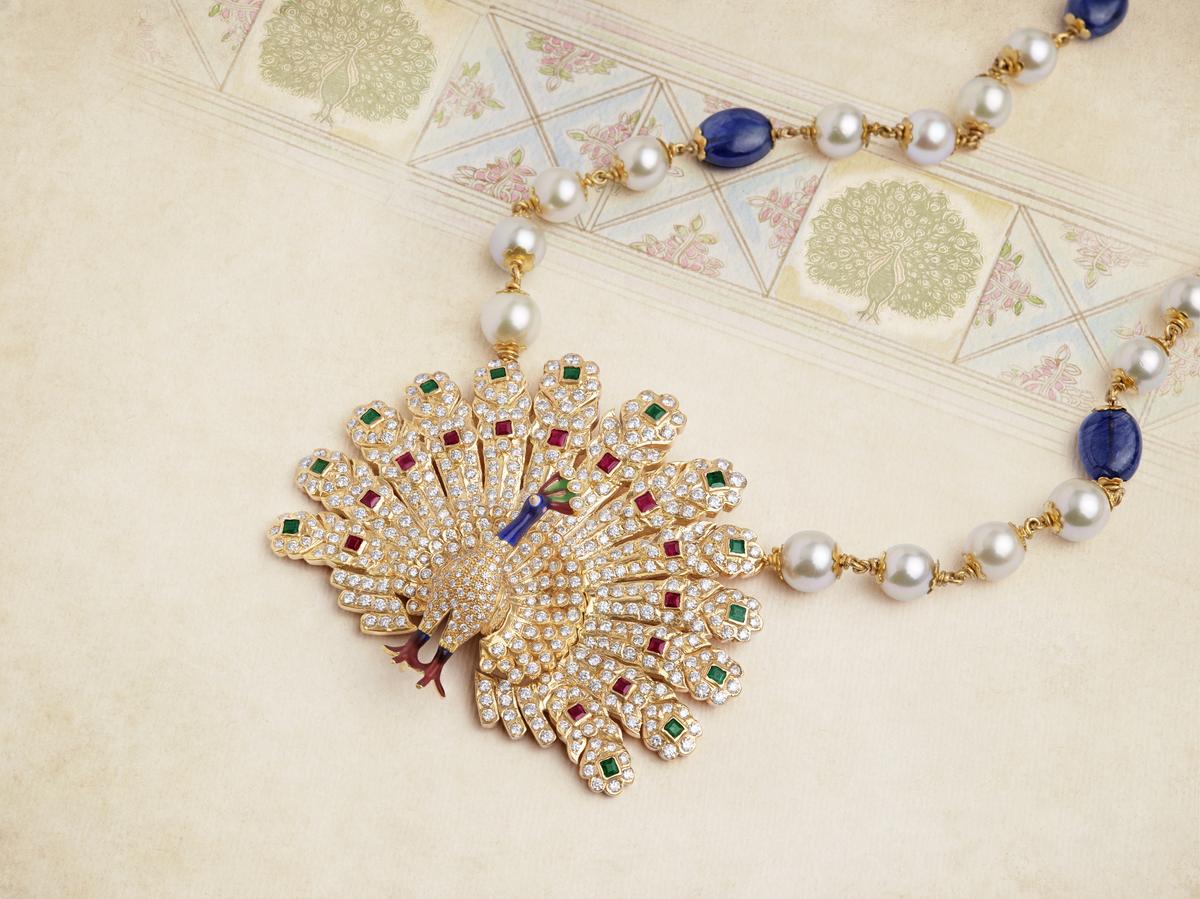
A ‘Mayil Maguri’ piece from Meenu Subbiah’s Vilasam brand. Photo Credit: Special Arrangement
Her recently unveiled brand, Vilasam, which focuses on authentic Chettinad jewellery, will be prominently featured, further underscoring the beauty of the close-setting technique. Visitors will also find contemporary creations from her Menaya brand, alongside pieces from the Vamsam range. This Vamsam collection showcases jewellery from various Indian regions, such as the exquisite guttapusalu from Andhra Pradesh and the classic kaasu maalai from Kerala, reimagined and adapted.
Pettagam proudly takes its place among India’s distinguished private jewellery museums, akin to Jaipur’s Amrapali Museum, which celebrates distinctive craftsmanship and ancestral jewellery traditions. Meenu emphasizes, “Every region in our vast country boasts a magnificent ancestral jewellery legacy, and it is crucial to protect and preserve these stories.” She concludes that Pettagam serves not only as a vital archive for Chettinad and its jewellery but also as a testament to the enduring importance of safeguarding traditional jewellery-making techniques.
Pettagam is located on SRM Street, Karaikudi, and is scheduled to open its doors to visitors starting October 1. Appointments can be made via email at concierge@meenusubbiah.luxe or by calling 9566503736. Admission is free.