
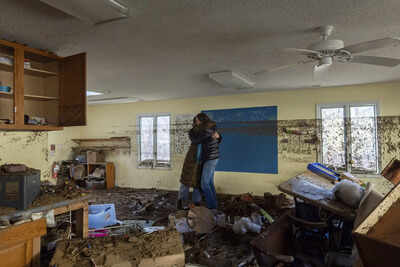
Hurricane Helene struck western North Carolina a year ago, leaving thousands of students homeless and communities shattered. The Appalachian region, once considered a safe haven from climate disasters, was unexpectedly ravaged by severe floods, landslides, and fierce winds. The storm’s devastation went far beyond physical damage, deeply affecting children who now face profound instability, interrupted education, and lasting emotional trauma. According to the Associated Press, over 2,500 students were identified as homeless directly because of Helene.
For many, returning home meant navigating through the skeletal remains of their once-familiar spaces, where exposed wires and broken walls served as grim reminders of all they had lost. Months later, sunlight still pierced through makeshift tarps where windows once offered views of the world, starkly emphasizing the absence of normalcy. In classrooms, the ghosts of destroyed homes lingered, triggering panic and anxiety at the slightest provocation, as children carried the fragments of disaster into their daily lives.
Families Grapple with Unstable Housing
Across the region, these struggles became a common narrative. Students attended school while their families desperately sought stable living situations, often residing in motels, temporary campers, or crowded into relatives’ homes. For low-income rural families, existing challenges like food insecurity and housing affordability significantly worsened the difficulties of recovery. A public policy professor at the University of North Carolina at Chapel Hill told the Associated Press that many children never truly had the chance to heal from the trauma.
Some families endured months of constant uncertainty, moving from one temporary motel to a donated camper, battling the cold and damp while striving to ensure their children maintained school attendance amidst the chaos. Others were forced to split their households across multiple temporary residences—staying with relatives, friends, and in hotels—all while living with a constant fear of rain and future storms.
Schools and Infrastructure Face Long-Term Disruption
The scale of physical destruction was immense. Hurricane Helene damaged over 73,000 homes, cutting off electricity and water for weeks and forcing extensive school closures throughout the region. In rural Yancey County alone, students lost more than two months of instructional time due to storm-related interruptions, further exacerbated by additional snow days, clearly illustrating the widespread educational impact.
Student displacement extended far beyond individual counties. Research from UCLA’s Center for the Transformation of Schools indicates that following natural disasters, students frequently end up in precarious living arrangements such as sleeping on couches, in shelters, or sharing crowded homes—conditions federally recognized as homelessness. Helene’s aftermath mirrored trends seen after Hurricane Maria in Puerto Rico and the 2023 Maui wildfires, with North Carolina counties reporting significant surges in students lacking permanent housing. For example, Yancey County saw its number of homeless students soar from 21 to 112 in the subsequent school year, with most cases directly attributed to the hurricane, according to the Associated Press.
Temporary Solutions and Federal Support Shortfalls
Temporary enrollment in different school systems became a necessary adaptation, with some students commuting to distant schools until their home communities could rebuild and reopen. While federal initiatives like the “McKinney-Vento Homeless Assistance Act” aim to provide support for transporting displaced students and offering tutoring, funding limitations meant that many affected districts could not access aid immediately after Helene, leaving a substantial number of children without critical resources.
The Lingering Emotional Toll
The mental and emotional toll of displacement weighed heavily on these young lives. Many students spoke of the immense difficulty of balancing academic responsibilities and part-time jobs while constantly relocating from temporary housing after their homes were flooded. Even after families eventually found more stable living situations, the lingering stress continued to impact school performance and daily routines. In certain instances, the confined spaces of shared relatives’ homes intensified feelings of grief and anxiety, though many families also reported a gradual process of adaptation and strengthened bonds forged through shared adversity.
A Year of Enduring Uncertainty
In western North Carolina, the year since Hurricane Helene has starkly highlighted the fragile sense of stability for students grappling with natural disasters. While physical debris may be cleared and school doors reopened, the hurricane’s long-term effects on learning, overall well-being, and the sense of security continue to reverberate throughout these communities. As the Associated Press emphasizes, Helene’s true legacy is not merely in damaged buildings, but in the disrupted childhoods and the ongoing struggle to restore normalcy in a region persistently challenged by nature’s fury.