
Despite ongoing whispers and eager anticipation from the gaming community, an official release date for the Steam Deck 2 remains elusive. There’s even speculation that Valve might shift its focus to supplying SteamOS software for other handhelds, like the Lenovo Legion Go S, rather than launching a new device itself. Still, we remain hopeful for a genuine successor to the original. Here, we’ve gathered all the latest information and rumors about a potential new model.
Steam Deck 2 Release Date Estimate
Our most informed guess for the Steam Deck 2 launch window is 2026 or later. This projection comes directly from Valve staff, including designer Lawrence Yang. In a November 2023 discussion, Yang stated that a “next-generation” power boost would not be available for at least another “two or three years.” He also mentioned that while Valve is “thinking about Steam Deck 2 at all times,” significant technological advancements are needed before a major generational leap can occur.
Adding to the uncertainty, Valve recently denied plans to use an AMD Z2 Extreme processor for a Steam Deck 2, despite AMD’s own suggestions. Valve Steam Deck coder Pierre-Loup Graffais explicitly said, “there is and will be no Z2 Steam Deck.” This could imply Valve won’t use that specific chip, or perhaps it won’t be branded as “Steam Deck 2.” Coupled with the announcement of the Lenovo Legion Go S adopting SteamOS, it casts doubt on Valve’s immediate hardware plans.

It remains to be seen if Valve is shifting away from its own handheld production or simply committing to a prolonged hardware update cycle. With 2005 drawing to a close and no new handheld in sight, a Steam Deck 2 release before the year’s end seems highly improbable.
Further supporting a delayed launch, tech leaker KeplerL2 recently suggested a Steam Deck 2 wouldn’t arrive until 2028. Such a long wait would be surprising, as the handheld market has evolved rapidly since the original Steam Deck. Waiting another two or more years could make a new device feel outdated upon release, especially considering the typical six-year console cycle already feels slow in this fast-paced segment.
Steam Deck 2 Price Estimate
Our current Steam Deck 2 price prediction suggests the next Valve handheld could range anywhere from $399 to $999. While there’s a possibility Valve might aim for a launch price similar to its initial model, the success of pricier gaming handhelds like the Xbox Ally X indicates that consumers are willing to invest more. However, specific leaks that could narrow down this price range are still absent.
Gabe Newell, Valve’s CEO, once noted that achieving the $399 MSRP for the original Steam Deck’s base model was “painful.” Since then, the company has released the more premium Steam Deck OLED. Considering competitors such as the Asus ROG Ally debuted at $599 and the Lenovo Legion Go at $799, it’s clear the market supports higher price points. Therefore, it’s reasonable to expect a Steam Deck 2 to be more expensive than its predecessor, especially given the established demand for such devices.
Adding to this theory, Newell mentioned in an interview that the Deck’s “most popular SKU is the most expensive one,” referring to the $649 1TB Steam Deck OLED. He interprets this strong demand as customers expressing a desire for “an even more expensive version of this, in terms of horsepower capabilities or whatever.”
Steam Deck 2 Design Rumors
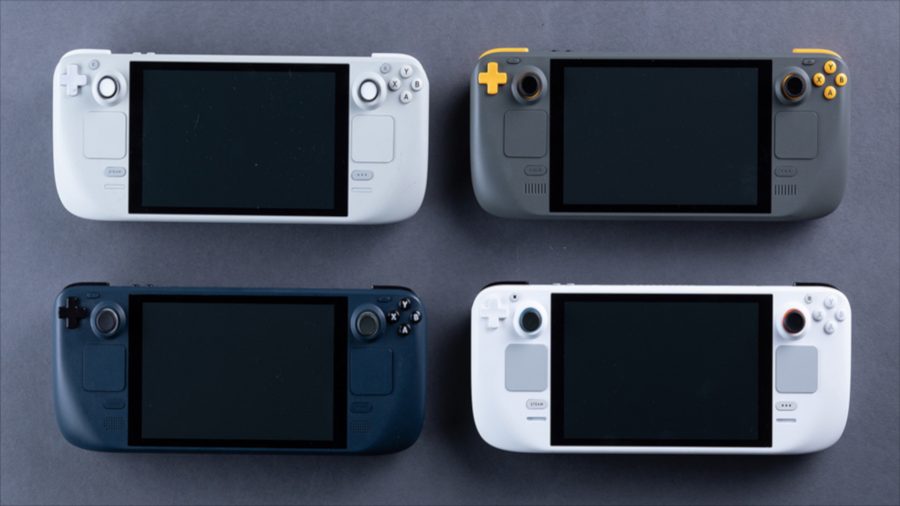
Generally, we don’t anticipate significant changes to the Steam Deck’s physical design. Both the original Steam Deck and the Steam Deck OLED have been incredibly well-received, with many, including us, commending their comfortable ergonomics.
However, innovations from competitors, such as the Lenovo Legion Go’s detachable controllers (reminiscent of the Switch 2) and the Xbox Ally X’s enhanced gamepad-style grips, might inspire Valve to consider some refinements.
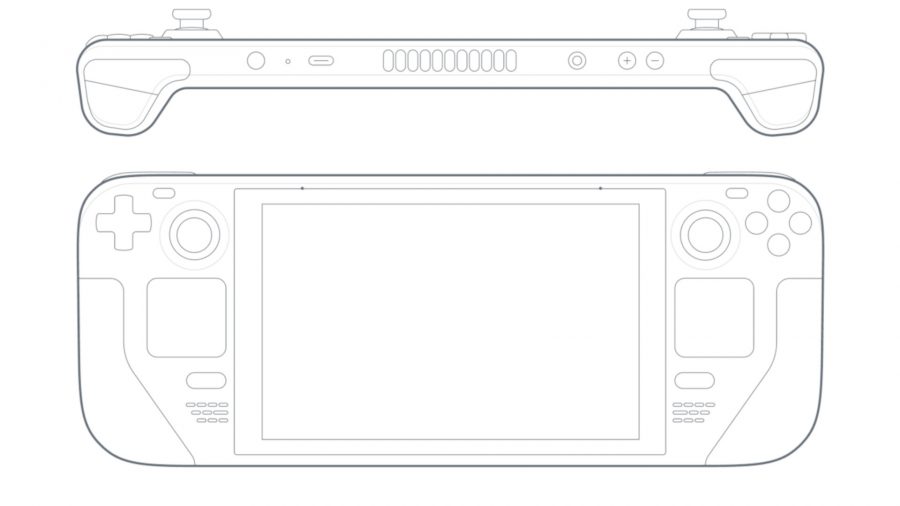
The most probable scenario is that the overall design will remain largely consistent, but Valve could adjust the button placement on the Steam Deck 2, moving them lower to align with most rival handhelds. We might also see a slightly larger screen with narrower bezels.
Intriguingly, there haven’t been any leaks concerning the physical design of the Steam Deck 2. This lack of information further indicates that a release is likely still quite a way off, as hardware leaks typically become more frequent closer to a product’s launch, often through production line photos or during distribution stages.
Steam Deck 2 Specs Rumors
Official details and substantial Steam Deck 2 specifications rumors are scarce, with Valve having already dismissed the most recent CPU speculations. However, Valve has shared aspirations for future handheld improvements, some of which were already incorporated into the Steam Deck OLED.
In a 2022 interview, Valve expressed a desire for enhanced battery life and screen technology in the Steam Deck 2. These improvements materialized in the Steam Deck OLED, which boosted battery capacity from 40Whr to 50Whr and upgraded from an LCD to an OLED panel.
For a truly next-generation Steam Deck 2, a logical step for the screen would be a higher resolution. Most competing devices offer at least 1080p, with some reaching 1440p, providing significantly sharper visuals. This upgrade would benefit not only games but also video consumption and other applications.
While some users might wish for a larger screen, Valve already marginally increased the size with the Steam Deck OLED (from 7 inches to 7.4 inches). Given that a prominent rival, the Xbox Ally X, maintains a 7-inch display, Valve might also opt to keep this screen size for the Steam Deck 2.

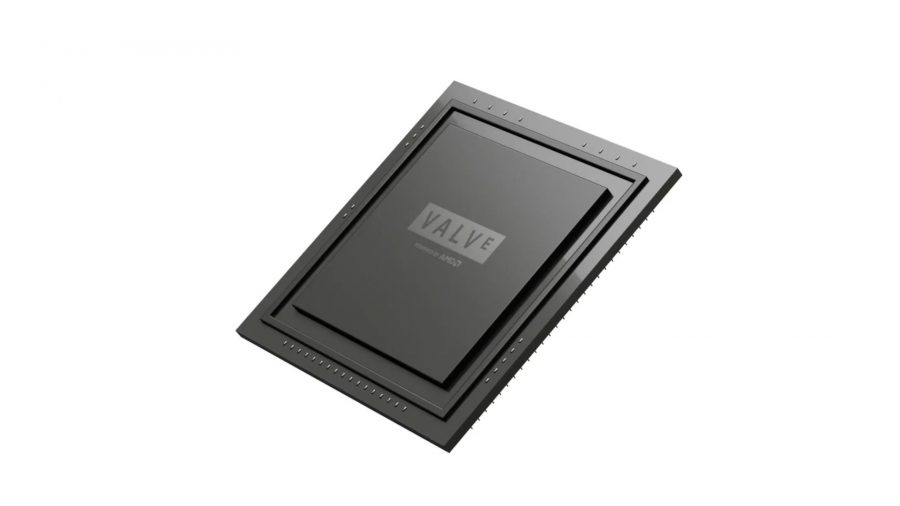
Regarding processing power, current Steam Deck models utilize a custom AMD APU, often codenamed Aerith, which is based on older Zen 2 CPU architecture (four cores, eight threads) and RDNA 2 GPU architecture (eight compute units). This makes it relatively less powerful compared to newer offerings.
In contrast, first-generation Windows handhelds like the Asus ROG Ally and Lenovo Legion Go feature the significantly more robust AMD Ryzen Z1 Extreme processor. This chip boasts an eight-core CPU (16 threads) built on the more efficient Zen 3 architecture, coupled with a GPU featuring 12 CUs and the faster RDNA 3 architecture.
Furthermore, a second wave of Windows handhelds, including the Lenovo Legion Go 2 and Xbox Ally X, are now emerging, powered by the cutting-edge AMD Ryzen Z 2 Extreme processor. This new chip offers eight CPU cores with the even newer Zen 5 architecture, and a GPU extending to 16 CUs using RDNA 3.5 architecture. Integrating such a chip into a new Steam Deck would deliver a massive performance leap, but current indications suggest this upgrade is not imminent.
Considering other potential improvements, manufacturers like those behind the Xbox Ally X have demonstrated a willingness to include substantially larger batteries in handheld devices. Consequently, a Steam Deck 2 could feature an 80Wh battery, doubling the capacity of the original Steam Deck and adding 30Wh over the Steam Deck OLED, potentially nearly doubling overall battery life.
Steam Deck 2 Performance Rumors
Should the Steam Deck 2 eventually launch, a significant performance increase is a reasonable expectation. With the array of processor upgrades currently available, as discussed previously, Valve has ample opportunity to engineer a device capable of higher resolutions, smoother frame rates, and extended battery life. The question, however, remains when—or if—the company will implement these changes.
With the Steam Deck OLED, Valve deliberately maintained the core performance level, ensuring consistency across its hardware lineup. Yet, even if Valve adopts a console-like approach to hardware cycles, releasing major updates every five years or so, any future update is sure to bring noticeable improvements.
Crucially, assuming a Steam Deck 2 does arrive and continues to use an AMD processor, gamers should largely be free from concerns about backwards compatibility. Unlike traditional consoles that can introduce generational compatibility hurdles, an AMD-powered Steam Deck 2 would likely share nearly the same compatible game library as its predecessors.
In fact, playing games on a Steam Deck 2 should be a more straightforward experience than on current versions, as the new device would offer greater performance headroom. This would allow games that currently struggle on the original Steam Deck and Steam Deck OLED to run smoothly. However, a Steam Deck 2 would still likely face compatibility issues with certain games, particularly those that use anti-cheat software incompatible with Linux, such as Battlefield 6 and Apex Legends.
Even so, the existing list of excellent Steam Deck games continues to grow and will undoubtedly remain a valuable resource for a future Steam Deck 2.
If you’re eager to enhance your current first-gen Steam Deck or its OLED revision while awaiting the Steam Deck 2, consider exploring the best Steam Deck accessories or picking up a Steam Deck Dock to connect your handheld to a gaming monitor.