Even with persistent rumors and widespread anticipation from the gaming community, there’s no concrete indication that a Steam Deck 2 is on the immediate horizon. In fact, Valve might be leaning towards supplying its Steam OS to other handhelds, like the Lenovo Legion Go S. Despite this, we remain optimistic for a genuine successor. Here, we’ll compile all the information we’ve gathered about a potential new Steam Deck.
The excitement for a Steam Deck 2 began the moment the original hit the market. Valve’s initial handheld was an instant sensation, impressing us with its performance and quickly becoming a top contender among portable gaming PCs, a title it held until the Steam Deck OLED launched about a year later. Since then, Valve has been notably silent regarding a true second-generation device, leaving most of the speculation to external leaks and industry whispers.
Steam Deck 2 Release Date Estimate
Our best projection for the Steam Deck 2’s launch is sometime in 2026 or even later. This estimate stems from comments made by Valve staff, including designer Lawrence Yang, who stated in a November 2023 interview that a significant “next-generation” power upgrade wouldn’t be ready for at least two to three years. Yang also mentioned that while “we’re thinking about Steam Deck 2 at all times,” a substantial technological leap is necessary before major advancements can be made. More recently, Valve explicitly refuted claims of developing a Steam Deck 2 powered by an AMD Z2 Extreme processor, a rumor that arose after AMD’s own processor launch. Pierre-Loup Graffais, a Valve Steam Deck coder, firmly stated, “there is and will be no Z2 Steam Deck.” This could imply that Valve won’t use that specific chip, or perhaps a variant, or even that they might not brand a new device as “Steam Deck 2.” The overall sentiment, coupled with the announcement of devices like the Lenovo Legion Go S adopting Steam OS, strongly suggests otherwise. We’ll have to wait to see if Valve intends to shift away from manufacturing its own handhelds or if they’re simply adhering to a prolonged hardware update cycle. With 2025 nearing its end and no new handheld in sight, a 2025 release for the Steam Deck 2 seems increasingly improbable. This view is further supported by a recent leak from tech leaker KeplerL2, who suggests the Steam Deck 2 won’t arrive until 2028. Such a long wait would be surprising; while six-year cycles are common for consoles, the handheld market is evolving rapidly, and waiting much longer could leave the Steam Deck feeling significantly outdated.

Steam Deck 2 Price Estimate
Our best guess for the Steam Deck 2’s price range is between $399 and $999. While Valve could aim for a similar entry-level price as the original, the success of pricier gaming handhelds, such as the Xbox Ally X, demonstrates a market for higher-end devices. Currently, there are no specific leaks to help narrow down a precise price point. Valve CEO, Gabe Newell, previously stated that achieving the $399 MSRP for the original Steam Deck’s base model was “painful.” The company has since released the more expensive Steam Deck OLED. Considering that competitors like the Asus ROG Ally launched at $599 and the Lenovo Legion Go at $799, it’s clear that gamers are willing to invest more. Therefore, it’s highly probable that a Steam Deck 2 would carry a higher price tag than the initial model, especially given the established popularity of the device and similar products. Adding to this speculation, Newell mentioned in an interview that the Deck’s “most popular SKU is the most expensive one,” referring to the $649 1TB Steam Deck OLED. He interprets this strong demand as customers expressing a desire for “an even more expensive version of this, in terms of horsepower capabilities or whatever.”
Steam Deck 2 Design Speculations
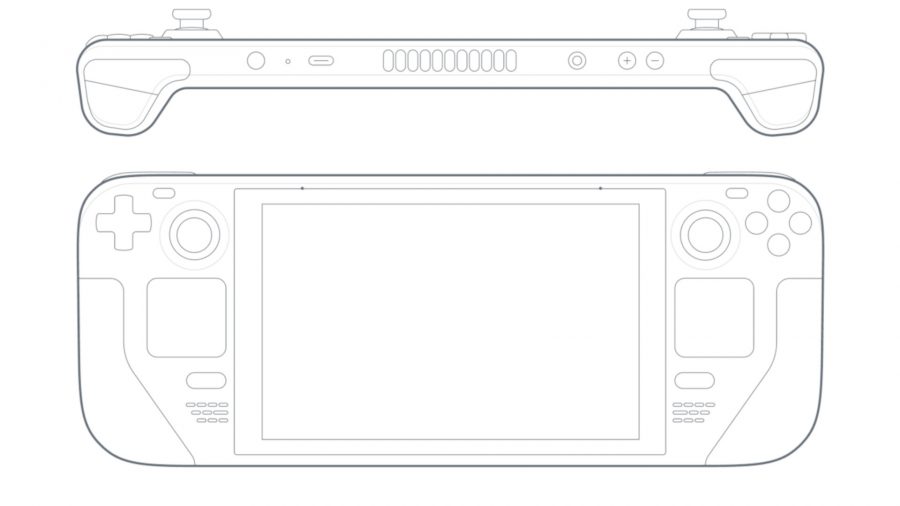
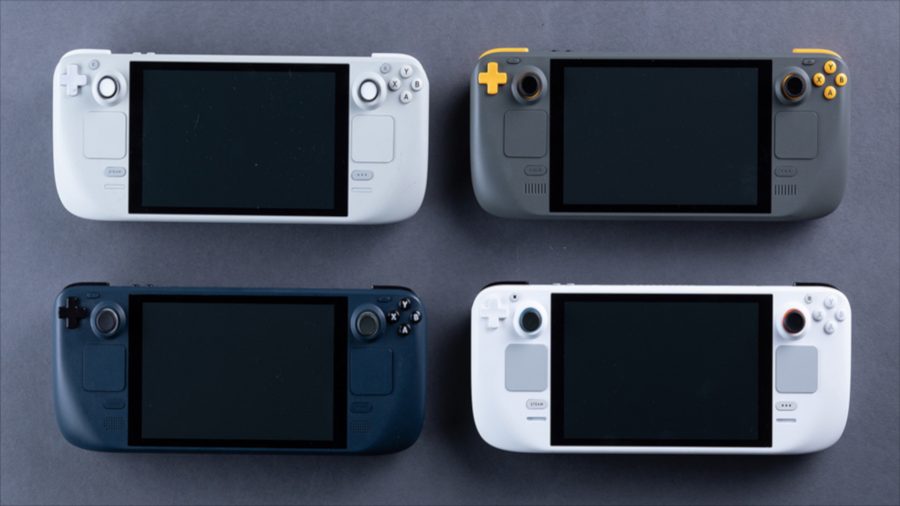
Generally, we don’t anticipate a drastic overhaul of the Steam Deck’s physical design. Both the original Steam Deck and its OLED iteration have garnered immense popularity, earning praise for their comfortable ergonomics. However, with competitors like the Lenovo Legion Go introducing innovative features such as detachable controllers (similar to the Switch) and the Xbox Ally X incorporating dedicated gamepad-style grips, Valve might be considering some design adjustments. The most probable scenario is that the core design will remain consistent, but Valve could reposition the Steam Deck 2’s buttons lower on the device, aligning with the common layout found on most competing handhelds. We might also see a slightly larger screen with reduced bezels. Notably, there have been no leaks regarding the physical design of the Steam Deck 2 whatsoever. This lack of information further indicates that the handheld’s release is still quite a distance away, as hardware leaks typically intensify closer to launch, when more opportunities arise for photos of production-line components or shipping stages to surface.
Steam Deck 2 Specs Speculations
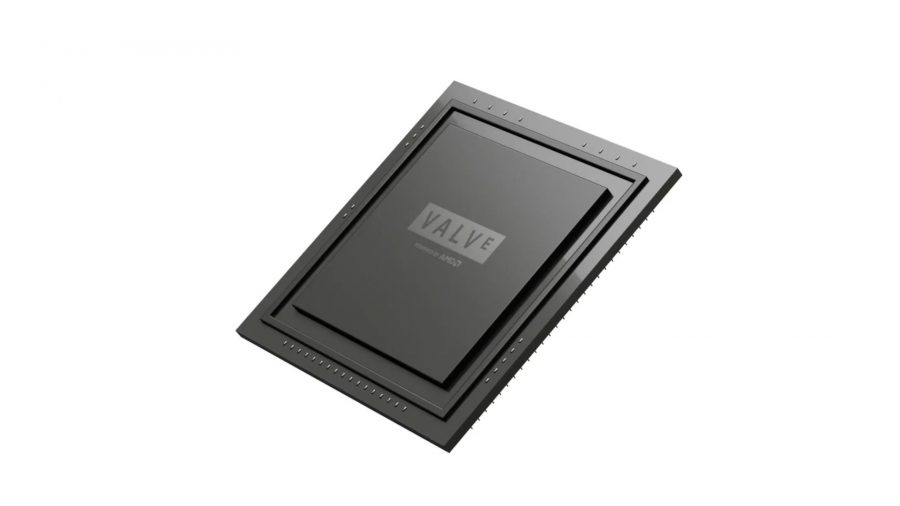
Official announcements or substantial rumors regarding Steam Deck 2 specifications are scarce, with Valve having explicitly denied recent CPU rumors. However, Valve has previously commented on areas they wished to enhance in future handheld iterations, many of which were addressed with the Steam Deck OLED. In a 2022 interview, Valve expressed a desire for improved battery life and screen technology in the Steam Deck 2. Both improvements materialized in the Steam Deck OLED, which boosted battery capacity from 40Whr to 50Whr and upgraded the display from LCD to OLED. For a truly next-generation Steam Deck 2, a reasonable expectation for the screen would be a higher resolution. Most competing devices offer at least 1080p, with some boasting 1440p panels, delivering significantly sharper visuals. This would enhance not only gaming but also video playback and general device usage. Some users might also desire a larger screen for the Steam Deck 2. While the Steam Deck OLED already saw a slight increase from 7-inch to 7.4-inch, several other handhelds feature even larger displays. Nevertheless, with a prominent gaming handheld like the Xbox Ally X maintaining a 7-inch screen, Valve might opt to stick with this size for the Steam Deck 2. Regarding processing power, the current Steam Decks utilize a relatively modest custom AMD CPU (APU/processor), known as AMD Custom APU 0405 or Aerith. It features four CPU cores (eight threads) and a GPU with eight compute units (CUs), based on older Zen 2 CPU and RDNA 2 GPU architectures. In contrast, first-generation Windows handhelds, such as the Asus ROG Ally and Lenovo Legion Go, adopted the significantly more powerful AMD Ryzen Z1 Extreme processor/APU/CPU. This chip packs an eight-core CPU (16 threads) based on the faster and more power-efficient Zen 3 architecture, complemented by a GPU with 12 CUs utilizing the more efficient RDNA 3 architecture. Furthermore, a new wave of second-generation Windows handhelds, including the Lenovo Legion Go 2 and Xbox Ally X, are now emerging, powered by the new AMD Ryzen Z2 Extreme processor. This latest chip also features eight CPU cores but leverages the even newer Zen 5 architecture, with its GPU expanding to 16 CUs using the RDNA 3.5 architecture. If a future Steam Deck were to incorporate such a chip, it would deliver a monumental boost in performance; however, current indications suggest such an upgrade is not imminent. For other specifications, observations from devices like the Xbox Ally X show that handheld manufacturers are increasingly willing to integrate substantially larger batteries. Consequently, we could see the Steam Deck 2 arrive with an 80Wh battery, effectively doubling the original Steam Deck’s capacity and adding 30Wh over the OLED model, potentially almost doubling battery life.

Steam Deck 2 Performance Speculations
Should the Steam Deck 2 eventually launch, a significant performance boost is a highly reasonable expectation. With the current array of processor upgrades available, as discussed, Valve has ample opportunity to engineer a device capable of higher resolutions, smoother frame rates, and extended battery life. The question simply remains when Valve will implement these changes. With the Steam Deck OLED, Valve deliberately maintained a consistent performance level across its hardware range, opting not to introduce fundamental performance alterations. However, even if the company continues with a console-like approach to hardware updates, releasing major iterations every five years or so, the eventual update is certain to bring notable enhancements. Crucially, assuming Valve releases a Steam Deck 2 equipped with an AMD processor, gamers should not face backward compatibility issues. Unlike some traditional consoles that frequently encounter compatibility breaks between generations, a Steam Deck 2 powered by AMD hardware is expected to offer a nearly identical compatible game library to its predecessors. In fact, gaming on a Steam Deck 2 should be more straightforward than on current versions, as the new device would offer greater performance overhead for titles that struggle on the Steam Deck and Steam Deck OLED. Nevertheless, the Steam Deck 2 will likely still encounter some unplayable games due to its Linux operating system, as certain anti-cheat software, used by titles like Battlefield 6 and Apex Legends, does not run on Linux. Regardless, the list of excellent games for the Steam Deck continues to expand and will undoubtedly serve as a valuable resource for any future Steam Deck iteration. If you’re eager to enhance your experience with the current Steam Deck or its OLED update while awaiting a potential Steam Deck 2, explore the best Steam Deck accessories and consider a Steam Deck Dock to connect your handheld to a gaming monitor.