
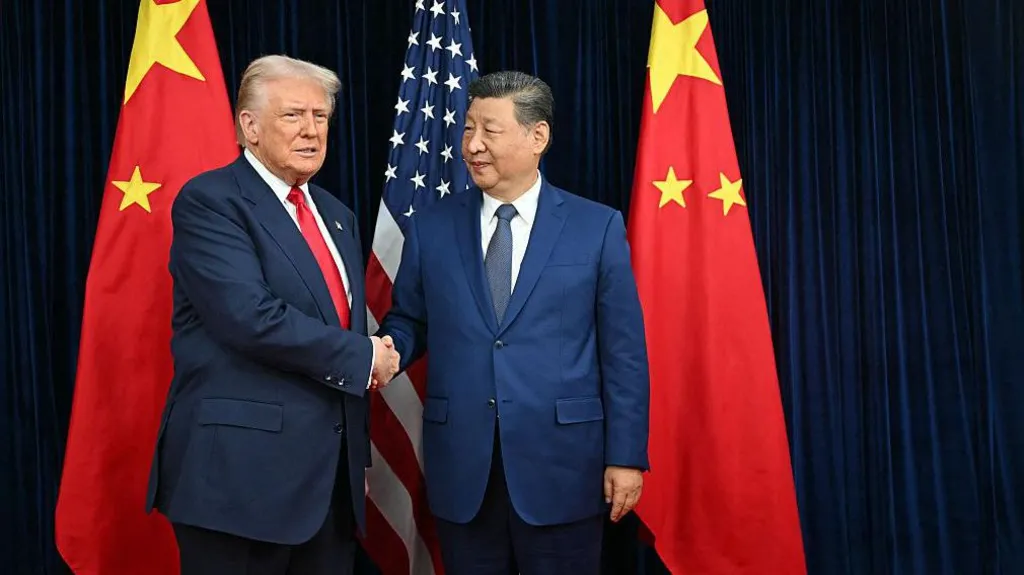
Donald Trump emerged from his meeting with Chinese leader Xi Jinping expressing immense optimism, calling it a “great success” with a score of 12 out of 10. However, China’s response was more reserved. Beijing’s initial statement, read like an instruction manual, urged both sides to act quickly, suggesting Xi’s focus is on a prolonged, strategic engagement rather than an immediate deal. While Trump is eager for a swift agreement, China appears to be playing a longer game, leveraging its economic influence for strategic advantage.
A more detailed second statement from China echoed some of Trump’s points, mentioning potential US tariff reductions and a suspension of Chinese export controls on rare earths – crucial minerals for advanced technology and military applications. While no concrete deal has been reached, and months of negotiations lie ahead, this agreement marks a significant breakthrough, stabilizing the often-turbulent relationship between the world’s two largest economies and providing reassurance to global markets. Nevertheless, this truce is fragile, and the fundamental competitive differences between the two nations remain unresolved.
Kelly Ann Shaw, a former economic advisor to President Trump, notes that the US and China are on diverging paths. She suggests the current dynamic is about managing a difficult relationship to minimize damage and protect national interests, rather than anticipating a significant improvement in ties anytime soon.
‘Struggle, but don’t break’
Mastering the art of negotiation with Donald Trump involves a degree of flattery, a tactic widely employed by nations during his Asian tour. While South Korea offered him a grand gesture with a golden crown, and Japan’s prime minister nominated him for a Nobel Peace Prize, China’s approach was more subtle. A meeting at a South Korean airbase, strategically placed as Trump was departing, signaled a more measured, yet defiant, stance.
This understated yet firm response aligns with China’s reaction to the US trade war. As the US imposed new tariffs, Beijing retaliated in kind, emphasizing that a trade war benefits no one. Like Trump, Xi perceived himself as holding a strong hand, supported by a well-defined strategy. China utilized its economic power, acting as the global manufacturing hub and a vast consumer market, to exert pressure. Crucially, unlike Trump, Xi is not bound by electoral cycles or public opinion, allowing for a more consistent long-term approach, although he too faces domestic economic pressures, needing growth to ensure stability and maintain the Communist Party’s authority.
Despite economic challenges, including a real estate crisis and high youth unemployment, China has demonstrated its resilience by withstanding US tariffs. Ministries conveyed a message of determined resistance, with the principle being to “fight until the bitter end” without breaking.
Keyu Jin, author of ‘The New China Playbook,’ describes China’s strategy as one of “struggle, but don’t break,” employing a tactic of “escalating to de-escalate,” which is a novel approach in international relations.
Xi had a plan
China strategically targeted US vulnerabilities, notably by restricting exports of rare earths – materials essential for advanced technologies and defense systems, where China holds a dominant 90% share of global processing.
Jason Bedford, a macroeconomics expert, highlights the critical advantage China possesses in the heavy rare earth supply chain, crucial for advanced defense systems. He notes this position is significantly harder to disrupt than other segments of the rare earth industry.
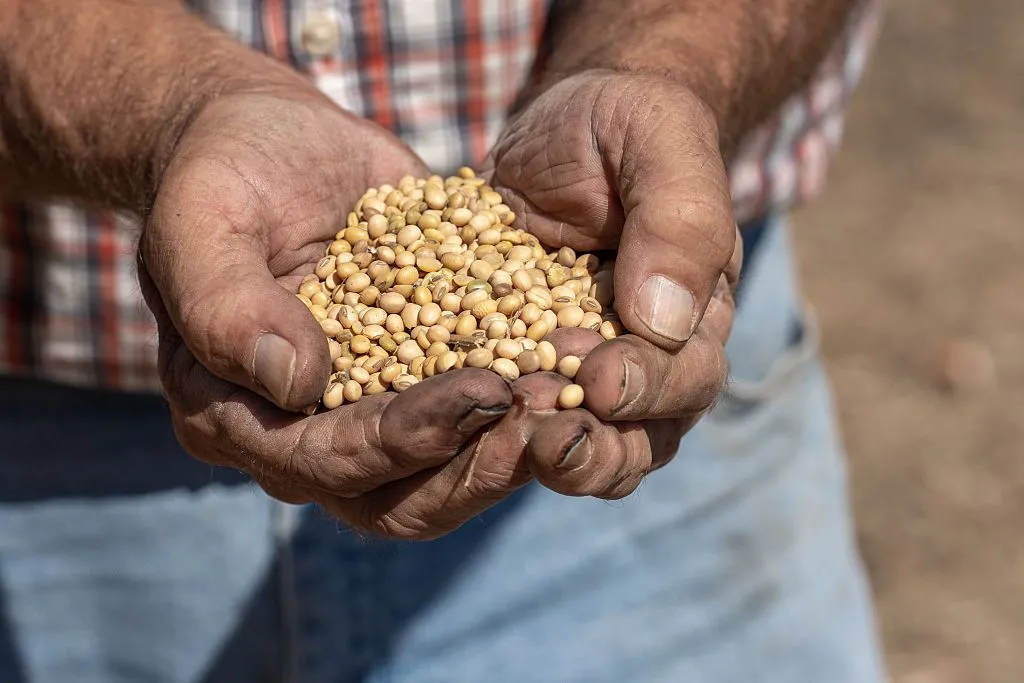
Consequently, securing the relaxation of these export controls became a priority for Washington, providing Xi with considerable leverage during his talks with Trump. China also halted soybean purchases, a move clearly aimed at impacting farmers in Republican-leaning states, who form Trump’s core base.
Recent reports indicate that Beijing has resumed soybean purchases from the US, suggesting a strategic adjustment. Ms. Jin states that the idea of the US dominating or suppressing China has been disproven, and this situation signals to the global community, particularly the United States, that China demands respect and will not yield to excessive political or economic concessions.
Trump’s administration faces a more assertive China than in his previous term. Beijing has learned from past experiences, diversifying its trade partners and reducing its reliance on US exports. While Chinese exports to the US previously accounted for nearly a fifth of its total, this figure has fallen to 11% in the first half of the current year.
Xi’s appearance in South Korea, confirming the meeting with Trump only the day prior, was a display of political theatre aimed at reinforcing China’s position of strength. The protocol of standing before Trump for the handshake and remaining impassive as Trump whispered in his ear – a moment typically avoided by China – underscored this strategy.
The meeting concluded with Trump escorting Xi to his car, after which Xi was quickly surrounded by his security detail. Trump, meanwhile, was left to find his own vehicle, a moment that seemed to highlight the subtle power dynamics at play.
Despite these nuances, the summit offered several positive takeaways, being the first major international engagement of Trump’s second term. Ms. Jin reiterates that China aims for a strong negotiating position without damaging the relationship, as it is in neither country’s interest. The resulting calm will be welcomed by businesses, markets, and other nations caught between the two superpowers, though its sustainability remains uncertain.
Ms. Shaw predicts continued medium- to long-term instability, expecting further destabilization within the next three to six months due to the fundamental differences between the US and China.
While Trump may not have secured the groundbreaking deal he often seeks, China has clearly demonstrated its resolve. Even if a formal agreement is reached, Beijing has shown it will not easily yield to Washington and possesses significant resilience. The rivalry between the two nations is expected to persist, regardless of any future trade agreements.