
Riot Games has faced a turbulent period, marked by increasingly aggressive microtransactions in League of Legends, a lukewarm reception for 2XKO’s early access, and ongoing controversies regarding AI in promotional content. Many loyal fans trace this instability back to the closure of Riot Forge and the significant changes to Legends of Runeterra (LoR), a popular League-themed card game that once aimed to challenge titles like Hearthstone. Despite its dedicated fanbase, LoR’s player numbers were reportedly low, and its shift to a PvE-only format was met with disappointment. The subsequent announcement of Riftbound, a physical TCG envisioned as a competitor to Magic: The Gathering, left many LoR enthusiasts wondering if their beloved game was sacrificed for this new venture. We spoke with Jonathan Moormann, Riftbound’s design manager and former senior game designer for LoR, to understand the lessons learned from their previous virtual card game.
Jonathan Moormann, with his extensive background on both League of Legends and Legends of Runeterra, possesses unique expertise in adapting the LoL universe into card game mechanics. Even from demo plays, it’s evident that the Riftbound decks masterfully capture the essence of their respective champions, with Jinx and Yasuo being prime examples. This deep understanding, honed during their work on LoR, underpins Riftbound’s central goal: to authentically embody each League of Legends character.
Moormann emphasizes the importance of crafting “specific moments” within the game. He explains, “It’s like Malphite charging into a fight and knocking everyone airborne – if that doesn’t happen, it just doesn’t feel like Malphite. The champions’ lore, who Yasuo is, who Annie is – that’s something we really aimed to convey with each deck. From the outset, we wanted every Riftbound deck to embody its champion completely.”
Leveraging their experience from LoR, the team meticulously refined “champion resonance” – Moormann’s term for how well a card game captures a champion’s essence. He points out that Riftbound’s design streamlines this process. “In Legends of Runeterra, we had limited space to define a champion’s abilities, often forcing us to condense too much information onto a single card,” he recollects. “With Riftbound, we prioritized giving each champion a dedicated Legend card, a signature spell, and various unit cards. This allows us to explore different facets of a character, rather than trying to fit Jinx’s entire identity onto one card, which would lead to an overwhelming amount of text.”
“Runeterra also presented a significantly high ‘mental ceiling,’ teaching us valuable lessons about simplifying card design,” he states. “Our goal for Riftbound is to create a game that’s intricate enough for competitive play and skill expression, yet still approachable enough to teach new friends. Legends of Runeterra often struggled to attract newcomers due to this complexity, highlighting a common challenge: the deeper a game, the steeper the initial learning curve can be.”

The most significant departure from LoR, however, lies in Riftbound’s battlefield system. Here, gameplay centers on capturing and maintaining control of unique battlefield cards, each providing distinct enhancements. While these battlefields originate from various regions across Runeterra, their specific geographical ties don’t restrict deck construction. In stark contrast, LoR heavily emphasized world-state themes, using regions much like colors in Magic: The Gathering (e.g., a Bandle City/Demacia deck instead of a black/white one). Moormann, citing Shurima as an example, explains that LoR’s strong regional focus “complicated efforts to balance colors.”
“We were constantly challenged to uphold the region’s core identity while also providing functional cards,” he elaborates. “With so many regions in League of Legends, carving out distinct and balanced spaces was incredibly difficult. This often led to situations where, for example, ‘Shurima couldn’t perform a crucial action needed to be competitive, making it challenging to balance as a distinct ‘color’ or faction.’ This is precisely why we shifted to ‘domains’ instead of regions. It freed us from LoR’s rigid regional constraints, allowing us to work with a more manageable set of thematic segments and ensure each segment could effectively compete against others, preventing any domain from feeling incomplete.”
“Now, regions are represented as card tags, and we’re holding onto them for future content,” he hints with a smile. “You never know when they might make a return.”
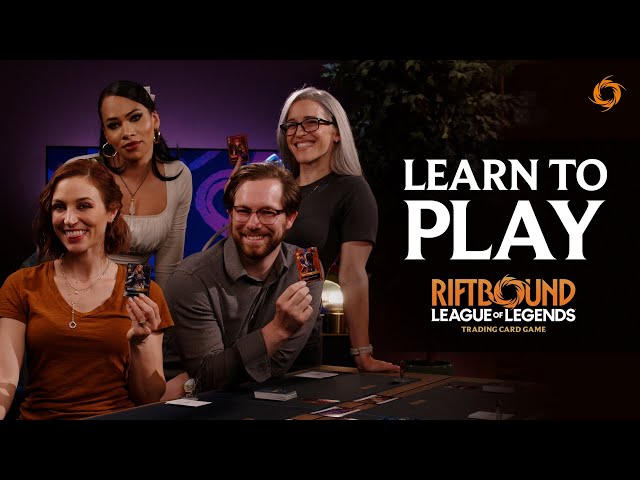
While I still miss Legends of Runeterra, my early experiences with Riftbound’s demo decks have been genuinely enjoyable. With the “Spiritforged” expansion on the horizon, introducing champions like Irelia that I’m eager to try, I’m genuinely excited for Riftbound’s future – though my wallet might have other opinions!
Riftbound will be available in English across North America, Europe, Latin America, and Oceania, launching on Friday, October 31. Players can purchase various decks, including special Worlds 2025 and Arcane box sets, directly from the official Riot Games merchandise store or at participating local game retailers.
Stay tuned for our upcoming Riftbound review. In the interim, you can explore the latest League of Legends skin sales or check out the exclusive offerings in the current League of Legends Mythic shop.
Are you looking forward to Riftbound? Share your thoughts and favorite cards with us on Discord!