
In a profoundly symbolic gesture, Pope Leo XIV is scheduled to visit the devastating site of the 2020 Beirut port blast during his upcoming first foreign trip as Pontiff. This tragic event claimed over 200 lives and exacerbated Lebanon’s already dire economic and political struggles. The Pope’s itinerary also includes a significant stop in Turkey, where he will join Orthodox Christians in commemorating a crucial historical anniversary, underscoring themes of unity and remembrance.
The Vatican officially unveiled the details of Pope Leo’s six-day journey, running from November 27 to December 2, on Monday, October 27, 2025. This historic visit, the first for an American Pope, is packed with opportunities for His Holiness to address critical issues. He plans to champion interfaith and ecumenical understanding, bring attention to the challenges faced by Christian communities across the Middle East, and discuss broader regional tensions.
Originally, Pope Francis had intended to visit both nations but passed away earlier this year before these plans could materialize. He held a deep desire to visit Lebanon, yet the ongoing economic and political turmoil in the country sadly made a papal visit impossible during his pontificate.
A primary reason for the Pope’s visit to Turkey this year is to commemorate the 1,700th anniversary of the Council of Nicaea, a pivotal event recognized as Christianity’s very first ecumenical council.
From the outset of his papacy, Pope Leo affirmed his dedication to fulfilling Pope Francis’s commitment. His schedule includes multiple prayer sessions with Patriarch Bartholomew I, the revered spiritual head of the world’s Orthodox Christian community.
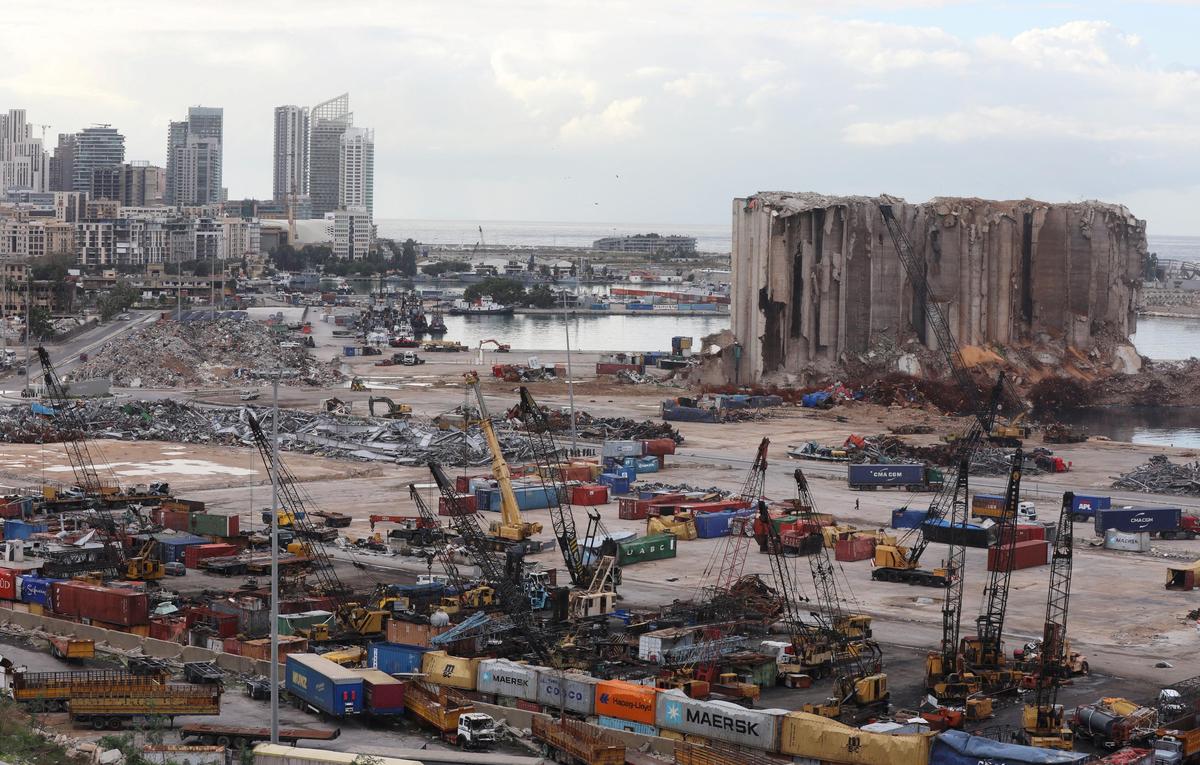
An aerial perspective of the Beirut port explosion site, photographed on December 9, 2020, revealing the scale of the devastation from the August 4 blast.
A Significant Visit to Istanbul’s Armenian Cathedral
A particularly poignant part of the Turkish leg of the journey will be Pope Leo’s prayer at the Armenian Apostolic Cathedral in Istanbul on November 30. This visit holds historical weight, as Pope Francis notably omitted this site during his 2014 trip. A year later, Francis sparked controversy and Turkish displeasure by describing the massacre of Armenians by Ottoman Turks as “the first genocide of the 20th century.”
Estimates from historians suggest that approximately 1.5 million Armenians perished at the hands of Ottoman Turks during World War I, an event many scholars widely recognize as the first genocide of the 20th century. Turkey, however, disputes this characterization, asserting that the casualty figures are exaggerated and that these deaths were a consequence of civil unrest and war, not a targeted genocide. The nation has actively campaigned to prevent international bodies, including the Vatican, from formally acknowledging the Armenian tragedy as a genocide.
Given Pope Leo’s deliberate avoidance of controversial statements during his initial six months in office, his choice of words regarding this historical event will be closely watched, particularly whether he will echo Francis’s previous characterization.
Solemn Prayer at the Beirut Port Blast Site
Beyond the customary diplomatic engagements with Turkish and Lebanese officials, and various meetings with Catholic clergy and liturgical services, Pope Leo’s visit to the heart-wrenching site of the August 4, 2020, Beirut port explosion promises to be one of the most impactful moments of his journey, scheduled for its concluding day.
The catastrophic blast ripped through the Lebanese capital when hundreds of tons of ammonium nitrate stored in a warehouse ignited. This immense explosion tragically killed at least 218 individuals, injured over 6,000, and left vast areas of Beirut in ruins, incurring billions of dollars in damages.
The Lebanese populace was understandably outraged, perceiving the blast as a direct consequence of governmental negligence, an event further compounded by an economic crisis fueled by decades of corruption and financial misconduct. Despite widespread demand for justice, the investigation into the explosion’s origins has repeatedly faltered, and even five years later, no official has been held accountable.
While Pope Leo will celebrate Mass along the Beirut waterfront and explore certain areas adjacent to the Lebanese capital, a notable omission from his itinerary is a visit to southern Lebanon. This region was severely impacted by last year’s conflict involving Israel and the Lebanese militant group Hezbollah.
Notable Omissions from the Papal Itinerary in Lebanon and Turkey
Although the primary devastation of the conflict was centered in Shia communities, which largely constitute Hezbollah’s support base, Christian communities also suffered significantly. Homes, agricultural lands, and even churches were destroyed. Consequently, Christian organizations in southern Lebanon had actively campaigned for the Pope to extend his visit to their region.
Similarly, in Turkey, Pope Leo’s schedule does not include a visit to Istanbul’s iconic Hagia Sophia monument, a departure from the practices of previous pontiffs. This historic structure, originally a Greek Orthodox patriarchal basilica and later a mosque during the Ottoman era, functioned as a museum when Pope Francis visited in 2014.
However, in 2020, the government under Turkish President Recep Tayyip Erdogan controversially reverted its status from a museum to a mosque, reopening it for Muslim worship. Pope Francis, at the time, openly expressed his profound sorrow over this decision.
Despite ongoing preservation efforts for its magnificent historic domes, Hagia Sophia remains accessible to both visitors and worshippers. Instead, Pope Leo is slated to visit the adjacent Sultan Ahmed Mosque, more commonly known as the Blue Mosque.