
The demand for accessible adventure motorcycles in the Indian market is soaring, and the brand-new Apache RTX 300 is TVS’s exciting answer. We put this bike through a challenging 120 km test ride across Shimla’s winding terrain, experiencing everything from rugged gravel paths and broken roads to stretches of smooth asphalt. This marks TVS’s first foray into the adventure segment, and despite the wait, the RTX 300 delivers significant value at its introductory ex-showroom price of Rs 1.99 lakh. In this comprehensive review, we’ll delve into its riding dynamics, off-road capabilities, innovative design, impressive features, detailed specifications, and the powerful new engine that drives it.
Design
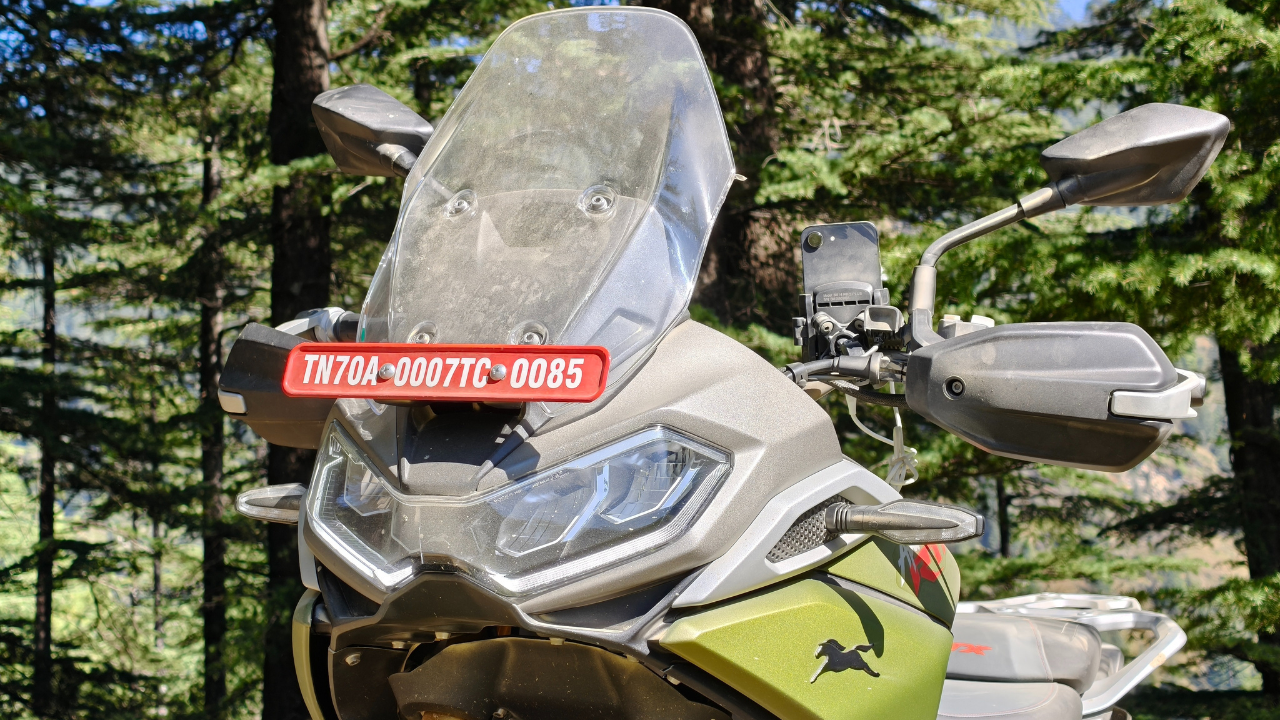
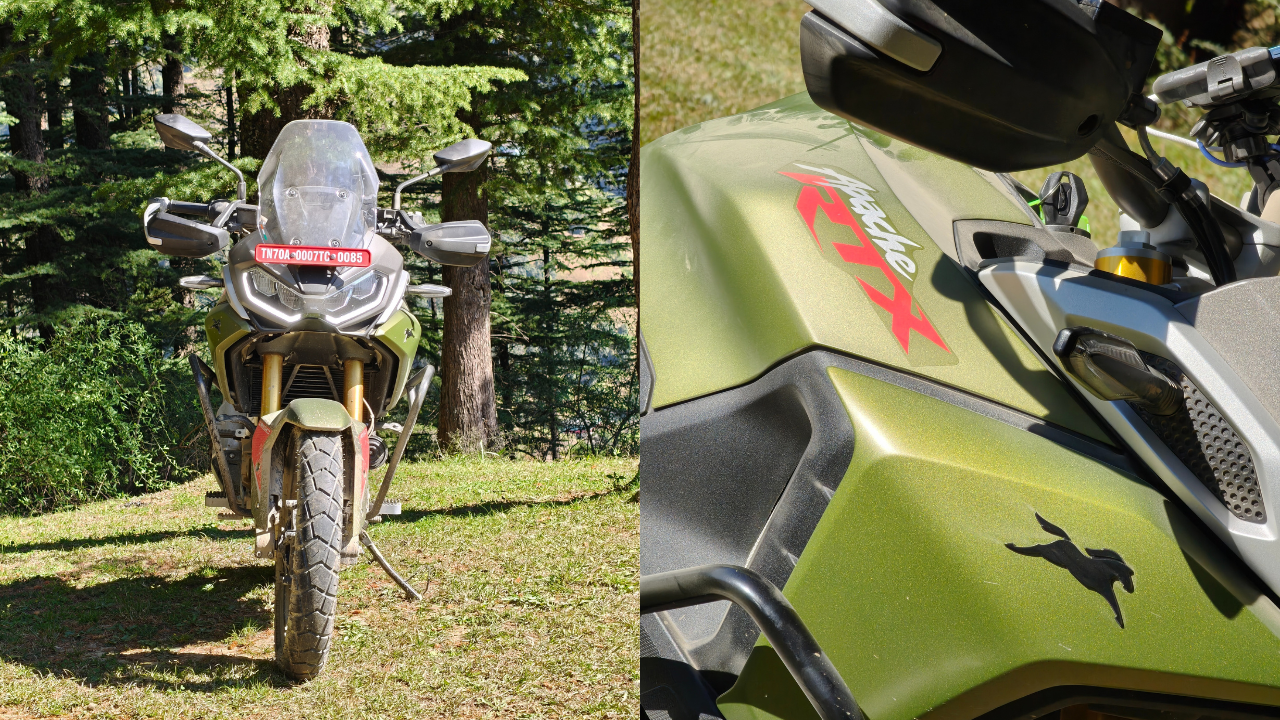
Visually, TVS has masterfully crafted the Apache RTX’s overall design language. The striking twin LED headlights, a sharply contoured windscreen, and crisp lines flowing into a muscular fuel tank give it a purposeful, yet not overly aggressive, presence. There’s a substantial feel at the front, but it’s balanced, never bulky. From the side and rear, the design maintains a practical yet refined aesthetic, with an exposed subframe, a functional luggage rack, and a neatly integrated LED taillight contributing to its adventure-ready appeal.
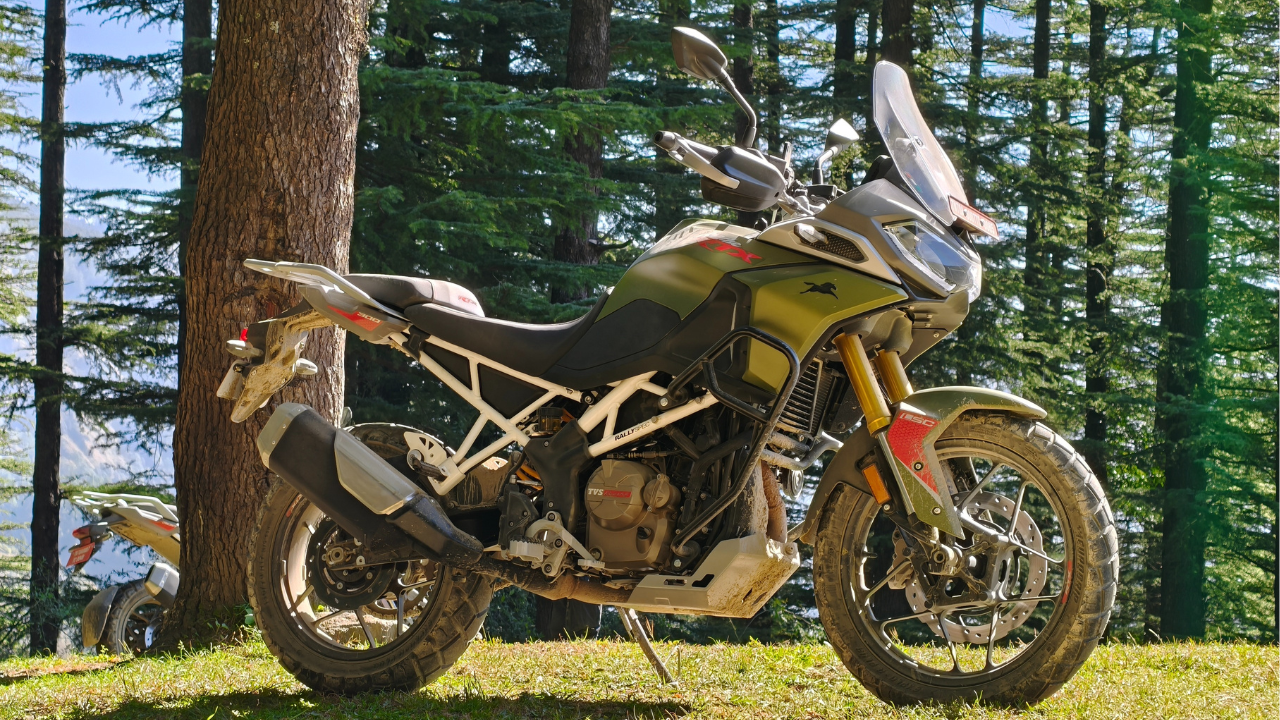
As expected from TVS, the build quality in this segment feels exceptional. The plastics, panel alignment, and overall finish convey a sense of robustness and meticulous attention to detail, qualities not always found at this price point. Everything felt solidly constructed during our brief test, though only extended use will confirm its long-term durability. Ultimately, the Apache RTX’s design prioritizes function over pure aesthetics, but still achieves a handsome and well-proportioned look. Its tall windscreen, broad tank, and split seats create an imposing road presence, making it appear larger than its actual size.
Features and Ergonomics
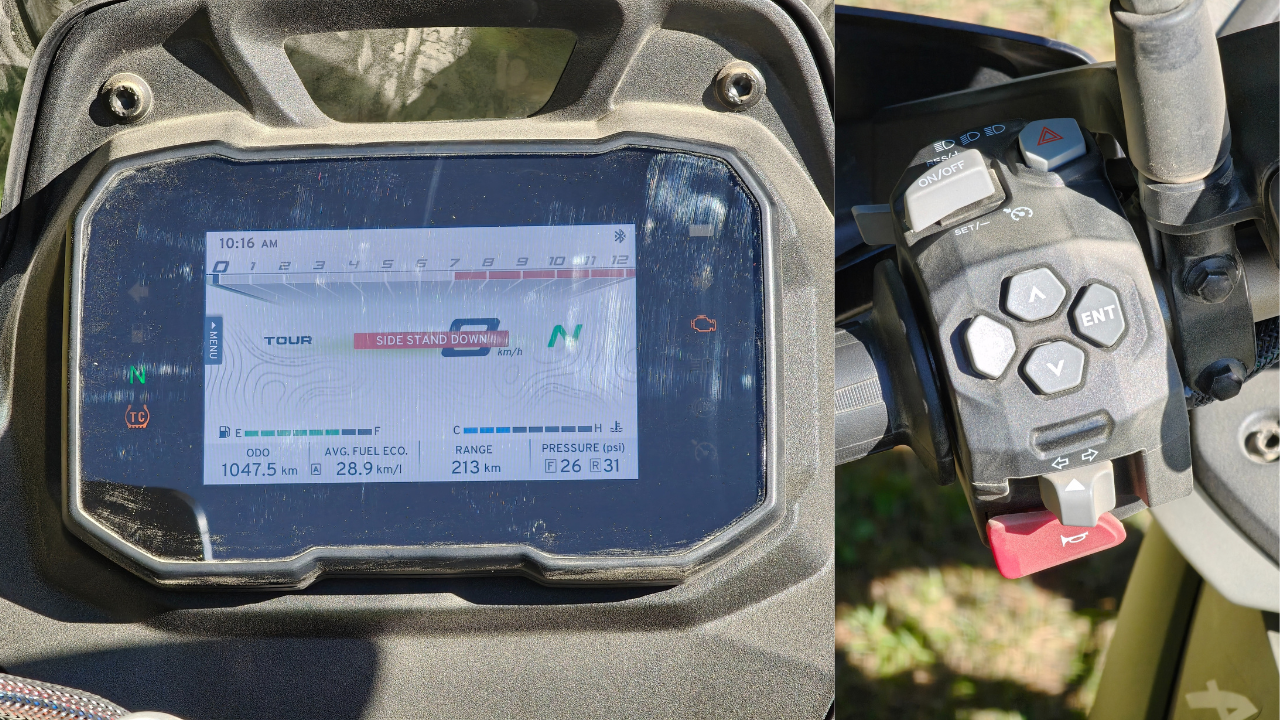
TVS has equipped the Apache RTX with a generous array of features. The bike offers four distinct riding modes – Urban, Rain, Tour, and Rally – each precisely adjusting ABS and traction control to suit varying terrains and rider preferences. Cruise control comes standard across all variants, a thoughtful inclusion particularly useful for extended highway journeys. Higher-end variants elevate the experience with a sharp 5-inch TFT display, easily controlled via dedicated switchgear. When paired with the TVS SmartXonnect app, riders gain access to connected functionalities like Google Maps mirroring and detailed ride analytics, adding a layer of technological sophistication rarely seen in this price category.
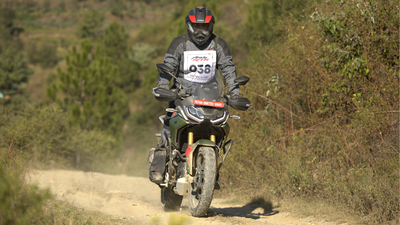
Our 120 km test loop through Fagu in Shimla proved to be a formidable challenge, featuring broken tarmac, deep potholes, and sections that could barely be classified as roads. Throughout this demanding route, the RTX’s suspension demonstrated impressive balance; it absorbed bumps effortlessly while maintaining composure. Even over severely rough terrain, I never felt the need to stand up, as the suspension masterfully absorbed impacts, ensuring a smooth and controlled ride.
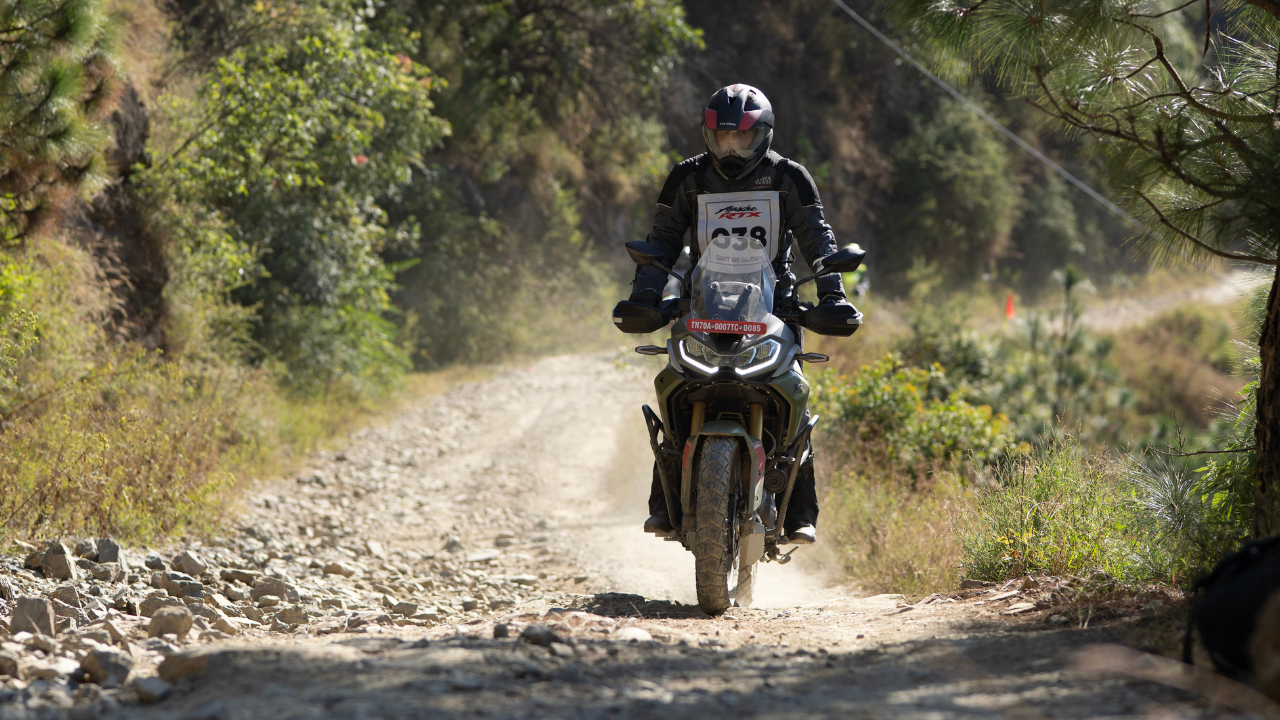
The ergonomics are perfectly tailored for long hours in the saddle. The tall, wide handlebar provides excellent leverage, while the neutral footpeg position prevents cramping even after extended rides. At 5 feet 11 inches, I could comfortably swing a leg over the 835 mm seat and easily flat-foot one side, which should accommodate most average-height riders with ease. The seating posture feels natural and commanding, offering a clear view ahead and superb control both on and off the tarmac. Overall, the RTX achieves a commendable balance between comfort and confidence, a feat many adventure bikes struggle to perfect.
Engine and hardware
At the heart of the Apache RTX is an entirely new 299cc, liquid-cooled RT-XD4 engine, which first debuted at TVS MotoSoul 2024. This powerhouse delivers 36hp at 9,000rpm and 28.5Nm of torque at 7,000rpm, positioning it as TVS’s second most potent motorcycle, surpassed only by the Apache RR 310. The engine is mated to a 6-speed gearbox and features a bidirectional quickshifter, enhancing its sporty character.
From the moment you ignite the engine, it’s clear that TVS has refined the lessons learned from its earlier 312cc platform. This new engine feels remarkably smoother and more composed, both at idle and on the move. Vibrations are minimal, throttle response is precise, and there’s a crisper, more engaging exhaust note that adds to its lively persona. It’s evident that TVS prioritized not just power, but also a more polished and enjoyable riding experience with this motor.
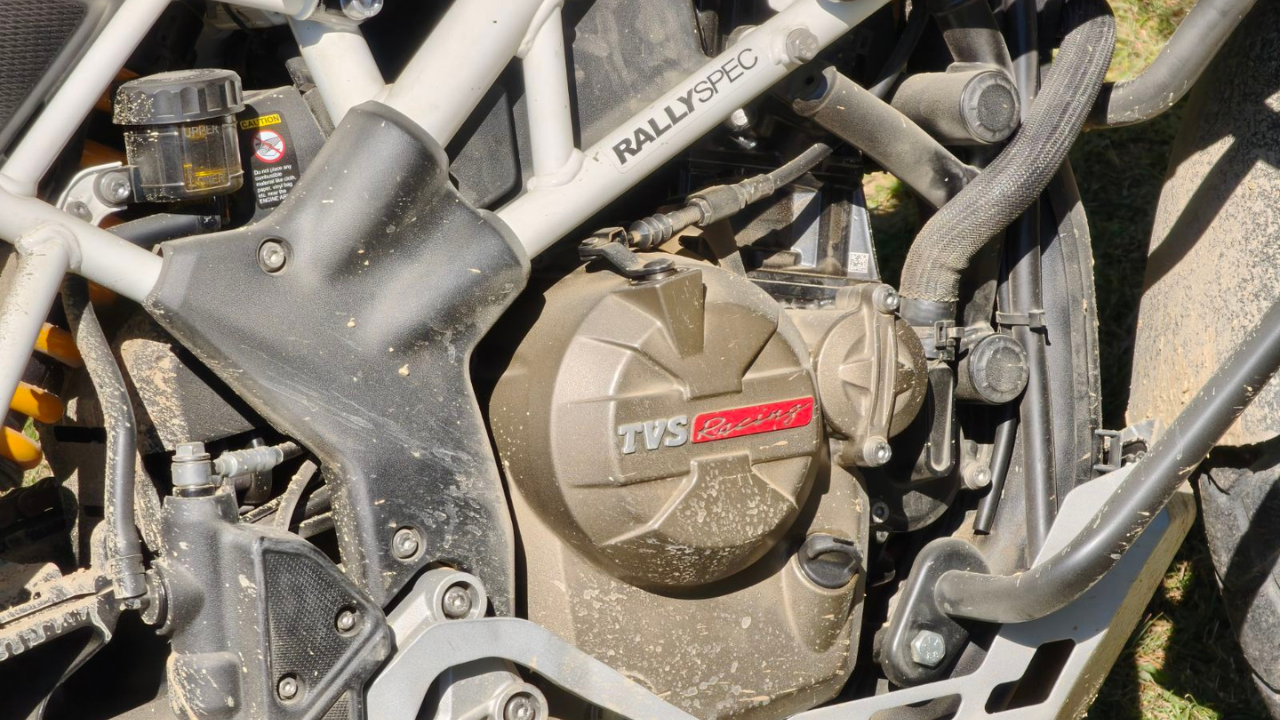
During our journey through Shimla’s challenging, winding hill roads, we primarily operated in second and fourth gears, rarely exceeding 80 km/h before slowing for corners. Consequently, a comprehensive high-speed evaluation is reserved for another occasion. However, even within these limited parameters, the engine felt composed and tractable, pulling smoothly from low speeds without any protest.
In fact, the RTX’s flexibility impressed us more than its raw speed. It can comfortably maintain speeds of around 20–25 km/h in third gear, and with a twist of the throttle, it accelerates predictably and linearly. As a small-capacity single-cylinder engine, it occasionally requires a downshift or two for swift overtakes, especially when the revs dip below its optimal range. The gearbox itself is crisp and precisely calibrated, offering light shifts and seamless engagement, with the quickshifter performing exceptionally well during rapid acceleration through the gears.
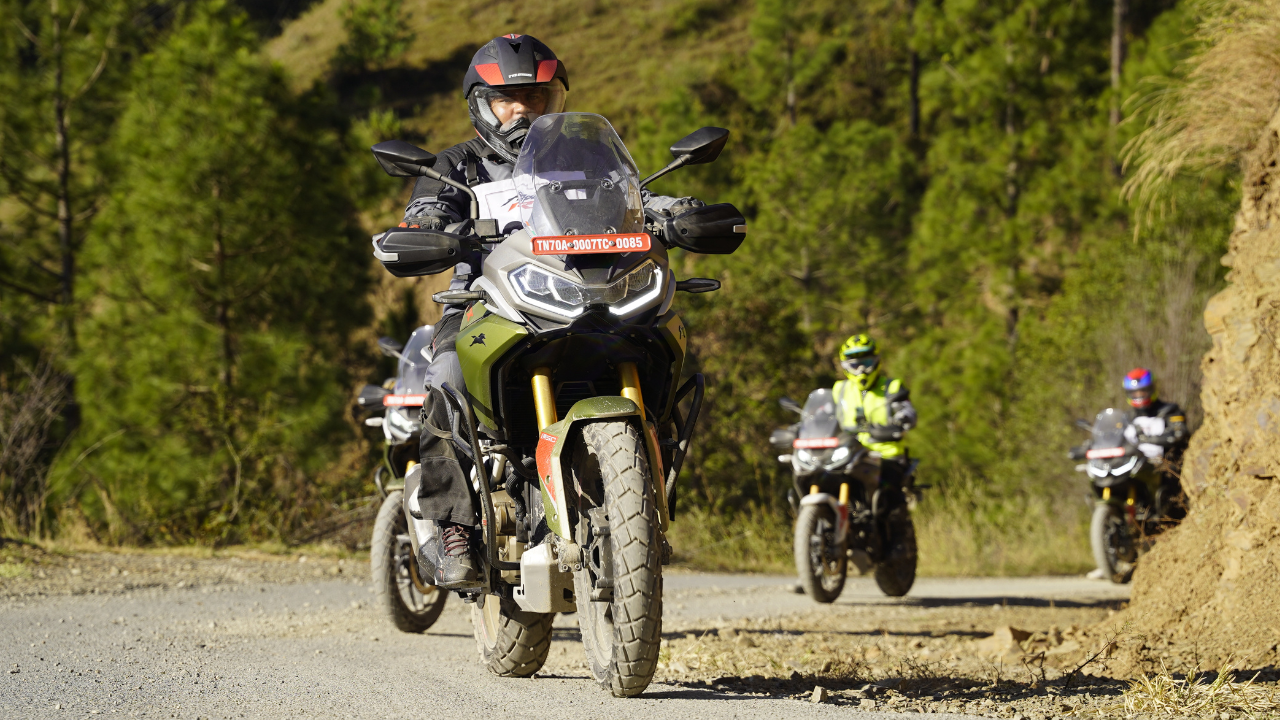
Nevertheless, I did encounter a few instances of inconsistent fueling during upshifts – a brief hesitation where the engine seemed to lose power before resuming its delivery. While not frequent, this is an area TVS could refine further before production models reach showrooms. The RTX feels spirited up to 90 km/h and maintains an effortless cruise at 80 km/h in sixth gear, with minimal vibrations reaching the pegs or handlebars. This instills confidence in its potential as a comfortable highway tourer, though a dedicated 100–120 km/h test will truly unveil its long-distance capabilities. For city commuting, the engine’s tractability and the flexibility of its Urban, Tour, Rain, and Rally modes make it highly versatile. Urban mode ensures smooth and accessible power delivery for newer riders, while Tour and Rally modes sharpen throttle response, making the bike feel more dynamic, particularly on open stretches or challenging trails. Overall, the new 299cc engine strikes an excellent balance between refinement and practicality. It’s smooth, adaptable, and engaging enough to make daily commutes as enjoyable as weekend adventures, though a longer highway stint will truly showcase its full potential.
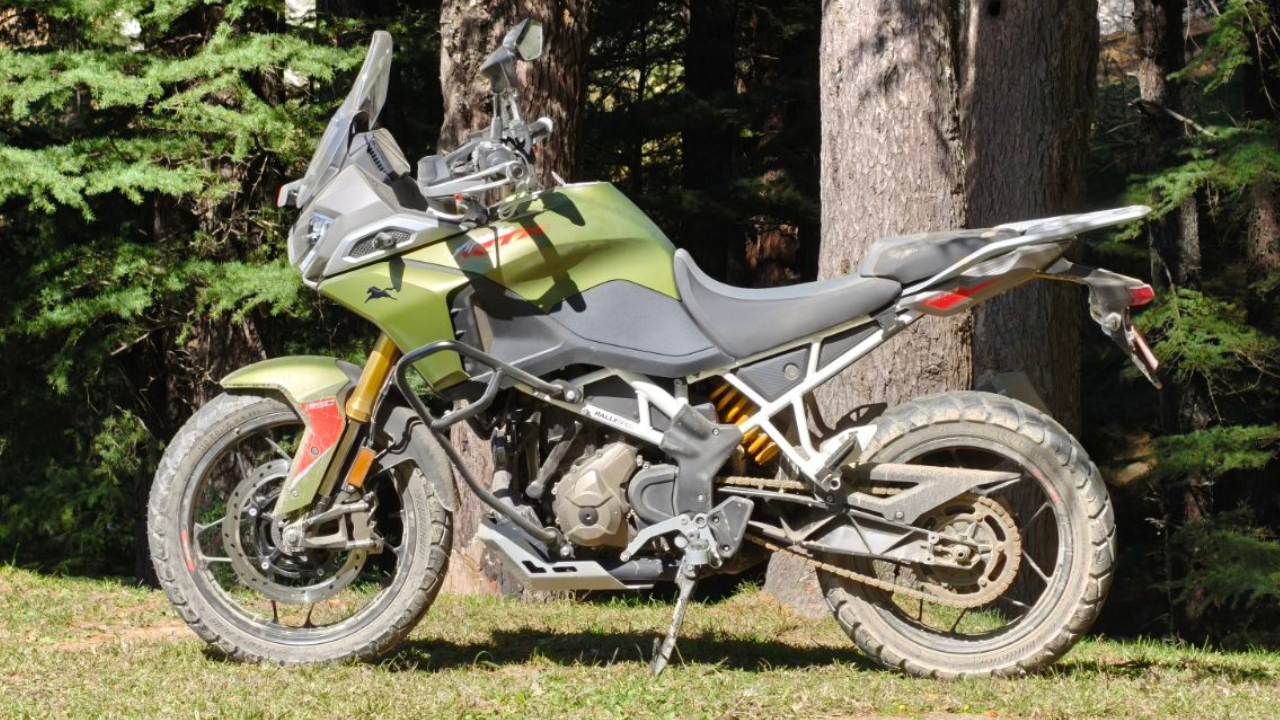
The Apache RTX is constructed around an entirely new steel trellis frame, complemented by a 41mm upside-down front fork and a rear monoshock. Both front and rear suspension systems offer 180mm of travel, while a healthy 200mm of ground clearance ensures the bike confidently navigates uneven terrain. It rides on a 19-inch front and 17-inch rear wheel setup, fitted with tires specifically developed for this machine by TVS. Stopping power is provided by disc brakes at both ends, further enhanced by dual-channel ABS for superior safety. With a seat height of 835mm and a kerb weight of 180kg, the RTX achieves a commendable balance between agility and stability, ideal for an adventure motorcycle in its class.
Ride and handling
On the road, the Apache RTX achieves a superb balance of stability and agility. It feels planted and composed at higher speeds, yet remains nimble enough to effortlessly change direction. This, combined with its plush suspension and generous seating, encourages both rider and passenger to embark on longer journeys. What’s truly impressive is that this comfort doesn’t come at the expense of handling. Credit largely goes to its robust tires – a 110-section upfront and a 150 at the rear – developed by Eurogrip. Even when tackling off-road sections with slush, gravel, and rocky inclines, these tires provided reassuring grip, keeping the bike stable and controlled.
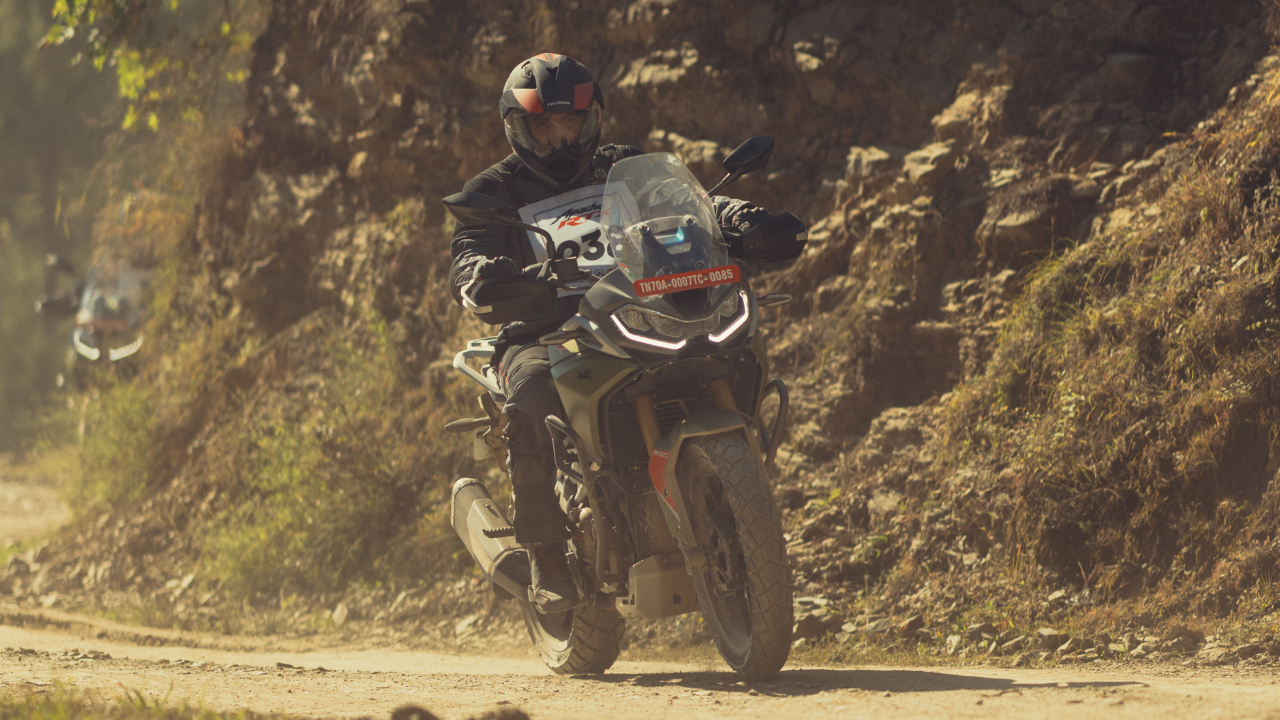
Through challenging uphill turns, rough gravel trails, and uneven dirt paths, the RTX maintained its composure without ever feeling unsettled. The light clutch, combined with a tractable engine that delivers power smoothly rather than aggressively, inspires genuine confidence, especially for less experienced riders. Braking performance is equally reassuring. The initial bite is deliberately gentle for off-road safety, but with increasing pressure, both feedback and modulation are excellent. The dual-channel ABS operates smoothly, engaging only when necessary and never feeling intrusive.
Handling is notably impressive, considering its 19-inch front wheel. The wide handlebars offer ample leverage, making it easy to lean into corners, while quick directional changes require minimal effort. Cornering stability is outstanding, and the tires maintain a strong grip in dry conditions, giving the RTX a planted and confident feel whether on winding roads or rugged trails.
Should you buy one?
The TVS Apache RTX 300 presents a compelling proposition as an entry-level adventure bike that doesn’t cut corners on comfort, features, or style. It blends a sharp, purposeful design with meticulously engineered ergonomics that excel in both urban commuting and long-distance touring. Its new 299cc RT-XD4 engine strikes an impressive balance between refinement and usability, providing tractable performance at lower speeds and a smooth, composed ride even when the terrain gets tough.
While there are minor areas for refinement, such as occasional fueling inconsistencies and the need for more extensive high-speed testing on open highways, the Apache RTX 300 largely succeeds in delivering a versatile, capable, and well-rounded adventure motorcycle. For riders eager to enter the world of touring and light off-roading without a hefty investment, this bike stands out as an exciting and highly competent choice.