
For acclaimed filmmaker Jeethu Joseph, it’s a universal truth that no matter how many diverse projects he takes on, the phenomenal Drishyam franchise will always be his defining work. Though he has ventured into various genres, his name remains synonymous with gripping thrillers. His latest offering, Mirage, is set to further cement his reputation for crafting intricate mystery narratives.
“It’s a blend of thriller, action, and mystery,” Joseph explains during our chat, offering a tantalizing glimpse into his new film. Mirage centers on a woman relentlessly pursuing answers, eventually joined by two companions on a shared quest. Joseph prefers to keep further details under wraps until its September 19 release. Interestingly, the film was initially conceived in Hindi but transitioned to Malayalam after a four-year hiatus, as Joseph found the Hindi industry’s storytelling methods didn’t quite resonate with his vision.
The screenplay for Mirage was a collaborative effort between Jeethu himself and Srinivasan Abrol, based on an original story by Aparna Tarakkad.
Aparna Balamurali takes the central role, starring opposite Asif Ali. “Aparna’s character is deeply entangled in solving a complex puzzle, and Asif’s character becomes her partner on that challenging journey,” Joseph reveals. Their proven on-screen chemistry, showcased in films like Kishkindha Kaandam and Sunday Holiday, made their casting a natural and easy decision.
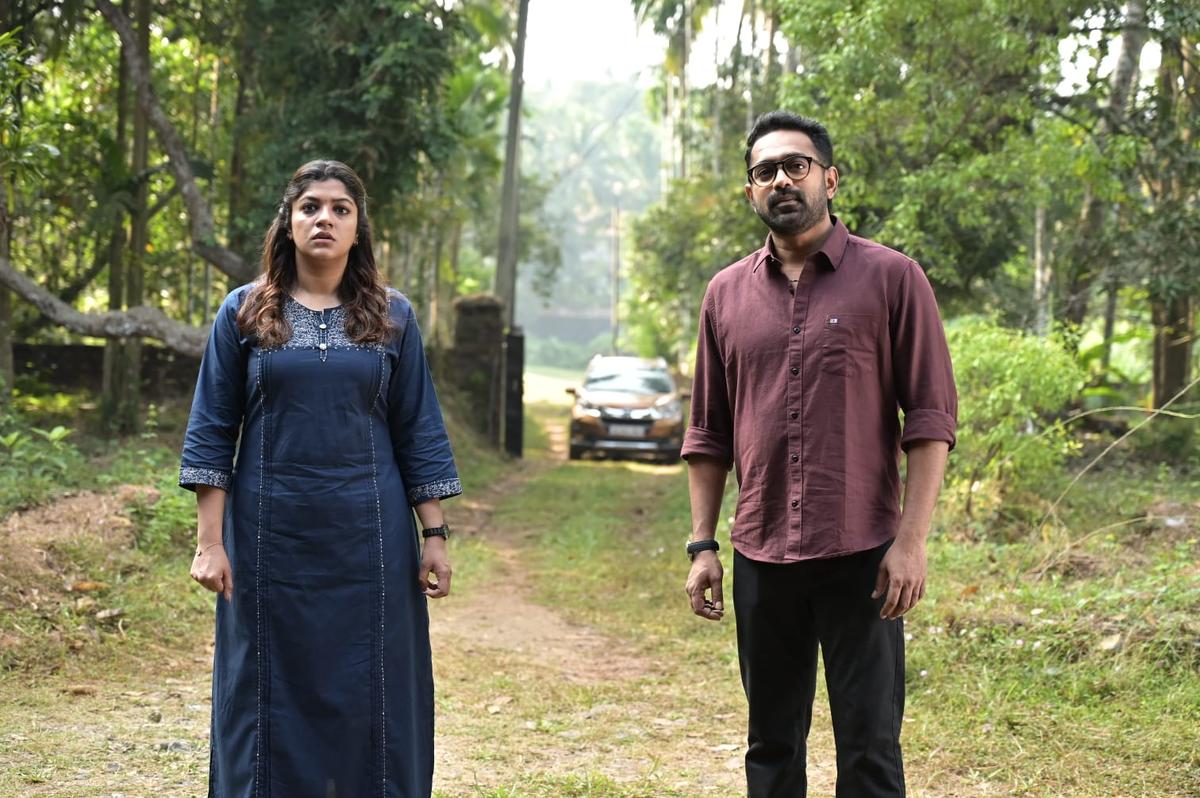
Aparna Balamurali and Asif Ali in ‘Mirage’
“Aparna is an incredibly talented actor, and this particular role demands her to portray a wide range of emotions and experiences. Her seasoned performance was exactly what was needed. She and Asif also share a fantastic rapport on screen. I reached out to Asif because this character presented him with a unique challenge, which he found quite engaging. He’s always eager to embrace roles that allow him to showcase his acting prowess. However, it’s important to emphasize that Aparna’s character is the true heart of this story,” Joseph elaborated.
Joseph clarified that featuring a woman in the lead wasn’t a conscious statement or a calculated move. “I don’t believe in making a film purely because it aligns with current trends. If a character is compelling and the narrative captures the audience’s attention, the gender of the lead actor becomes secondary. It’s always the content that truly matters. If success hinged solely on a lead’s gender, why would films starring prominent male actors occasionally falter? Ultimately, it all boils down to strong performances and exceptional writing.”
There’s no denying that the Drishyam films have become the cornerstone of Jeethu Joseph’s reputation. He’s frequently celebrated as the visionary behind “that thriller” that shattered box office records across multiple languages. A glance at his filmography reveals a pattern: many of his other works, including his debut Detective, along with Memories, Oozham, 12th Man, Neru, and Kooman, similarly lean into the thriller genre. Despite this, Joseph maintains he never intentionally sought to specialize in thrillers.
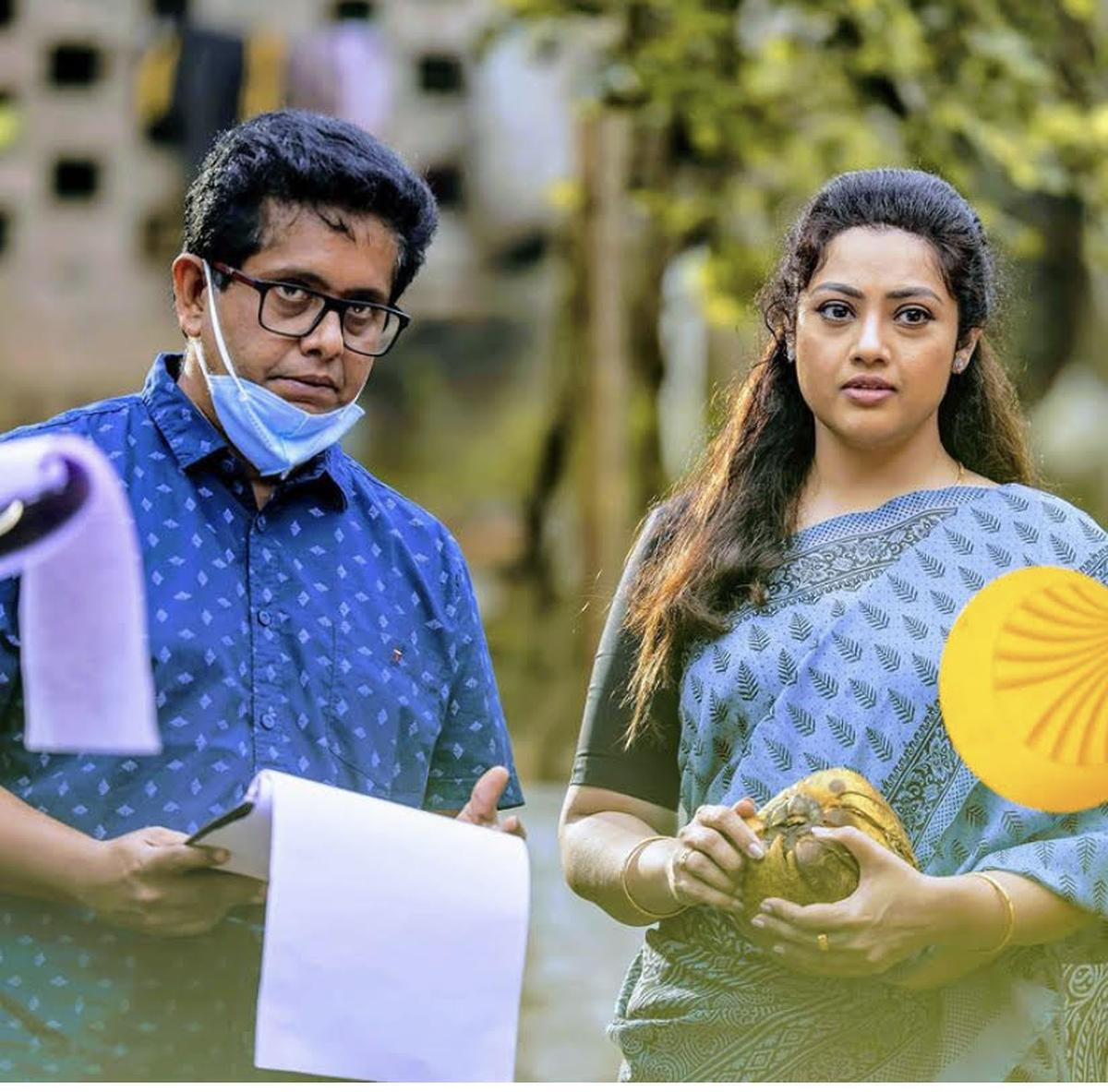
With Meena on the sets of ‘Drishyam 2’
“When I started my career, I didn’t consciously pick a genre to focus on, and certainly not mysteries or thrillers,” Joseph stated. “However, I grew up devouring investigative novels by authors like Agatha Christie, Arthur Conan Doyle, and Alistair MacLean, so I was naturally drawn to that kind of storytelling.” He continued, “My debut film, Detective, evolved from a core idea into an investigative thriller. But for my second project, Mummy and Me, I deliberately chose something entirely different. I wanted to demonstrate my versatility and prove I could create other types of cinema.”
His next venture was My Boss, a charmingly light-hearted film. Joseph admits this was a calculated move, an attempt to prevent being pigeonholed exclusively as a thriller director. However, the back-to-back releases of Memories and Drishyam sealed his fate. “While I was deeply immersed in Memories and My Boss, the script for Drishyam was already complete,” he recalls. “Although I had penned it, I wasn’t originally slated to direct. I hadn’t even considered casting. But by the time I was approached to helm the project, Mohanlal’s dates were locked in, and that’s how Drishyam ultimately came to be.”
Following this, he directed Life of Josutty, which unfortunately didn’t fare well at the box office. “That was a conscious decision,” he explains, “because I desperately craved a change. Constantly making thrillers can become creatively stifling, even impacting the variety in cinematography and camera work.” This urge for diversity led him to explore other genres, resulting in lighter films like Mr & Mrs Rowdy and Nunakuzhy, as well as the courtroom drama Neru. “My aim is to continually experiment with different kinds of stories,” he emphasizes. “There’s simply no point in blindly chasing a formula, even if it has brought success before.”
Joseph is equally resolute in his refusal to be confined by linguistic boundaries. After the monumental success of Drishyam, he was frequently lauded as a ‘pan-Indian’ director, a label he views with skepticism. “Is such a category truly meaningful?” he muses. “I often question it when people use that term. Personally, I don’t dwell on labels or grand titles. My sole focus is to tell compelling stories.” He confirms that offers have come from various film industries: “I’m slated to work on a Hindi film, and I’m also exploring a couple of intriguing Telugu projects.” Beyond just language, Joseph is keenly interested in immersing himself in the distinct filmmaking approaches prevalent in different cinematic landscapes.
Among Joseph’s many aspirations is to direct what he describes as a “mass film” – a pure, unadulterated entertainer. “Audiences typically come to my films expecting intricate plots and logical narratives, but I long to create something that’s just sheer, unpretentious fun,” he shares. He reminisces, “Years ago, I confided in actor-director Johny Antony that I dreamt of making a film akin to his CID Moosa – an absolute, no-holds-barred entertainer.”
He further adds, “Following the success of Drishyam, I found myself branded as a ‘pan-Indian’ director. But for me, it has always been singularly about the art of storytelling. The sheer scale of a film holds little importance.” He recalls the reactions to his film Nunakuzhy: “When I made Nunakuzhy, people questioned why I was undertaking a ‘small film.’ To me, there’s no such thing as ‘big’ or ‘small’ cinema; there are only compelling stories that deserve to be told, and countless ways to bring them to life. While some filmmakers strive to escalate the grandeur of each subsequent project, I simply don’t share that perspective. In fact, I’d even love to direct a children’s film someday.”
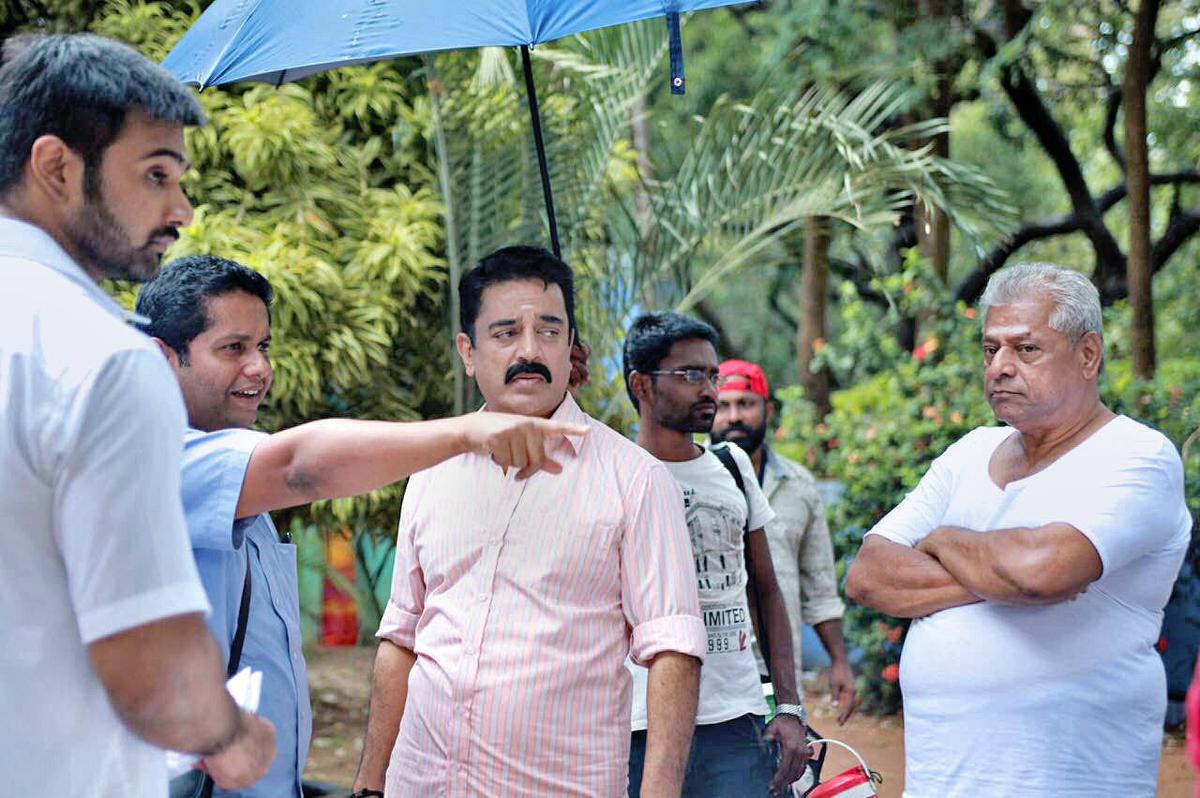
Jeethu Joseph (left) on location during the filming of ‘Papanasam’
Joseph’s prowess as a scenarist often garners as much attention and critical acclaim as his directorial work. He firmly believes that compelling narratives don’t simply materialize from nothing. “A story might spark from a single visual, a compelling character, or a significant incident—something you personally experience, read, or encounter in another film or the news. From there, you begin to intricately weave a complete narrative,” he explains. “While cinema is undeniably a commercial art form, I strive to operate in that fascinating middle ground between what is often termed ‘parallel cinema’ and mainstream commercial films. A movie needs to captivate a broad audience; only then does it truly fulfill its purpose. My constant quest is for potent subjects featuring well-developed characters, always aiming to transform the film into a memorable experience. This philosophy guides me from the very initial stages of scripting.”
With a third installment of Drishyam already in development, the conversation naturally turns to the possibility of a fourth. Joseph lets out a slight laugh, clearly amused by the suggestion. “I honestly never even anticipated a second part,” he admits. “But when the idea was floated, I began to explore its potential. Drishyam 2 wasn’t conceptualized with a third film in mind at all. It was simply the powerful final shot of the second movie that unexpectedly created an opening for another chapter.”
Currently, his focus is firmly on his immediate projects: Ram (Part I), an eagerly awaited action thriller starring superstar Mohanlal, and Valathu Vashathe Kallan, which brings together the talents of Biju Menon and Joju George.