The History of Cinema: A Journey Through Time
Cinema has been on an incredible journey, from silent movies to today’s technological marvels. The film industry continues to win audiences’ hearts and minds, from silent movie days to high-tech 3D blockbusters with thrilling storylines, memorable characters, and novel inventions.
Discovery of the Cinema
The first film to come out was Workers Leaving the Lumière Factory in 1895, which marked the beginning of cinema. During this silent period, there were legends such as Charlie Chaplin, Buster Keaton, and Harold Lloyd, who communicated through storytelling without using words. Synchronized sound also played a great role in changing the way cinema was presented before audiences during the 1920s.
The Golden Age of Hollywood
This was one of the most memorable times of film classics, including Casablanca, The Wizard of Oz, and Singin’ in the Rain, which occurred between the 1930s and 1960s. In this period, the world also saw Marilyn Monroe, Audrey Hepburn, and James Dean as cultural icons and the studio system at its peak in filmmaking.
The Blockbuster Revolution
The blockbuster revolutionized the face of cinema in the 1970s and 1980s. Jaws, Star Wars, and E.T. the Extra-Terrestrial were the blockbusters that captured audiences’ imagination all over the world. Filmmakers such as Steven Spielberg and George Lucas changed the face of filmmaking by creating larger-than-life spectacles that redefined the process of filmmaking and set new standards for the industry.
Contemporary Cinema
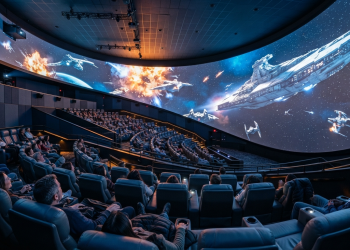
The 1990s and the 2000s have seen revolutions in the forms of CGI, 3D, and IMAX. The Matrix, Avatar, and The Lord of the Rings trilogy created a new visual platform for storytelling. Independent cinema saw much importance and produced some of the most powerful filmmakers, with names like Quentin Tarantino and Christopher Nolan.
New Cinema
Today’s cinemas are filled with diversity—from stories that find their source from every nook and corner of the world to streaming platforms revolutionizing the way people watch movies. Films such as Parasite, The Joker, and Avengers: Endgame did not just win awards but set new records and changed pop culture around the globe.
Impact of Cinema on Culture
Cinema is not only entertainment. It influences societal values, starts discussions over relevant issues, and affects social movements. Characters, scenarios, and phrases from a movie become part of everyone’s life, and film continues contributing to collective memories generation after generation.
Film Genres
- Action: Fast-paced, high-energy sequences.
- Comedy: Humor, satire, and social commentary.
- Drama: Emotional, character-driven stories.
- Horror: Suspense, fear, and psychological thrill.
- Romance: Scenes of love, relationships, and emotional attachment.
Major Film Festivals
- Cannes Film Festival
- Sundance Film Festival
- Toronto International Film Festival
- Berlin International Film Festival
High-ranking Awards
- Academy Awards (Oscars)
- Golden Globe Awards
- BAFTA Awards
- Screen Actors Guild Awards
Legendary Directors
- Alfred Hitchcock
- Martin Scorsese
- Francis Ford Coppola
- Steven Spielberg
- Quentin Tarantino
Famous Actors
- Marlon Brando
- Meryl Streep
- Jack Nicholson
- Julia Roberts
- Denzel Washington
The Future of Cinema
New technologies, including virtual reality, and the resurged new wave of streaming services in the framework of social media, will define a new direction for cinema. Their influence on filmmaking, distribution, and consumption will be very significant.
Glossary
- Cinematography: This is the act of filming visual images for a film.
- Editing: Assembling non-sequential footage into a coherent story.
- Screenplay: Script or written text of a movie.
- Sound Design: Refers to all the audio elements produced in a film.
- Visual Effects: Digital effects added to films to make them more interesting.
References
- The Film Encyclopedia, Ephraim Katz
- The Oxford Handbook of Film Theory
- The History of Cinema
Further Reading
- IMDb
- Rotten Tomatoes
- Metacritic
- Film School Rejects
Exploring cinema through its history, genres, and the important figures involved truly helps us appreciate the potential of this art form for influencing human societies.