
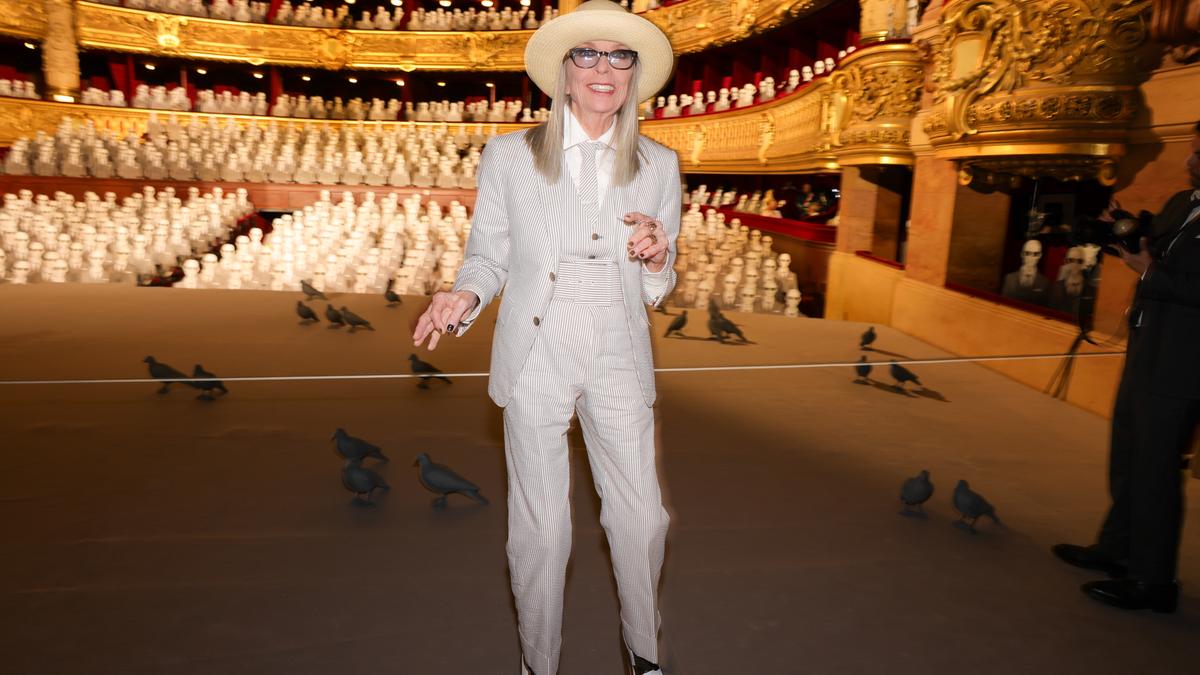
The late Diane Keaton at the Paris Fashion Week in 2023. (Getty Images)
For many, embracing trousers as a core part of their style identity, especially as a woman, has meant looking to a select group of pioneers. In my early twenties, as I gravitated towards wearing pants for reasons both defiant (hello, Western wear!) and practical (goodbye, constant waxing!), my sartorial heroes became a cherished trio: Katharine Hepburn, Audrey Hepburn, and Diane Keaton. While the Hepburns each carved out their distinctive trouser looks – Katharine with her wide-legged pants and crisp Oxford shirts, and Audrey with her sleek cigarette pants and ballet flats – Diane Keaton broke every mold. She truly owned the pant, sporting every conceivable silhouette: cropped, wide-legged, boot cut, skinny, straight, and gloriously baggy.
My introduction to Keaton came later, in the mid-2010s, when her iconic 1977 ‘Annie Hall’ ensemble sparked a renewed fashion trend. Though the film itself is a blur of memories, her distinctive outfit – suit vests, menswear-inspired shoes, voluminous pleated trousers, casually knotted ties, and floppy hats – remains as fresh and influential today as ever. Fashion commentators have rightly lauded this look, entirely Keaton’s own creation, for advancing the acceptance of pants for women as profoundly as Marlene Dietrich and Katharine Hepburn did in their eras. This trailblazing approach was particularly significant given that Yves Saint Laurent had only introduced women’s tuxedos and pantsuits a decade prior, and groundbreaking designers like Coco Chanel and Jean Patou had first championed trousers for women over half a century earlier, seeking to liberate them from restrictive garments.
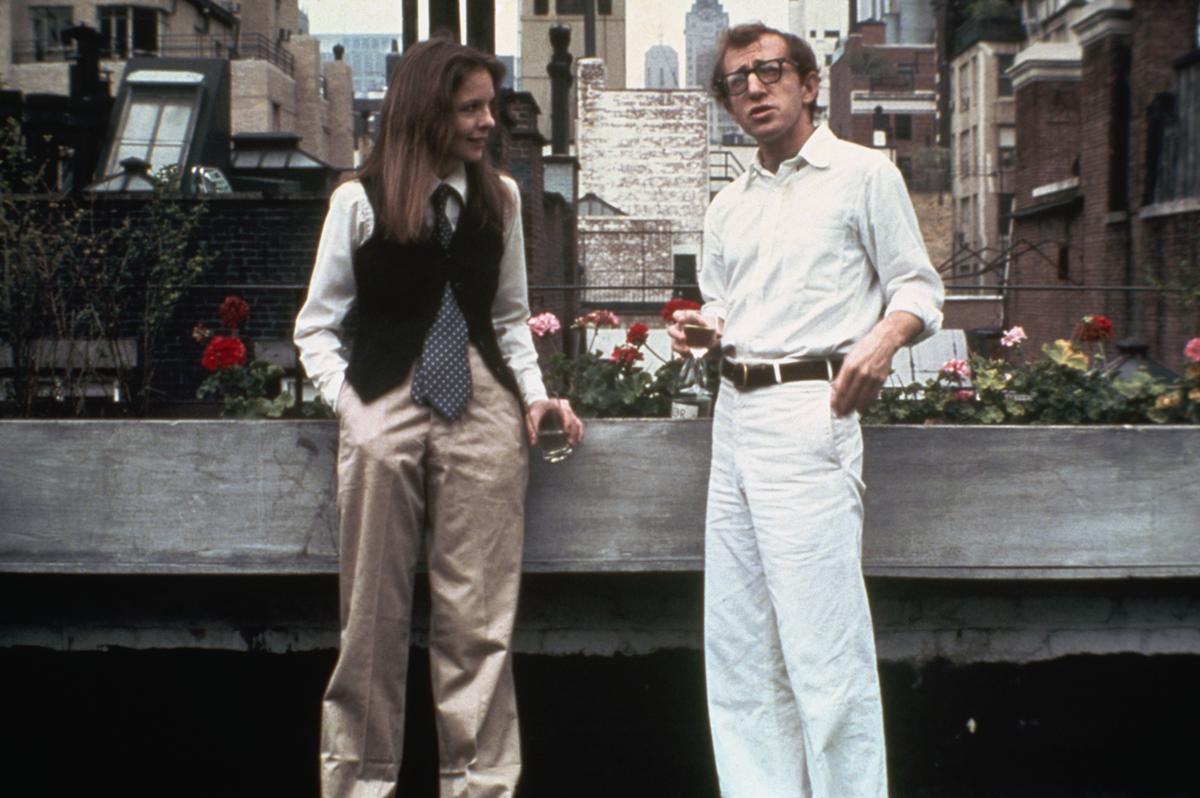
Diane Keaton and Woody Allen in a scene from the seminal film ‘Annie Hall’ (1977). (Getty Images)
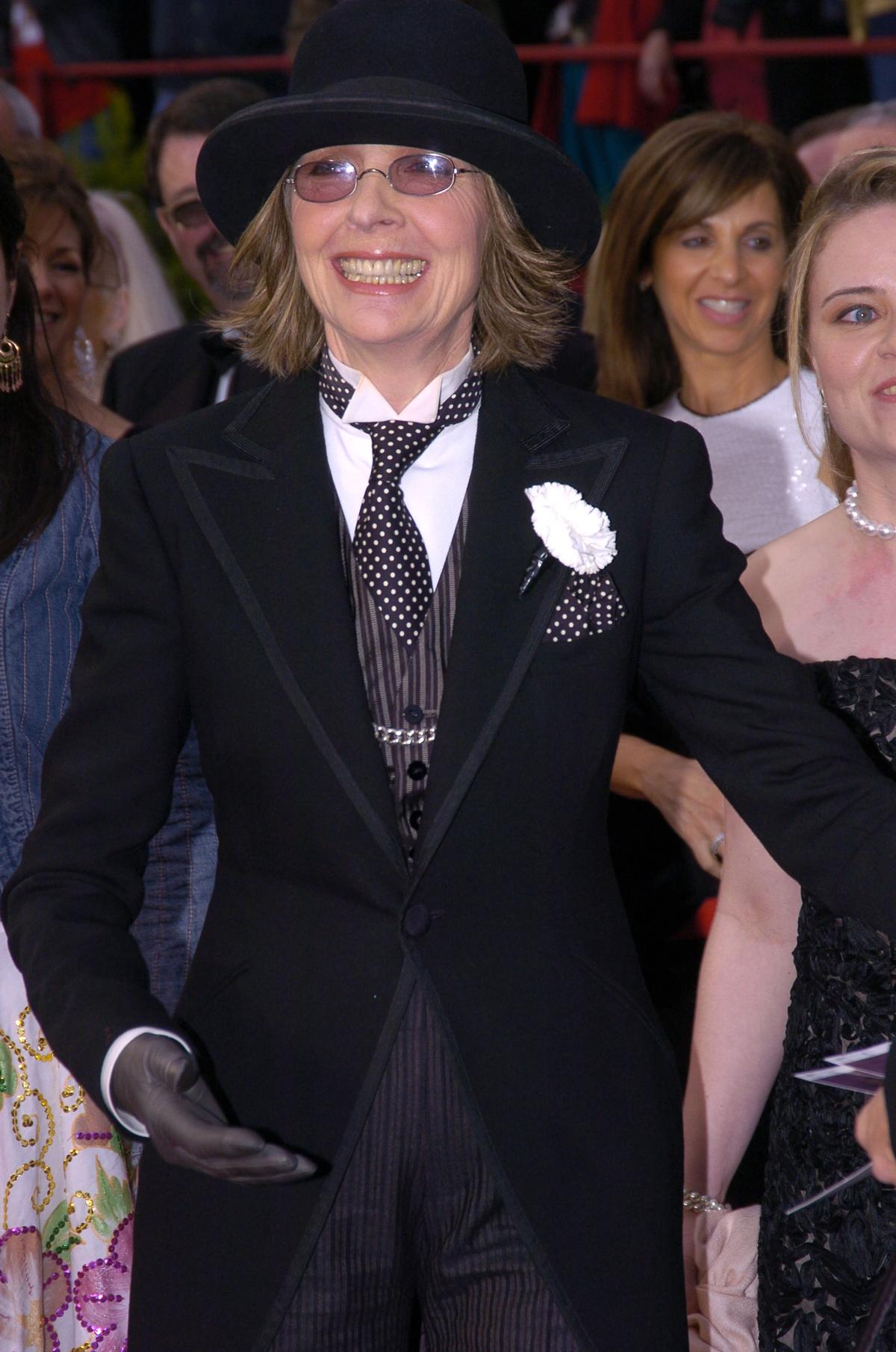
Diane Keaton gracing the 76th Annual Academy Awards in Los Angeles. (Getty Images)
For generations, women adopting tailored menswear carried significant social and political weight. Trousers, symbolizing male authority, often led to accusations of unfemininity. Even the allure of Hollywood glamour couldn’t entirely protect trailblazers like Katharine Hepburn, Greta Garbo, and Marlene Dietrich from such labels. Moreover, trousers were frequently seen as conveying a lesbian identity, and full suits were perceived as both an affront to male identity and a problematic feminist capitulation to male dominance. (Notably, this scrutiny rarely extended to universally accepted jeans or track pants.) It was a classic ‘damned if you do, damned if you don’t’ scenario. The prevalent, and still common, strategy was to wear masculine attire only occasionally, ensuring enough appearances in ‘feminine’ outfits to balance the perception.
Diane Keaton, however, fearlessly forged an identity centered almost entirely on menswear, from her tailored suits down to her choice of shoes. Her frequent red-carpet appearances in tuxedos, three-piece suits, and even spats redefined glamour. She ingeniously crafted an alternative elegance, a sophisticated form of modest fashion, by taking conventional ideas of ‘unattractive’ female attire and transforming them into statements of power and style. Beyond her signature eclectic layering of menswear, including oversized jackets, playful neckties, stacks of sweaters and vests, and even cowboy boots, she confidently incorporated glasses and bowler hats, further solidifying her unique aesthetic.
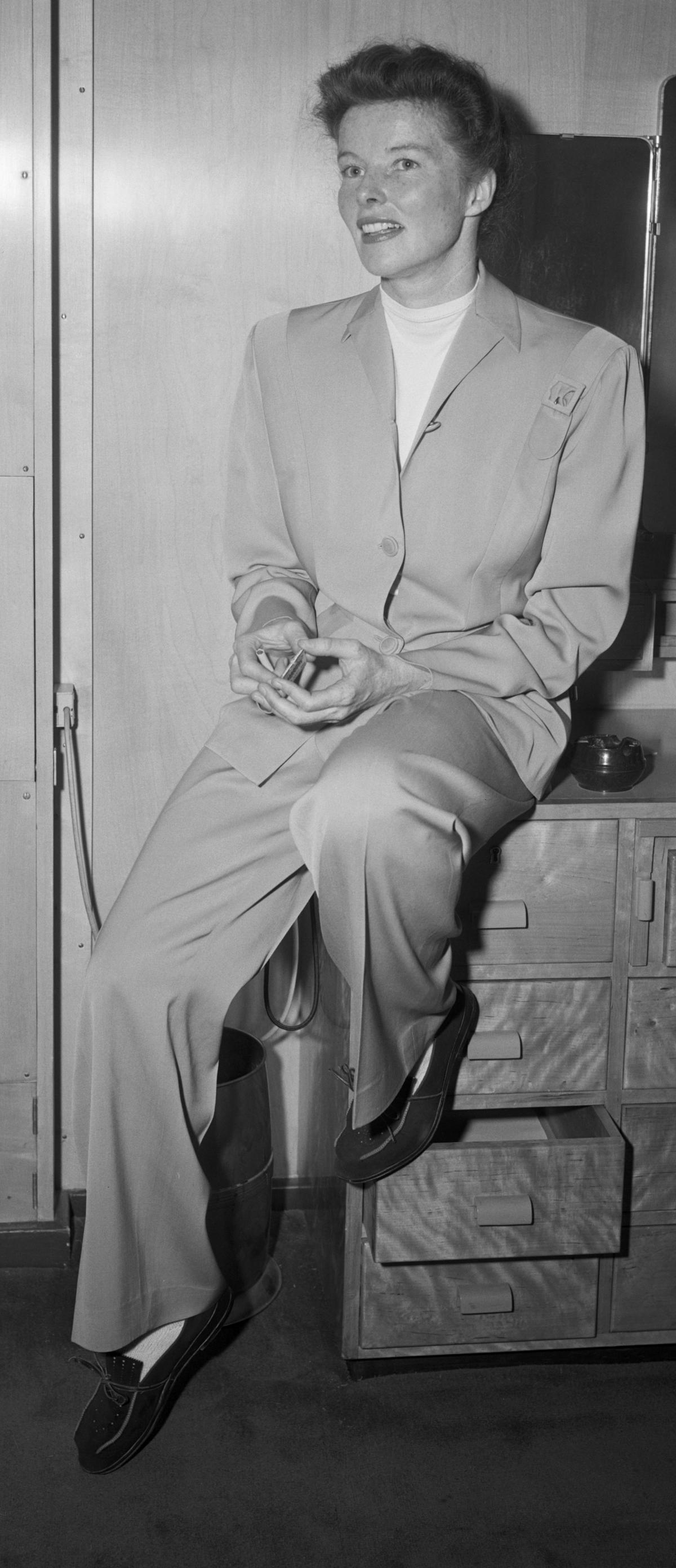
The legendary actor Katharine Hepburn. (Getty Images)
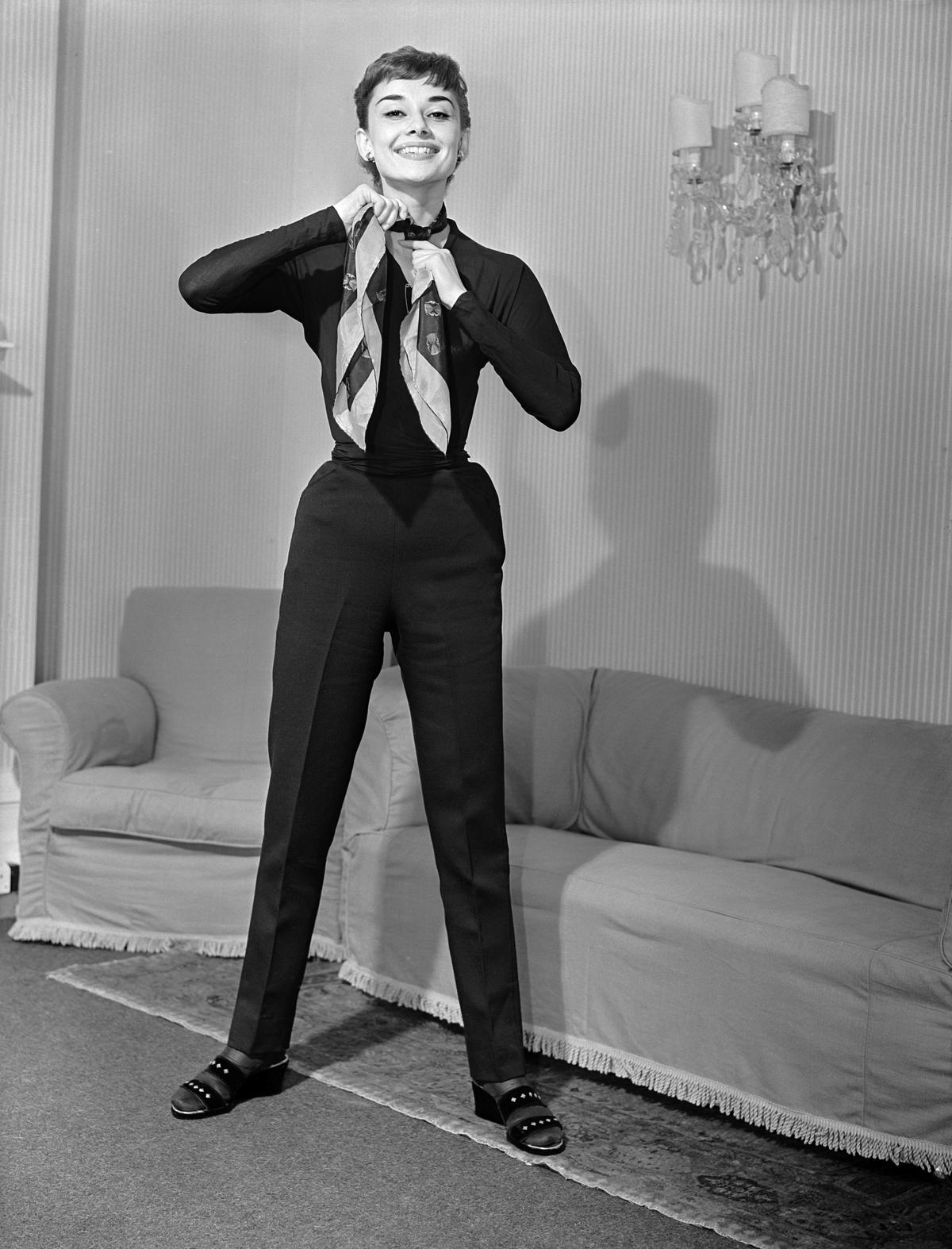
Audrey Hepburn in a timeless shot from 1953. (Getty Images)
The aesthetic she cultivated was uniquely hers, fluidly shifting from androgynous to asexualized, and at times, distinctly feminine. Her fashion choices weren’t just about style; they held a practical dimension, influenced by a family history of skin cancer. Keaton herself faced two diagnoses: basal cell carcinoma at 21, and squamous cell cancer later in life.
While the ‘Annie Hall’ look undoubtedly propelled Keaton to fashion stardom, it was far from her only expression of style. Her 1978 Oscars outfit, where she accepted the Best Actress award for ‘Annie Hall,’ perfectly illustrates her willingness to constantly evolve. She famously paired a flowing, voluminous mid-calf skirt over straight pants, completing the ensemble with a double-breasted Armani blazer. This adventurous layering, a concept rarely seen in mainstream fashion, would likely still stun today’s red-carpet critics.
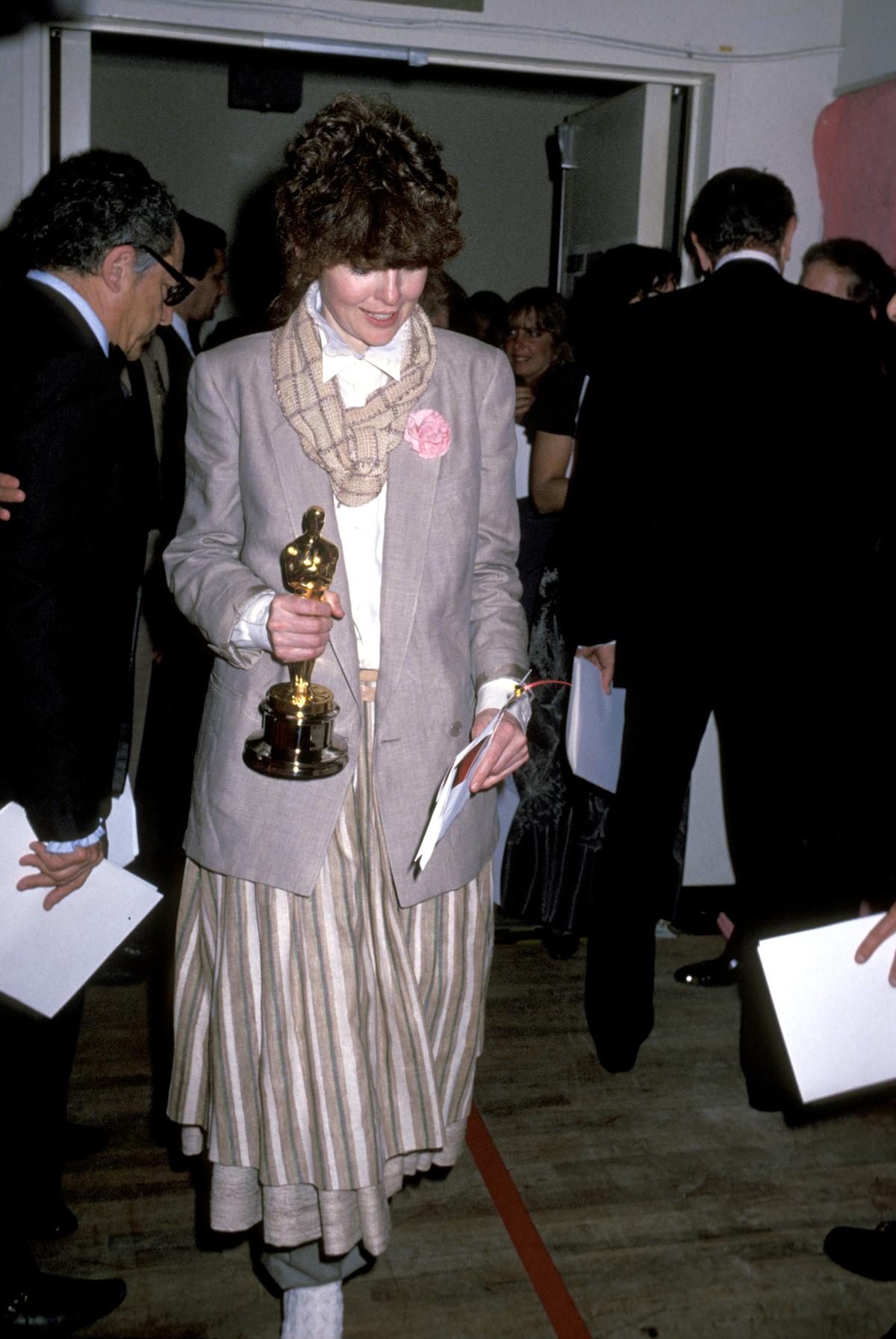
Diane Keaton accepting her Oscar at the 50th Annual Academy Awards in 1978, Los Angeles. (Getty Images)
In an Instagram video, Keaton once shared her deep interest in fashion. What remained unspoken, yet evident, was her fearless willingness to experiment and embrace the new. Throughout her career, Keaton proudly showcased her grey hair, opted against cosmetic surgery, and famously never relied on a stylist. She masterfully played with volume, especially in skirts and dresses, sporting them with the same vibrant flair as her beloved trousers. She championed ‘anti-fit’ silhouettes and often incorporated elegant long coats. Her eclectic style blended plaids with pearls, rugged boots with sharp blazers, and cravats with bold belts, proving her unique fashion lexicon.
While Coco Chanel introduced pants as a symbol of comfort and liberation, and Katharine Hepburn famously embraced them while skateboarding, Diane Keaton perhaps harnessed this freedom to explore a multitude of passions. Beyond her illustrious Hollywood career, she authored three poignant memoirs: ‘Then Again’ (2011), ‘Let’s Just Say it Wasn’t Pretty’ (2014), and ‘Brother & Sister: A Memoir’ (2020). She also published numerous photography books, showcasing her own work, that of others, and collections of found photographs. Her deep dive into photography included shooting a series of striking hotel interiors for Rolling Stone magazine, which later evolved into her 1980 Knopf book, ‘Reservations.’ The stark, geometric quality of these black-and-white images strikingly mirrors the often monochrome, check, and stripe patterns found in her personal wardrobe.
Keaton’s creative pursuits extended to interior design; she famously renovated homes, including preserving two architectural masterpieces by Frank Lloyd Wright. She also shared her design philosophy through books like ‘California Romantica’ (2007) and ‘The House that Pinterest Built’ (2017). A true renaissance woman, she adopted two children in her fifties, ventured into music with a single release, and cultivated a vibrant presence as an Instagram personality.
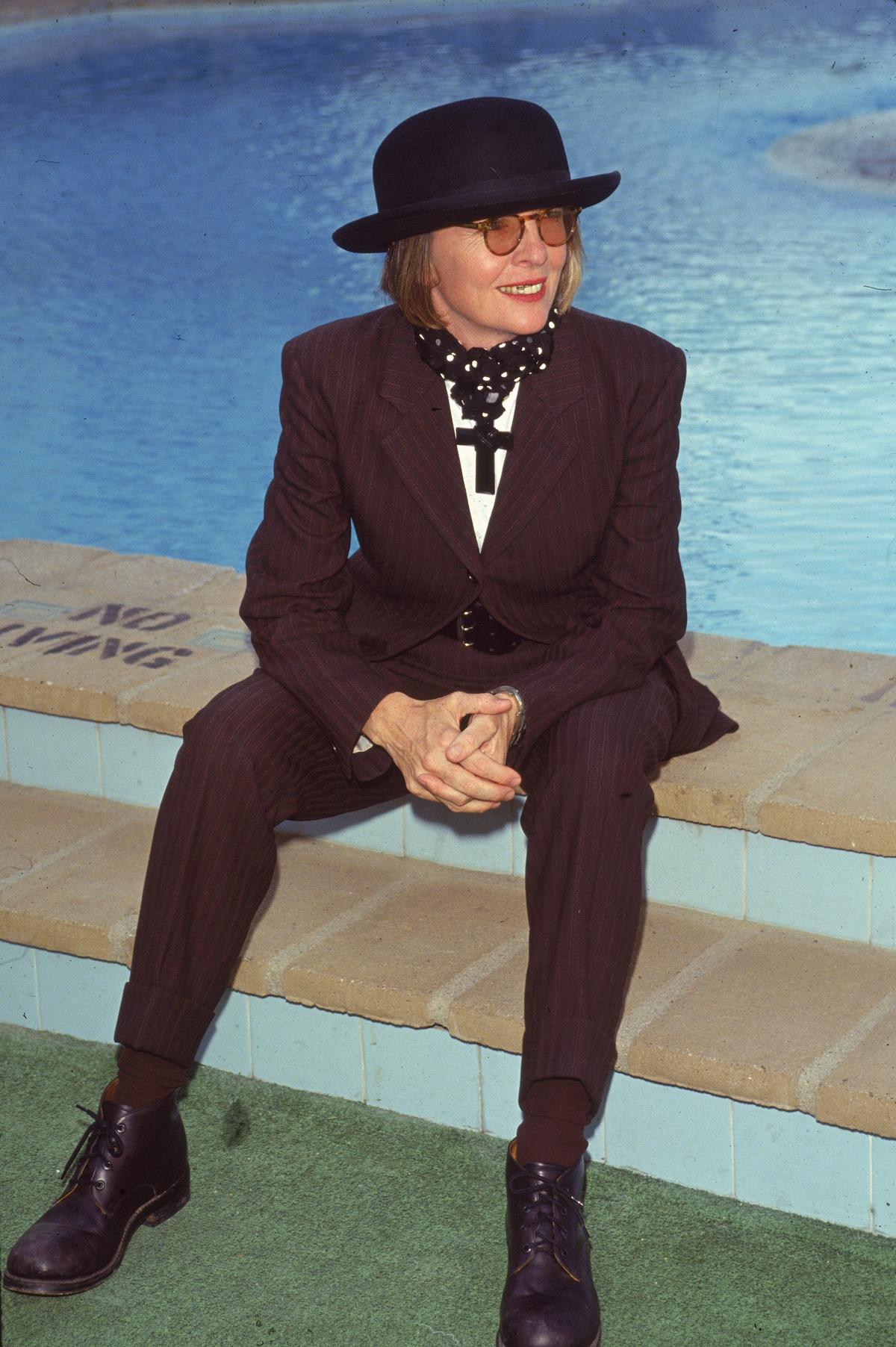
Actor Diane Keaton in 1996, showcasing her distinctive style with a purple & black striped suit, bowler hat, and a striking black crucifix necklace. (Getty Images)
My encounters with Keaton’s style were primarily through Pinterest and occasional red carpet sightings. Each time, I was consistently captivated by her authentic passion for fashion and the art of assembling an outfit. There’s a visible joy when someone isn’t striving for perfection but simply reveling in self-expression. This, I believe, was Keaton’s most profound gift to me and countless admirers: the permission to delight in the process of dressing up, to experiment freely, and to let go of the pressure for every look to be a flawless hit.
In her book, ‘Fashion First’ (2024), Keaton famously declared, ‘I wanted my clothes to scream, Hey! Look! Look over here!’ Ironically, this might be the only area where she didn’t quite achieve her stated goal. People certainly looked, and they admired her style immensely, but it was because the clothes were an extension of her, rather than the garments demanding attention on their own. She wore the clothes; they never wore her.
The author is a noted fashion commentator and writer.