
Whether you’re a seasoned enthusiast of arthouse cinema or just beginning to explore the global otaku subculture, this column curates titles that promise to provoke thought, offer comfort, and occasionally subvert your expectations.
This week’s selections resonate with a shared theme of female survival. One features a clever apothecary who uses poisons on herself to avoid becoming an object of desire. The other tells the story of a young woman who physically alters her body in a desperate attempt to fit into a glass slipper never meant for her. Both The Apothecary Diaries (available on Crunchyroll) and The Ugly Stepsister (streaming on MUBI) delve into the profound impact of power and societal beauty standards on the female form.
From the Drawing Board
In The Apothecary Diaries, the Imperial Rear Palace, a gilded cage for concubines in medieval China, functions as a simmering powder keg. This court is a labyrinth of hushed whispers, hidden poisons in cosmetic pots, and women whose very existence is determined by their fertility, looks, and charm. Our protagonist, Maomao, a sharp-witted apothecary from the brothel district, leverages her intelligence as her primary defense, rather than her perceived purity.
She is thrust into a world where a woman’s ability to survive is tied directly to how perfectly she can embody beauty. Instead of enhancing her appearance, Maomao deliberately disfigures herself, understanding that invisibility can be a powerful shield. The series unfolds through a series of intriguing mysteries involving infanticide, predatory figures, vast imperial conspiracies, and countless methods of poisoning, all intricately woven with a chilling critique of how women’s bodies are controlled and judged under the guise of etiquette.
Historically, the reality was far grimmer than the anime’s stunning visuals. In ancient Imperial China, concubines, often recruited as teenagers or even children, were confined to the Rear Palace, their bodies considered state property. Eunuchs monitored their every move, and practices like foot binding served as both a fetishized beauty standard and a cruel method of physical restraint. While favored consorts might wield significant influence, many others were merely traded, discarded, or entirely erased from historical records.
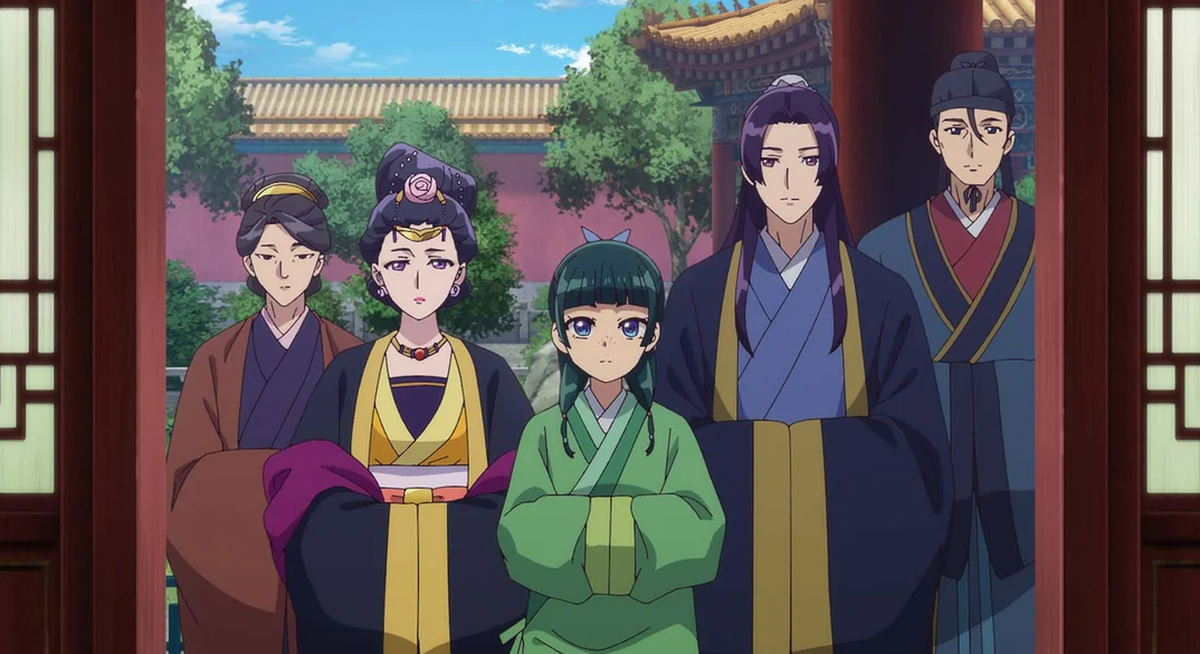
A still from The Apothecary Diaries | Photo Credit: Crunchyroll
If you’ve enjoyed the lavish scheming of dramas like Downton Abbey or Bridgerton, the rigid court politics of The Crown, or even the lethal power struggles in Game of Thrones, then The Apothecary Diaries offers an even more intricate and visually splendid narrative.
Foreign Affairs
The Ugly Stepsister plunges the classic Cinderella fairytale into a visceral realm of body horror, evoking a Cronenbergian nightmare where the ballroom reeks of bodily fluids. Inspired by the Brothers Grimm’s Aschenputtel, the film centers on Elvira, whose monstrously ambitious mother pushes her into a cycle of crude cosmetic surgeries, extreme diets, and social humiliation, all in a desperate quest to make her ‘worthy’ of a prince.
Director Emilie Blichfeldt masterfully captures the grotesque essence of original fairy tales, overflowing with blood, viscera, and decay. This reinterpretation of a sanitized children’s story uses body horror to incisively question the symbolic politics of the glass slipper. Each horrific contortion or mutilation Elvira endures becomes a stark commentary on the immense sacrifices beauty culture demands from women.
Positioned somewhere between the intense themes of The Substance and Saint Maud, this film explores the unsettling space between aspiration and self-mutilation. This compelling trend of employing body horror to narrate subversive feminist stories has gained significant traction recently, with films like Titane and Swallow transforming the human body into a canvas for rebellion and personal reclamation.
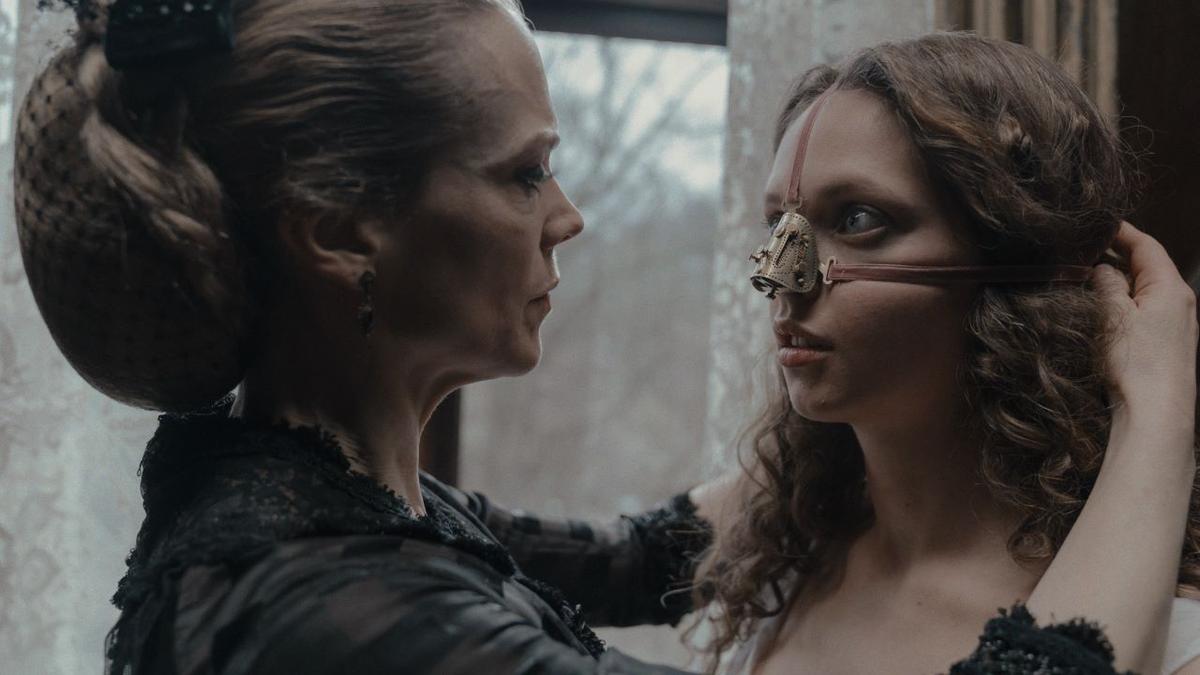
A still from The Ugly Stepsister | Photo Credit: MUBI
In both these powerful narratives, appearances are profoundly misleading. One protagonist learns to navigate a treacherous world by being sharp-tongued and observant, while the other relentlessly molds herself into what she believes society demands, only to discover her efforts are unseen. Yet, both tales spring from the same dark, oppressive well of insidious patriarchal expectations.
Ctrl+Alt+Cinema is a fortnightly column that brings you handpicked gems from the boundless offerings of world cinema and anime.