
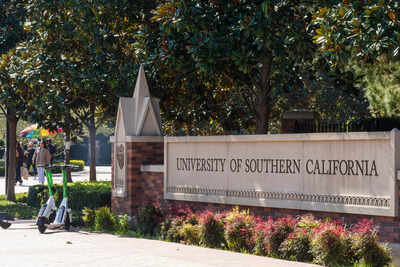
The University of Southern California (USC) has formally turned down a federal funding compact proposed by the administration of former US President Donald Trump. This move aligns USC with other prestigious universities, including the Massachusetts Institute of Technology (MIT) and Brown University, all of whom have refused federal funds linked to specific political and policy stipulations.
This controversial compact was presented directly to nine institutions: Brown University, Dartmouth College, MIT, University of Arizona, University of Pennsylvania, USC, University of Texas at Austin, University of Virginia, and Vanderbilt University. It promised greater access to federal research funding, but only if these universities adopted a series of conservative-leaning policy reforms. USC’s interim President, Beong-Soo Kim, officially communicated the university’s decision in a letter addressed to US Secretary of Education Linda McMahon.
USC Prioritizes Academic Freedom and Core Values
In his communication to the Department of Education, President Kim articulated that while the compact was ostensibly voluntary, its acceptance carried significant long-term threats to both academic freedom and the university’s inherent autonomy. He emphasized that linking research benefits to such a compact would gradually erode the very principles of free inquiry and academic excellence it purportedly aimed to support. Kim also drew parallels to other nations, observing that where government directives compromise academic independence, research quality often suffers.
The university’s letter, a copy of which was made public, also showed Kim acknowledging some common ground with the compact’s stated goal of nurturing a ‘vibrant marketplace of ideas.’ He stated, ‘To foster such an environment at USC, we have committed ourselves to institutional neutrality and launched a number of initiatives designed to promote civil discourse across the ideological spectrum.’”
Strong Faculty Resistance to the Compact
Internally, the USC Academic Senate voiced powerful objections to the compact. They characterized the proposal as potentially unconstitutional and fundamentally at odds with the bedrock principles of academic freedom. During a virtual meeting on October 6, over 20 faculty members, including several department heads, articulated their concerns, warning that the compact represented a grave danger to the spirit of free inquiry within the university. Professor Sanjay Madhav of the USC Viterbi School of Engineering remarked on the collective power demonstrated, noting, “This shows that when a broad coalition of faculty, students, staff, and workers comes together… we can affect institutional change.”
Ideological and Structural Conditions Proposed by Trump’s Compact
The Trump administration’s compact sought to impose a wide array of conditions on universities. These included mandating a binary definition of gender, implementing limitations on foreign student enrollment, freezing tuition for US students for five years, and making SAT or ACT scores compulsory for all undergraduate admissions. Furthermore, the compact required universities to remove considerations of race, sex, and other demographic factors from their admissions processes. It also advocated for the reorganization or elimination of university departments deemed to be antagonistic towards conservative perspectives.
White House spokesperson Liz Huston defended the compact, asserting that taxpayer-funded institutions should ‘absolutely serve the national interest.’ Huston contended that while universities are free to establish any legal policies, ‘the notion that universities should benefit from taxpayer money without responsibilities in return is terribly misguided.’”
Brown and MIT Previously Rejected Similar Offers
Both Brown University and MIT had already rejected this same compact prior to USC’s decision. Brown’s President, Christina Paxson, had communicated to Secretary McMahon that the compact would ‘restrict academic freedom and undermine the autonomy of Brown’s governance.’
Notably, Brown had previously reached a separate agreement with the Trump administration following federal investigations. While that earlier agreement involved adopting binary gender definitions and removing diversity targets, it crucially included a clause safeguarding academic freedom – a protection conspicuously absent from the compact now rejected by USC.