
Harvard University has finally regained access to the vast majority of federal funding that was controversially frozen earlier this year under the Trump administration. This development brings a much-needed sigh of relief to the university’s expansive research ecosystem, which is heavily reliant on government support.
The reinstated awards began to flow back into university accounts after a U.S. District judge decisively struck down the roughly $2.7 billion freeze on multi-year grants and contracts in early September.
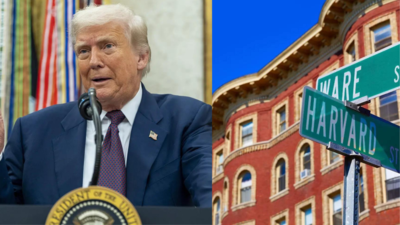
However, the return of these vital funds has not been immediate. It took over two weeks for Harvard to receive $46 million in Department of Health and Human Services grants alone. Faculty members were only formally notified via an email on October 1, 2025, from Vice Provost for Research John H. Shaw and Chief Financial Officer Ritu Kalra, confirming that most of the previously frozen funds had at last reached university accounts.
Reconciling Costs and Adjusting Guidelines
The Office for Sponsored Programs is now diligently working to reconcile payments, aiming to reimburse research costs that accumulated since April when the funding freeze first took effect. Harvard traditionally covers research expenses upfront, then seeks reimbursement from federal agencies. This crucial process was severely disrupted for over four months until Judge Allison D. Burroughs delivered her ruling in favor of the university.
While precise figures haven’t been publicly released by Harvard, it’s known that the university’s research projects typically receive more than $600 million annually from federal sources. During the freeze, almost none of this funding was accessible.
In response to the financial strain, the Harvard School of Public Health (HSPH), which is particularly dependent on federal support, had to adjust its spending guidelines. Currently, principal investigators can allocate up to 80% of federal awards, academic salary reductions have been lifted, and temporary pauses on sub-awards to other institutions have been implemented.
According to HSPH spokesperson Stephanie Simon, these measures aim to bring HSPH’s financial operations in line with other research-intensive schools, including Harvard Medical School (HMS). Earlier this year, HSPH had resorted to layoffs, exited property leases, and significantly reduced departmental budgets. Furthermore, the university implemented a system-wide hiring freeze and paused merit-based faculty wage increases.
Caution Amidst Partial Relief
Despite the recent financial uplift, other Harvard schools are maintaining a cautious approach. Harvard Medical School Dean George Q. Daley indicated in a September address that reductions in research spending would continue. Similarly, the School of Engineering and Applied Sciences recently announced substantial staff layoffs.
An email from Baccarelli to faculty members underscored that hiring would remain limited, advising that “existing personnel should be leveraged wherever possible and new hires should be limited to those that are critically necessary to achieve the specific aims of the awards.”
An Uncertain Financial Landscape Ahead
Beyond the immediate issue of federal grants, Harvard faces broader financial pressures. A recently imposed higher endowment tax has increased operational costs, and the previous Trump administration had signaled intentions to redirect agency budgets towards projects aligned with specific political priorities.
The availability of future federal grants remains uncertain, a concern further complicated by pending suspension and debarment proceedings initiated by the Department of Health and Human Services (HHS) in September. These proceedings could potentially restrict Harvard’s eligibility for government funding in the long term.
The White House has indicated its intention to appeal Judge Burroughs’ decision, though these proceedings are currently on hold due to the ongoing government shutdown. For the time being, Harvard must navigate a complex and evolving financial landscape, balancing the immediate relief of restored funds with persistent long-term fiscal uncertainty. Its researchers continue their vital work in an environment constantly shaped by policy shifts and changing federal priorities.