
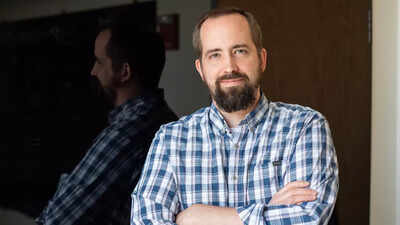
The Massachusetts Institute of Technology (MIT) is proud to announce the appointment of Matthew D. Shoulders as the new head of its Department of Chemistry, effective January 16, 2026. A luminary in protein biochemistry and synthetic biology, Professor Shoulders brings a wealth of expertise as both a distinguished educator and groundbreaking researcher. He currently holds the prestigious title of Class of 1942 Professor of Chemistry and serves as a MacVicar Faculty Fellow, alongside his role as an associate member of the Broad Institute of MIT and Harvard.
Professor Shoulders steps into this leadership position following Troy Van Voorhis, who has commendably guided the department since October 2019. Van Voorhis, the esteemed Robert T. Haslam and Bradley Dewey Professor of Chemistry, was widely lauded for fostering a robust and collaborative departmental community during his tenure. In a statement, Shoulders acknowledged his predecessor’s strong leadership and emphasized the critical role of chemistry in addressing humanity’s most urgent global issues: “One thing is certain: Chemistry innovations are critical to solving pressing global challenges.”
Pioneering Research in Protein Folding and Cellular Machinery
Professor Shoulders’ groundbreaking research delves into the intricate mechanisms by which cells fold proteins and the critical role of protein chaperones—molecular systems that govern protein behavior and evolution. His laboratory has made significant discoveries, including how viral pathogens exploit human chaperones to accelerate their evolution and bypass immune defenses. Furthermore, his team’s studies have revealed that these same chaperones can inadvertently promote the development of cancer-related mutations.
Troy Van Voorhis lauded Shoulders as “an outstanding researcher whose work touches on fundamental questions about how the cell machinery directs the synthesis and folding of proteins.” These vital insights have profound implications, paving the way for advancements in disease treatment and enhancing various biotechnological applications.
Bridging Scientific Discovery with Global Impact
Beyond his foundational biochemistry research, Professor Shoulders is deeply committed to tackling global food security challenges. He spearheads an interdisciplinary initiative under the Abdul Latif Jameel Water and Food Systems Lab (J-WAFS), collaborating with MIT Research Scientist Robbie Wilson. Their team is dedicated to boosting agricultural resilience against climate change by engineering RuBisCO, a crucial plant enzyme vital for photosynthesis and carbon dioxide fixation.
This innovative project, initially backed by the MIT Grand Challenge in 2023, has since garnered substantial funding from federal agencies and the Grantham Foundation. Shoulders emphasized the team’s dedication, stating, “This team is making a concerted effort using state-of-the-art techniques to engineer crop RuBisCO… to help make meaningful gains in securing a stable crop supply.”
Dedication to Education and Institutional Leadership
Professor Shoulders’ commitment to teaching is evident through his involvement in various undergraduate and graduate chemistry courses, such as 5.54 (Advances in Chemical Biology) and 5.111 (Principles of Chemical Science). He pioneered Guided Learning Demonstrations to enhance first-year chemistry education and contributed significantly to a 5.111 “bootcamp” via the MITx platform. These initiatives have not only expanded access to online learning but also notably improved student understanding of core chemical principles.
As a 2022 MacVicar Faculty Fellow and a recipient of the prestigious Committed to Caring award, Shoulders is widely recognized for his unwavering dedication to student achievement. Former department head Troy Van Voorhis remarked that Shoulders “is an innovator both inside and outside the classroom and has an unwavering commitment to his students’ success.”
Fostering a Thriving Academic Community
For six years, Professor Shoulders chaired the Department of Chemistry’s Quality of Life Committee, where he spearheaded significant enhancements in mentoring, feedback mechanisms, and the overall departmental culture. His efforts led to the establishment of impactful peer mentoring programs and the implementation of universal graduate exit interviews, providing invaluable data for informed decision-making. Notably, he also inaugurated the MIT Homeschool Internship Program for Science and Technology, offering paid summer laboratory experiences to high school students.
At the broader Institute level, Shoulders has contributed his expertise to several key committees, including the Committee on Graduate Programs, the Committee on Sexual Misconduct Prevention and Response (where he co-chaired the provost’s working group), and the Committee on Assessment of Biohazards and Embryonic Stem Cell Research Oversight, demonstrating his commitment to comprehensive institutional improvement.
Academic Journey and Distinguished Career
Professor Matthew Shoulders’ impressive academic career began with a Bachelor of Science in chemistry, alongside a minor in biochemistry, from Virginia Tech in 2004, where he graduated summa cum laude. He then pursued his doctoral studies, earning a PhD in chemistry from the University of Wisconsin at Madison in 2009, under the guidance of Professor Ronald Raines.
Following his PhD, he undertook a postdoctoral fellowship at Scripps Research Institute, collaborating with Professors Jeffery Kelly and Luke Wiseman, before joining the MIT faculty as an assistant professor in 2012. His exceptional contributions have been recognized with numerous accolades, including the prestigious NIH Director’s New Innovator Award, an NSF CAREER Award, an American Cancer Society Research Scholar Award, the Camille Dreyfus Teacher-Scholar Award, and the Ono Pharma Foundation Breakthrough Science Award.