
October 10, 2015, marked a poignant day as the world bid farewell to Manorama, the undisputed empress of laughter whose career spanned over 1,500 films. Yet, behind her radiant comedic genius lay a life of immense struggle and resilience. Born Gopishantha, her childhood in Pallathur was far from easy. Her single mother, Ramamritham, toiled selling sweets to make ends meet. Even at two years old, little Gopishantha displayed an extraordinary talent, effortlessly reproducing any song she heard, earning her the affectionate nickname ‘the singing Pallathur papa.’ When illness struck her mother, a mere 10-year-old Manorama stepped up, taking on household chores for affluent Chettiar families in her village to support her family.
At the tender age of twelve, Gopishantha found herself on stage, a twist of fate that would change her destiny. A local drama troupe, searching for a vocalist for their play Andaman Kadhali, heard of her burgeoning talent. It was then that harmonium player Thyagarajan and assistant director Thiruvengadam bestowed upon her the name ‘Manorama.’ She soon landed a role in Paulraj’s production, Vidhiyin Vilayattu, marking the beginning of her prolific stage career. Her captivating performance in Yaar Magan even earned her high praise from Veena Balachander. By sixteen, Manorama’s talent had blossomed, leading to an offer from actor Muthuraman and screenwriter Sakthi Krishnaswamy for a play by Vairam Nataka Sabha. Astonishingly, she memorized a hundred-page script in a single night, a testament to her dedication. Throughout her theatrical journey, she even graced the stage alongside future political giants, notably playing the female lead opposite E.V.K. Sampath in Annadurai’s Sivaji Kanda Hindu Samrajyam. Manorama proudly recounted acting with five individuals who would become Chief Ministers: Annadurai, M. Karunanidhi, M.G. Ramachandran, Jayalalithaa, and N.T. Rama Rao.
A Star is Born: Manorama’s Grand Entry into Cinema
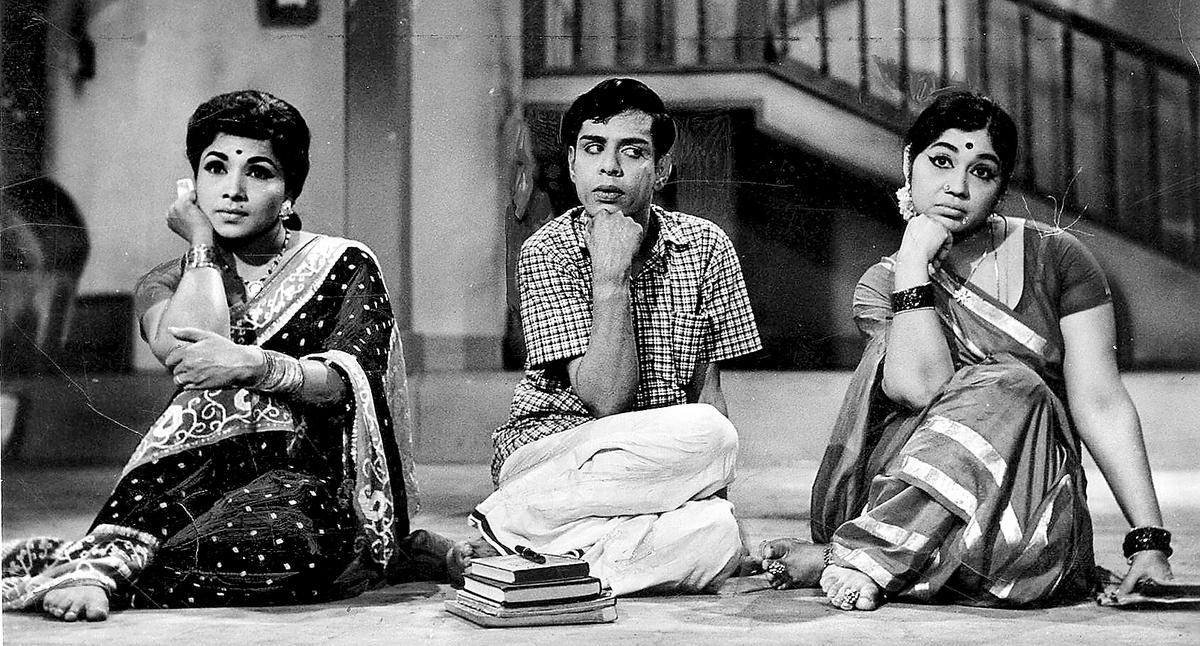
Manorama, Nagesh, and ‘Sowcar’ Janaki in Edhir Neechal | Photo Credit: The Hindu Archives
Manorama’s cinematic journey began with a Sinhalese film, but it was Kavignar Kannadasan’s Malayitta Mangai that marked her Tamil debut. Initially, she harbored reservations about portraying a comedian, longing instead for a heroine’s role. Yet, as Kannadasan’s son, Annadurai, recalls, his father’s words were prophetic: “He told her she would have a great future as a comedian.” This advice, which she took to heart, shaped an unparalleled career. Manorama never forgot Kannadasan’s pivotal support, once telling his assistant, “Kannadasan was not only your boss, but mine too.”
A Gallery of Giggles: Manorama’s Most Unforgettable Roles
Pinpointing Manorama’s single best performance is an impossible task, as her brilliance shone in countless roles. Who could ever forget the spirited yet warm-hearted Burma Pappa from the film Savaal, a character who hilariously managed an academy for pickpockets? In Unakkum Vazhu Varum, she masterfully played a talkative woman feigning a speech impediment, comically exasperating Thengai Srinivasan with her cryptic replies. Then there was the prim and proper Rathna in Galatta Kalyanam, always ready to playfully challenge her suitor, Nagesh. Even amidst a constellation of comedians in Kasi Yathirai, Manorama’s portrayal of Andal—an unemployed actor feigning a packed schedule and greeting everyone with her signature “Kaun ba?”—was a pure standout.
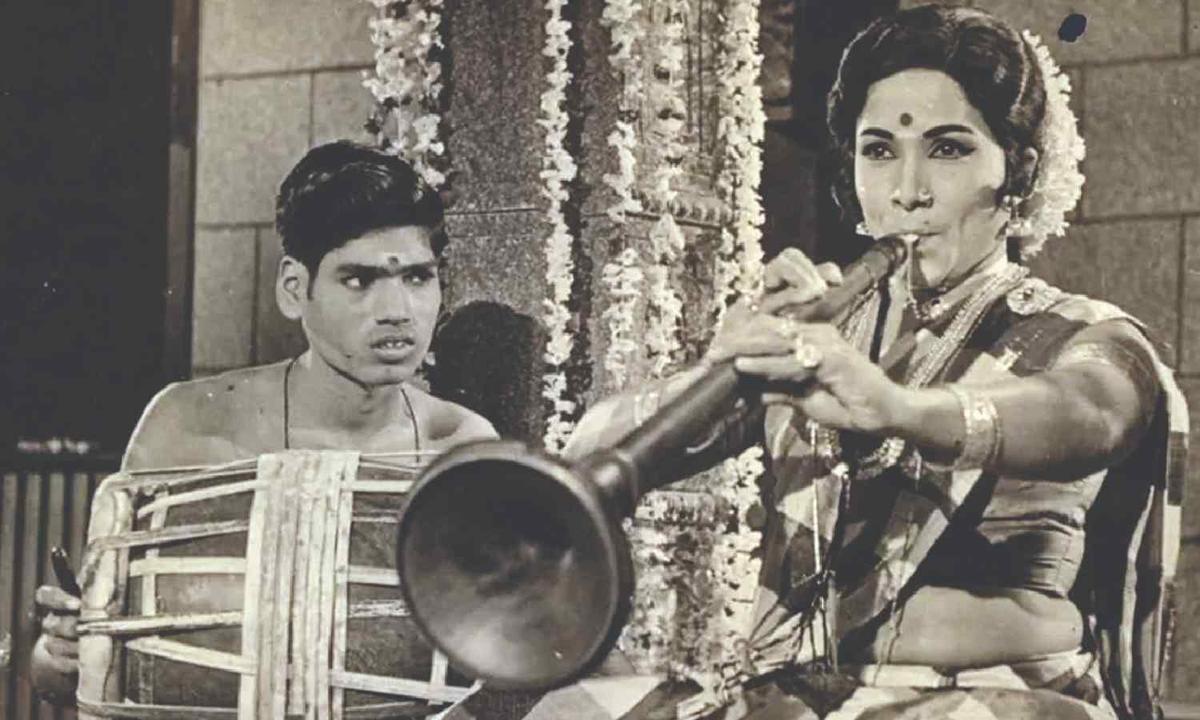
Manorama as Jil Jil Ramamani in Thillana Mohanambal | Photo Credit: Special Arrangement
A Linguistic Genius: Manorama’s Command of Dialects
Manorama’s unparalleled gift for languages and dialects truly set her apart. M.S. Perumaal, former director of Doordarshan Kendra, Chennai, once produced a remarkable Vividh Bharati program showcasing her talent. In it, Manorama masterfully interviewed various characters she had embodied: Jil Jil Ramamani from Thillana Mohanambal, speaking flawless Chettinad Tamil; Muthamma from Anubhavi Raja Anubavi, effortlessly switching to Thoothukudi Tamil; Chinna Ponnu from Bommalattam, delivering the authentic Madras slang; and as Nagesh’s wife in Idhu Sathiyam, commanding the Brahmin lingo. Her ability to seamlessly transition between these diverse dialects, without a single misstep, was nothing short of astonishing. Perumaal also recounts her dedication to perfection: “When she had to sing folk songs in Karaiyellam Shenbaga Poo, she meticulously studied Doordarshan recordings of folk singer Kollangudi Karuppayi, absorbing every nuance of her body language and attire.”
A Voice to Remember: Manorama, the Singing Sensation
Beyond her acting prowess, Manorama also boasted an impressive discography. She lent her voice to ‘Cycleil vegamai pogindraal’ set to Muthiah Bhagavatar’s nottuswaras in the radio play Janatha Nagar Colony. Her big screen singing debut, as Annadurai recounts, was with ‘Pogathey’ in Kannadasan’s 1963 film, Ratha Thilagam. Her popular film songs include the catchy ‘Vaa vaadhyaare’ from Bommalattam, ‘Theriyadho nokku’ in Suryakanthi, the vibrant Baila number ‘Poondamalliyile’ from Karunthel Kannayiram, and the energetic ‘Dhimikita Dhimikita’ from Thanga Gopuram.
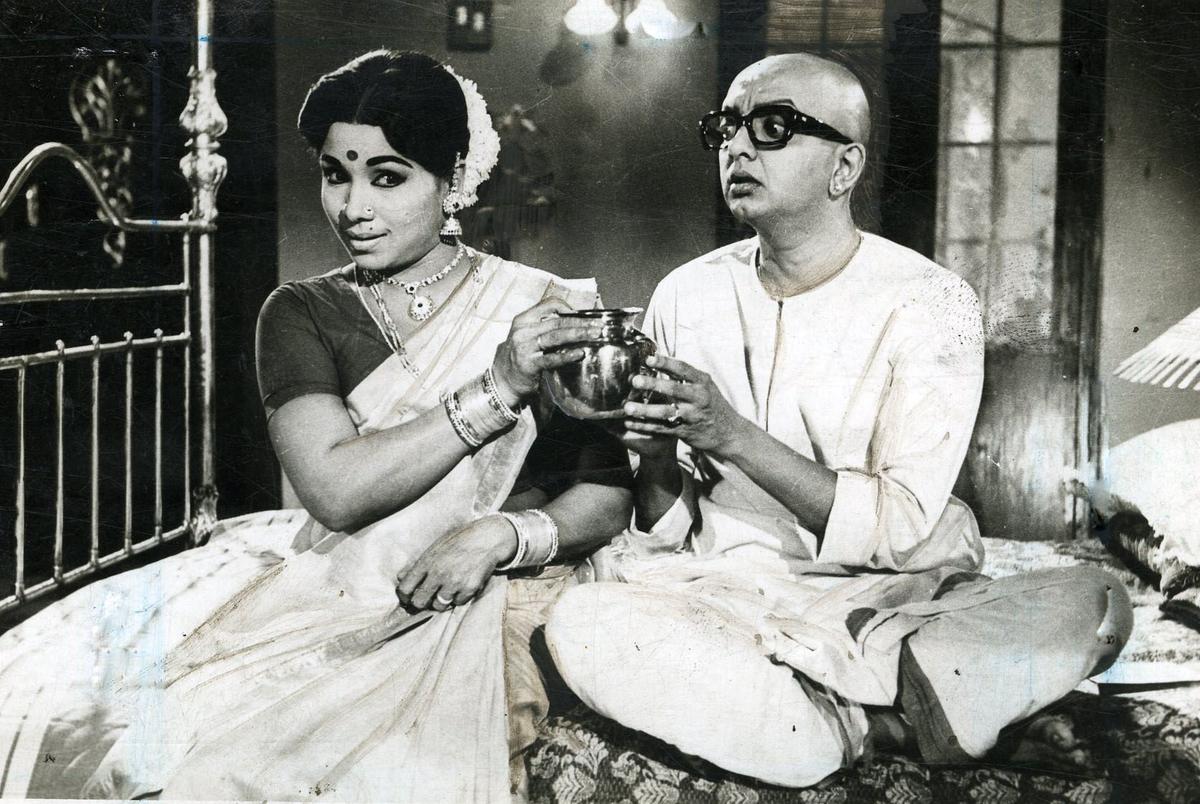
Manorama and Cho in Onne Onnu Kanne Kannu | Photo Credit: The Hindu Archives
Conquering the Airwaves and Small Screen
Manorama’s presence extended gracefully beyond the silver screen, captivating audiences on radio and television. In 1961-62, her portrayal of Panaiyur Bhagyam in Suki Subramaniam’s radio play Kappu Katti Chatram, delivered in impeccable Chettinad Tamil, earned her the beloved title ‘Aachi.’ M.S. Perumaal also produced the Vividh Bharati serial Veettukku Veedu, where Manorama not only excelled as the harried housewife Annapoorani but also charmed listeners with the character Balu’s baby talk. In Annadurai’s Latchiyavaadi, a Madras Doordarshan production, Manorama shared the lead with her ex-husband, S.R. Ramanathan—a separation that had occurred three decades prior. Yet, Perumaal notes her remarkable professionalism and lack of resentment, as she genuinely praised his acting. Her versatility further shone in Pudumaipithan’s radio play Pudhiya Koondu, where, despite minimal dialogue, she conveyed profound emotions through brilliant voice modulation, proving her depth beyond comedic roles.
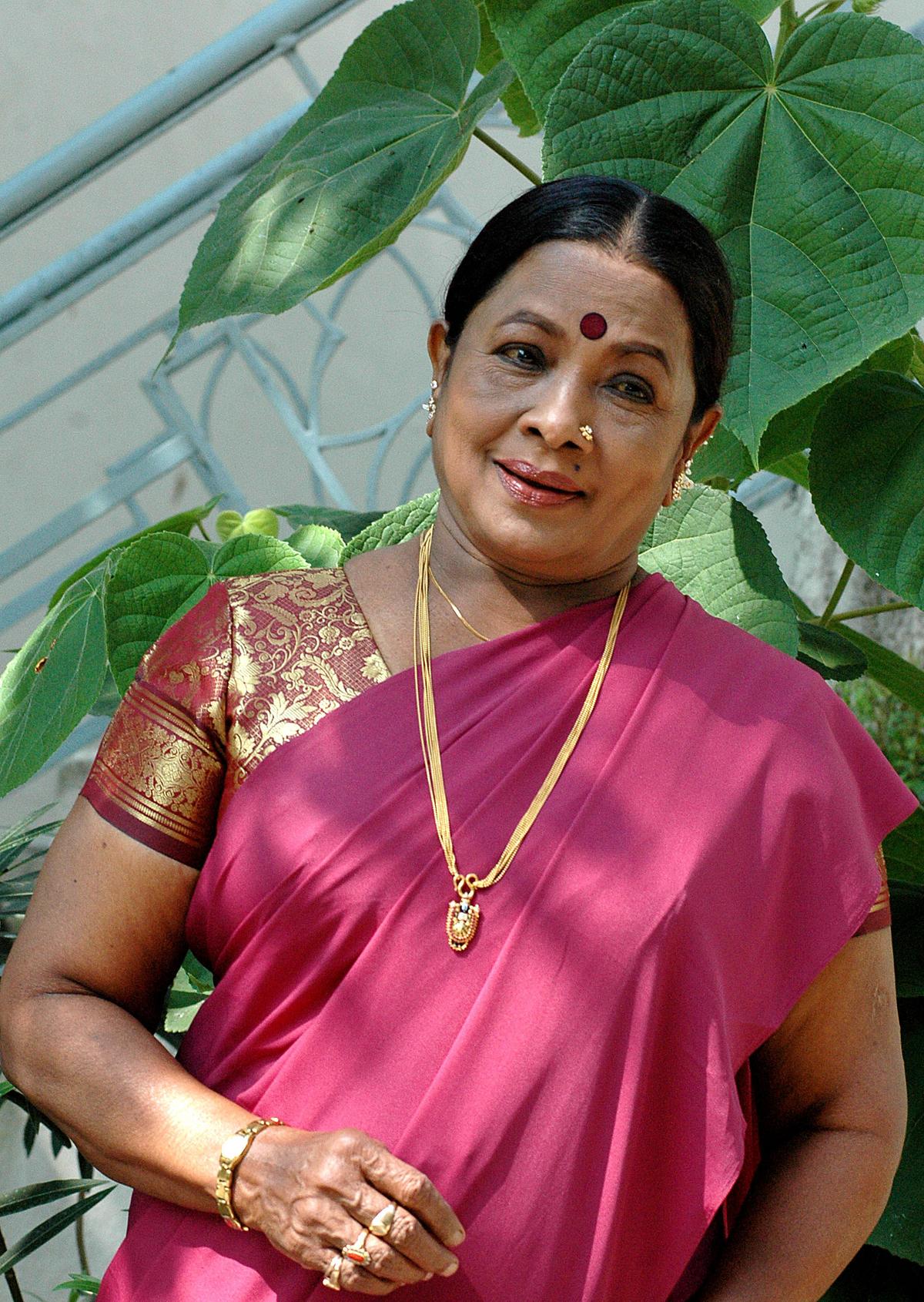
Stage, cinema, radio, and television: Manorama ruled them all | Photo Credit: The Hindu Archives
Her dramatic abilities were further highlighted in Komal Swaminathan’s television play, Yen Veedu Yen Kanavan Yen Kuzhandai. In a poignant scene, Manorama, as the wife, becomes pregnant after her husband decides to become an ascetic. Her face eloquently conveyed a spectrum of complex emotions: the embarrassment of late-life pregnancy, the quiet triumph of finally having a hold on a husband obsessed with duty, and the profound joy of impending motherhood. Manorama was indeed a rare gem, an artiste capable of breathing authentic life into any character, whether comedic or intensely dramatic.