
During the 80th session of the U.N. General Assembly in New York, Syrian President Ahmed al-Sharaa delivered a significant address – a historic event, marking the first time in almost 60 years that a Syrian leader spoke before the United Nations.
President al-Sharaa’s speech preceded Syria’s upcoming elections by several weeks. He, a former al-Qaeda jihadist, has publicly stated that these elections are intended to establish a transitional government. Due to a lack of popular poll infrastructure, the elections are being held via a restricted electoral college system with numerous caveats. While not fully representative, these elections are set to introduce a new political era for Syria, concluding decades of Ba’ath party dominance.
As one of the world’s most ancient continuously inhabited regions, Syria has long grappled with the concept of democracy. Throughout its history, with power frequently shifting hands, the nation’s political trajectory has increasingly moved beyond the control of its own people.
The Birth of Modern Syria and the Rise of Ba’ath Rule
The foundations of the contemporary Syrian state emerged in the early 20th century. With World War I drawing to a close, the Great Arab Revolt of 1918 swept through the region, ending centuries of Ottoman governance. This period was followed by the partitioning of territories between French and British powers, leading to the implementation of the 1916 Sykes-Picot Agreement, which granted France control over the Greater Syria region.
Nevertheless, by 1946, Syria achieved independence from French oversight, and Sunni leader Shukri al-Quwatli became the first President of the newly independent nation.
The ensuing decades were characterized by a cycle of military coups and counter-coups, driven by widespread regional and military dissatisfaction that continuously reshaped the nation’s leadership. Concurrently, Arab nationalism flourished, and the Ba’ath party, established by Michel Aflaq and Salah al-Din al-Bitar, garnered significant support. On March 8, 1963, the party’s increasingly confident military faction successfully seized power. They formed the National Council of Revolutionary Command and imposed a state of Emergency across Syria, which remained in effect until 2011.
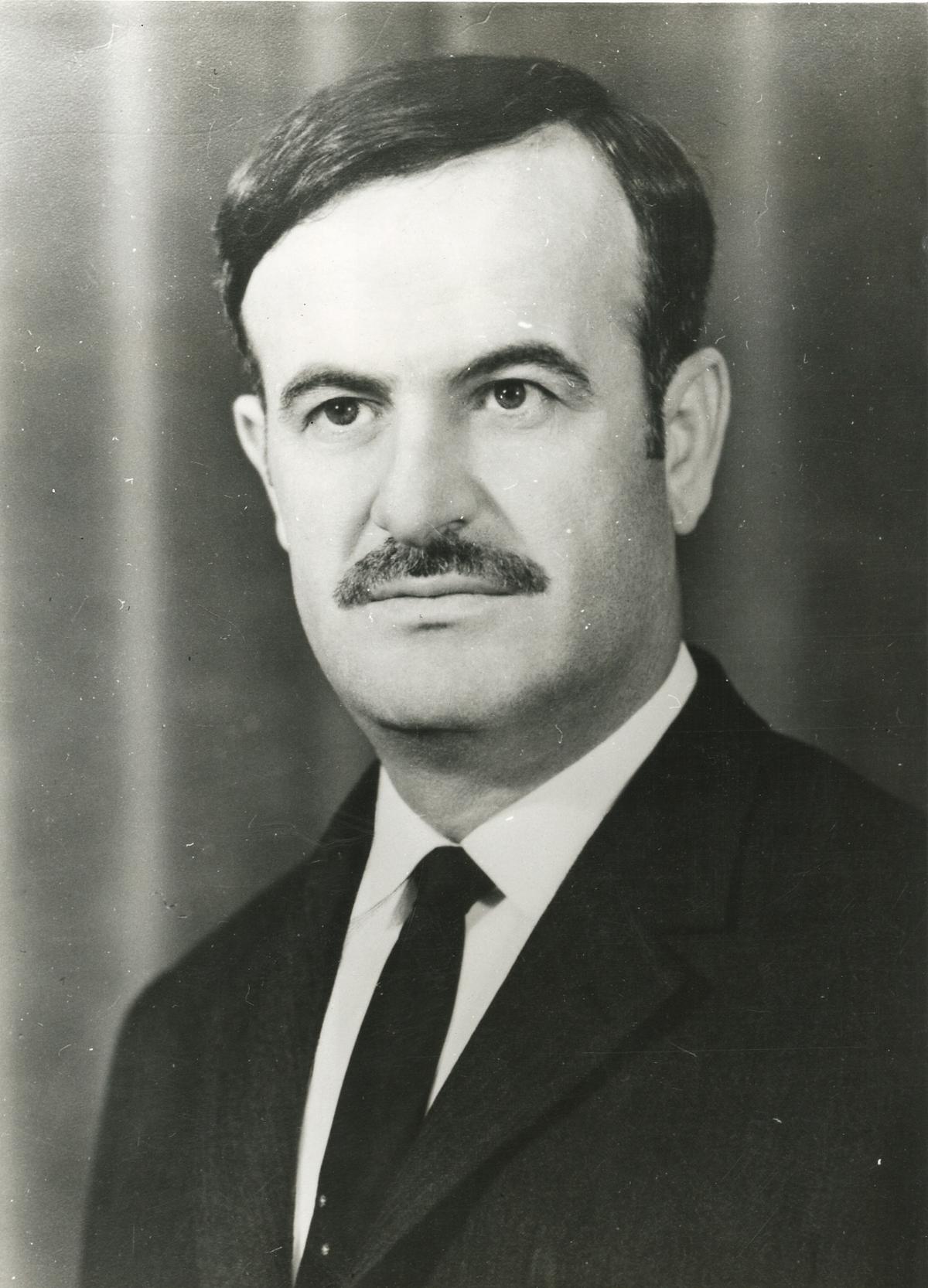
Three years later, an internal party coup installed General Salah Jadid as Syria’s leader, elevating his close associate, Hafez al-Assad, to a more prominent position in Syrian politics. Amidst this internal turmoil, the nation confronted external challenges. Syria was drawn into the Six-Day War in 1967, resulting in the loss of the Golan Heights to Israel. Domestically, al-Assad grew disillusioned with Jadid’s leadership and, in 1970, orchestrated a bloodless coup, imprisoning Jadid and his supporters. The following year, Hafez al-Assad officially became President, initiating the Assad family’s 53-year reign.
The 1973 Constitution formalized the family’s rule and the Ba’ath party’s central role in Syrian politics. Article 8, a crucial clause, effectively established a one-party system. Hafez al-Assad’s presidency saw a steady concentration of power within the minority Alawite community, to which he belonged. Following his father’s death in 2000, Bashar al-Assad officially assumed leadership of both the Ba’ath Party and Syria.
Continuing the Ba’ath Legacy
Bashar al-Assad, an ophthalmologist who returned from London to take up the political mantle after his elder brother’s death, aimed to cultivate a cosmopolitan persona. His tenure began with the release of 600 political prisoners. Over time, he permitted certain private media organizations to operate, and the Damascus Securities Exchange was launched in 2009.
His attempts to distance himself from his father’s authoritarian rule inadvertently created an environment where former dissidents felt safe to return to Damascus. The Muslim Brotherhood, which Hafez al-Assad had banned, announced its return to operations less than a year after Bashar took office. As President, Bashar al-Assad soon reverted to his father’s tactics, leading to the detention of parliamentary members and pro-reform activists.
The United States promptly voiced its disapproval of al-Assad’s government. Simultaneously, al-Assad initiated diplomatic efforts, engaging in dialogues with the European Union, the U.S., and France between 2006 and 2010. He also established diplomatic ties with Iraq and Lebanon. During this period, Syria conducted elections in 2003 and 2006, with the Ba’ath Party maintaining its grip on power.
2011: The Syrian Spring of Resistance Begins
In Daraa, Syria, mere months after Zine El Abidine Ben Ali’s government fell in Tunisia, anti-government protests ignited in March 2011. This followed the arrest of school students by military police for anti-government graffiti. Protests, which had been quietly surfacing across Syria since January, rapidly spread through cities. Key demands included the revocation of the Emergency law, the abolition of Article 8, and President al-Assad’s resignation.
Even as the government responded with lethal force, the uprising persisted. Syria, a nation characterized by its significant diversity, soon became a fertile breeding ground for sectarian politics to take root.
President al-Assad eventually yielded to some demands. The Emergency law was lifted in April 2011, and a number of political prisoners were released. The subsequent year saw the implementation of a new Syrian Constitution, which formally introduced a multi-party system and, theoretically, broadened political rights and freedoms for Syrians. The presidential term was also limited to seven years, though not retroactively applied. Despite these measures, the country spiraled deeper into a devastating civil war.
Accusations of chemical weapons attacks by the regime drew widespread international condemnation, further isolating Syria on the global stage. By 2013, the U.S. intensified its involvement in the escalating conflict, pledging non-lethal aid to rebels in northern Syria. A simmering issue under al-Assad’s watch erupted in 2014 with the emergence of the Islamic State of Iraq and Syria (ISIS). Its fighters proclaimed a caliphate spanning various parts of Syria, including sections of Aleppo, and within a year, secured control of the ancient city of Palmyra.
Foreign Intervention Takes Hold
With Syria’s conflict unfolding against the recent backdrop of regime change in Libya, the country became a real-world testing ground for Western nations aiming to influence internal politics. Unsatisfied with the outcomes in Libya, and given the Ba’ath regime’s strong alliance with Iran, Western powers were determined to achieve nothing short of a complete capitulation in Syria. A coalition comprising Western nations, Gulf Arab states, and Turkey sought al-Assad’s removal. Conversely, al-Assad garnered support from Russia, Iran, and Iraq.
Four years later, with a renewed urgency to resolve the Syrian crisis, the West spearheaded the adoption of U.N. Resolution 2254 in 2015. This resolution advocated for peaceful negotiations between the regime and rebel factions, the establishment of a transitional government in Syria, and ultimately, the holding of free and fair elections.
However, al-Assad’s lifeline came from a closer geographic ally. Russia’s ambition to bolster its influence in West Asia, counteract U.S. power, and safeguard its defense assets, such as the Tartus naval base, injected a critical new dynamic into the conflict. The impact was immediate: by December, Homs was reclaimed by the regime. March 2016 saw Palmyra liberated from ISIS control, with Aleppo swiftly following. Iran also deployed Shia militias, including Hezbollah, to support al-Assad.
In November 2016, al-Assad convened with several Western journalists, conveying the secure position his regime had attained. He attributed his continued hold on power in Damascus to the war itself, asserting that the conflict had made Syrians recognize the “value of the State.”
A crucial turning point in the seven-year civil war arrived with the September 2018 agreement between Russia and Turkey. This diplomatic breakthrough facilitated the creation of a demilitarized zone in the Idlib region, the final significant stronghold of anti-regime forces.
The Assad Chapter Concludes
By 2020, with significant support from Russia and Iran, al-Assad had regained control over 70% of Syria. In the following years, Syria gradually re-entered the Arab community, with the President engaging in dialogues with the UAE, Turkey, Saudi Arabia, and Tunisia. Domestically, efforts were directed towards reconstructing war-ravaged cities.
However, the al-Qaeda-affiliated Hay’at Tahrir al-Sham (HTS) continued to govern autonomously in Idlib. Led by Abu Mohammad al-Jolani (now known as Ahmed al-Shara), HTS had become the most formidable anti-regime militia, operating its own administrative and judicial systems within Idlib. Reclaiming Idlib and eliminating HTS became a primary objective for al-Assad, alongside integrating Kurdish populations into the Syrian state and managing the withdrawal of U.S. military forces.
By 2024, the cumulative impact of pandemic years, a devastating earthquake, and a rapidly declining economy fueled growing public discontent. Compounding this, Russia’s ongoing war in Ukraine and Hezbollah’s conflicts with Israel rendered the al-Assad regime particularly vulnerable. Recognizing this weakness, HTS seized the opportunity. With Turkey’s endorsement, HTS launched an offensive from Idlib on November 27, swiftly advancing through key cities with minimal army resistance. In just 12 days, al-Assad’s rule—which had withstood numerous internal and external conflicts—came to an end.
Mohammad Ghazi al-Jalali, then Syrian Prime Minister, endorsed a peaceful transfer of power, while the Syrian Army officially announced al-Assad’s downfall. Ahmad al-Sharaa, formerly Abu Mohammad al-Jolani of HTS, was subsequently instated as Syria’s new leader.
Syria’s Uncertain Political Future
Currently, HTS and the Turkish-backed Syrian National Army constitute a unified front in Syria’s political arena, while Kurdish factions continue to demand autonomy in other areas. In the south, local militias have seized control of various territories, and the Alawite community in coastal regions maintains loyalty to the Assad family. President Sharaa has inherited a deeply fragmented Syria.
With the Ba’ath Party’s operations halted, there is currently no organized political opposition to President Sharaa. Salih Muslim Muhammad, leader of the Democratic Union Party (PYD) and a key figure in the Autonomous Administration of North and East Syria, previously stated that the Syrian populace does not desire a return to a centralized regime. He observed, “Those who are controlling Damascus insist on forming a very strict, centralized regime as it was before, but with a different ideology — before there was a Baathist regime, and now they are trying to make it a Salafi regime.”
The period following President Sharaa’s ascent to power has affirmed this sentiment. Multiple reports of attacks against minorities, notably a massacre targeting the Druze community in April of this year, have sparked serious concerns.
Furthermore, President Sharaa’s electoral proposals offer little optimism for an inclusive political future in Syria. While he will directly appoint one-third of the Assembly’s 210 seats, the remaining seats will be decided by electoral colleges in each district. The lack of transparency in the selection of these subcommittees and electoral colleges, coupled with the exclusion of the Druze-majority Sweida province and Kurdish-controlled regions in the northeast, provides a concerning insight into Sharaa’s underlying intentions.
While President Sharaa lobbies in New York for the lifting of sanctions on Syria, back home, HTS struggles with full administrative control over the nation’s territory. His ability to skillfully manage the intricate ethno-political landscape will ultimately decide whether Syria can embark on a genuine path toward democracy.