
Curious about your standing in Valorant? Our comprehensive guide delves into the game’s intricate ranking system, revealing how it functions and the current player distribution. These insights not only show where you stack up against the average player but also reflect the dedication and skill you’ve poured into this thrilling FPS.
Just like other top-tier competitive shooters, Valorant employs multiple systems to gauge player progress and overall skill. Beyond your primary Valorant rank, there’s also a unique ‘Act rank’ for each game act, alongside a ‘rank rating’ tied to your Matchmaking Rating (MMR). This guide breaks down everything you need to understand about Valorant’s ranks, the current rank distribution, and how competitive play truly operates.
The Official Valorant Rank Hierarchy
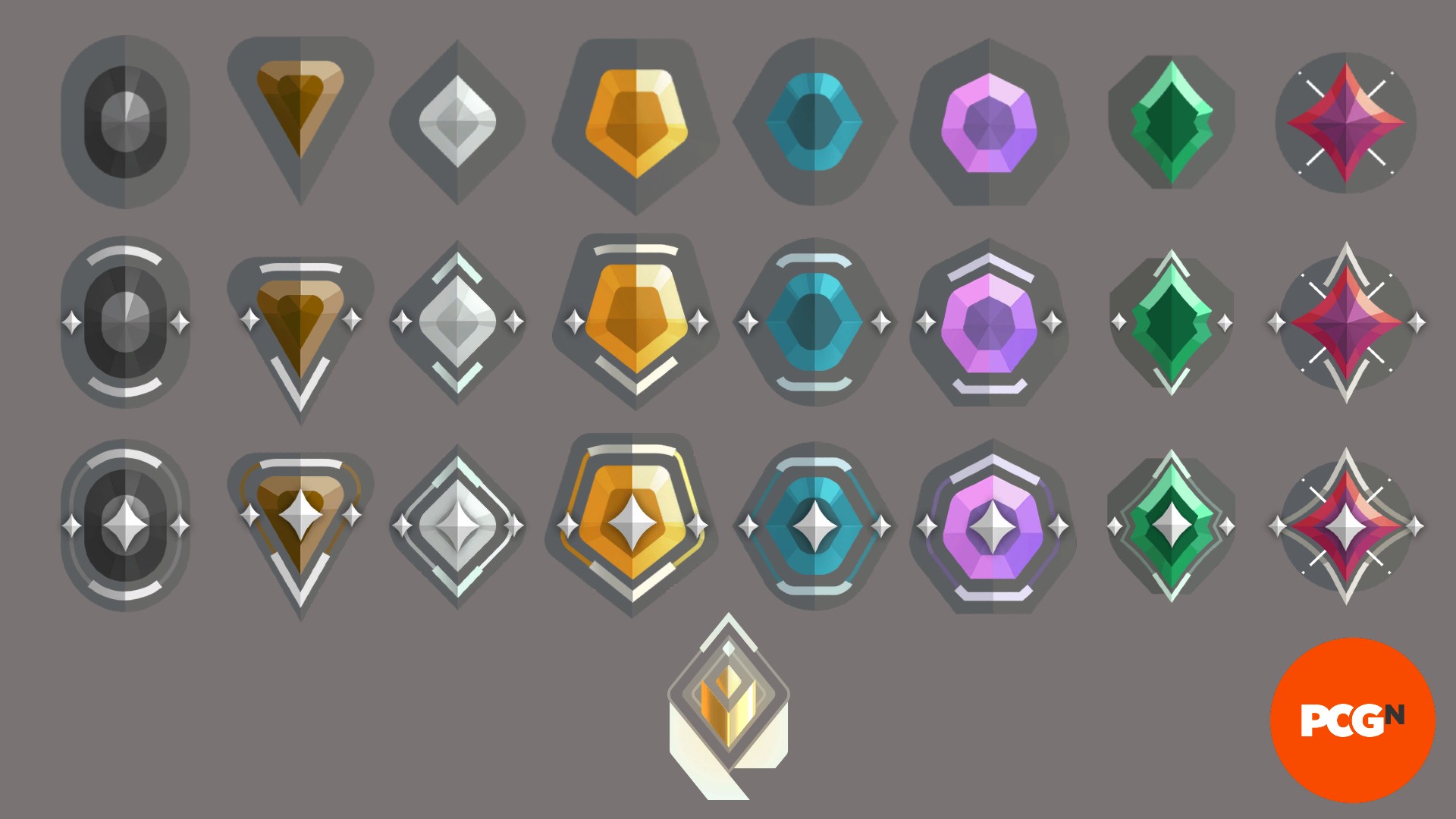
Here is a complete list of Valorant ranks:
- Iron 1
- Iron 2
- Iron 3
- Bronze 1
- Bronze 2
- Bronze 3
- Silver 1
- Silver 2
- Silver 3
- Gold 1
- Gold 2
- Gold 3
- Platinum 1
- Platinum 2
- Platinum 3
- Diamond 1
- Diamond 2
- Diamond 3
- Ascendant 1
- Ascendant 2
- Ascendant 3
- Immortal 1
- Immortal 2
- Immortal 3
- Radiant
Understanding Your Valorant Act Rank
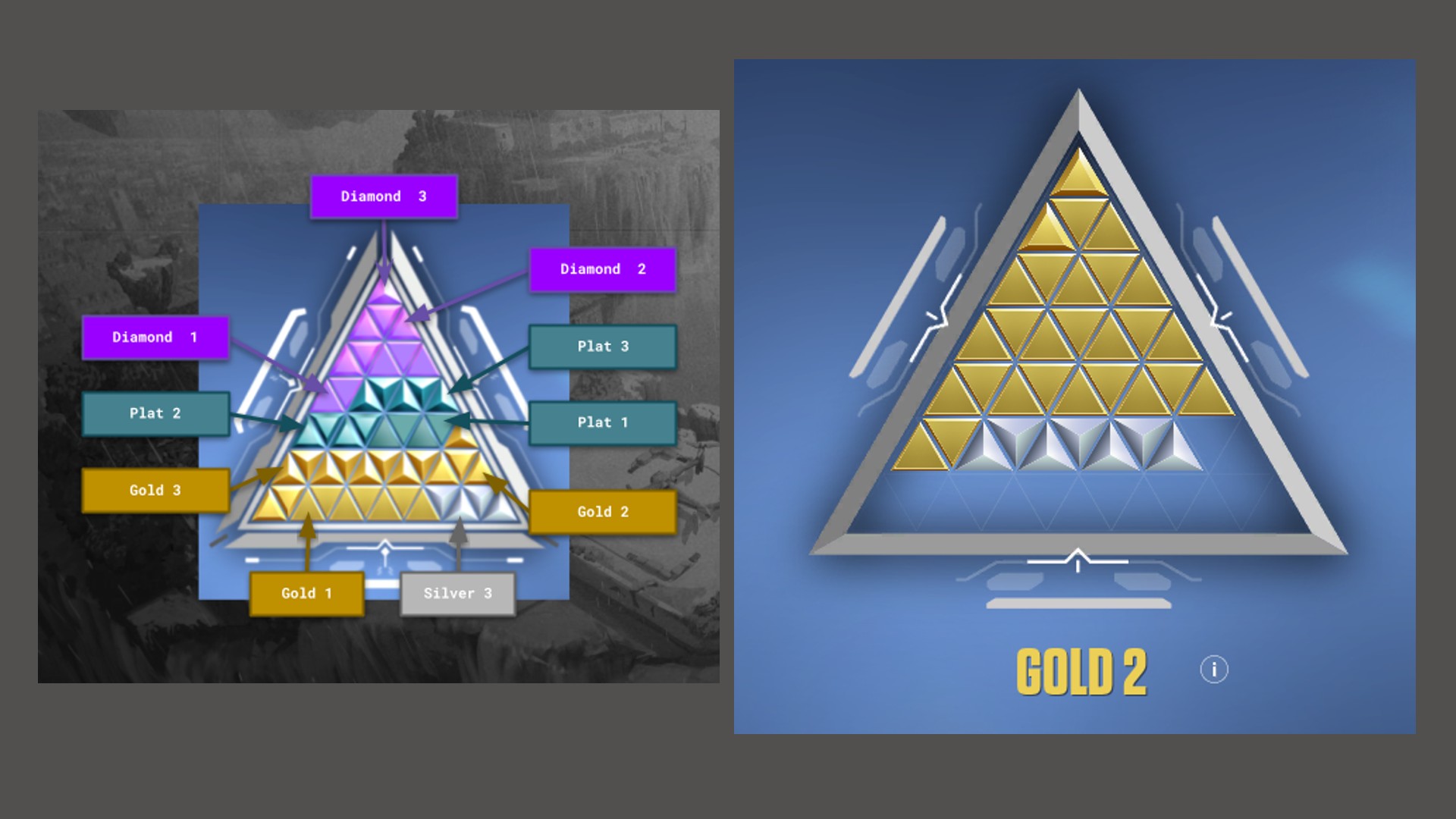
While your main rank offers a broad picture of your skill, you’ll also earn a distinct Act rank as you progress through each game act. This special rank represents your “proven skill,” determined by your single highest-ranked win during that Act.
Imagine a hollow triangular badge that progressively fills with miniature colored triangles as you compete. Despite the various colors that might accumulate, only the single triangle representing your highest-ranked victory will ultimately determine your Act rank.
This ‘proven skill’ also dictates the rewards you’ll snag when the Act concludes. For instance, even if you spent most of your time in Gold, a single win in Diamond 1 means you’ll walk away with Diamond-tier rewards. While your Act rank resets with each new Act, your previous MMR is wisely factored into your placement matches for upcoming Acts.
Valorant’s Player Rank Distribution Explained
Understanding rank distribution is crucial for any competitive shooter, and Valorant is no different. Even back in Episode 3 Act 1, Riot expressed concerns about a disproportionate number of players in lower ranks, with fewer advancing to higher tiers. This data helps us understand the competitive landscape.
Here’s a breakdown of the current Valorant rank distribution as of October 2025:
- Iron: 7.7%
- Bronze: 19.6%
- Silver: 22.6%
- Gold: 20.6%
- Platinum: 14.1%
- Diamond: 8.8%
- Ascendant: 5.3%
- Immortal: 1.4%
- Radiant: 0.04%
Valorant Rank Placement Rules and Party Restrictions
To dive into Valorant’s competitive mode, your account must reach at least level 20 (a requirement since Episode 4 Act 1). Once you hit this milestone, ranked play is open to you. Each new Episode kicks off with five placement matches. However, for Acts 2 and 3 within the same Episode, you’ll only need to complete one placement match, as your rank undergoes a soft reset with each new Act.
Valorant is designed to foster team-based competitive play, yet Riot also aims to be accommodating, allowing friends to queue together despite rank differences. When teaming up with your buddies, keep these important rules in mind:
- Four-person groups are prohibited to protect solo players from potentially unfair matchups.
- Groups of two or three must adhere to specific rank disparity limitations.
- Full five-person squads face no rank disparity restrictions, though significant rank differences within the group can impact your rank rating gains and losses.
For duos or trios, specific rank disparity rules apply. If the lowest-ranked player is in Iron or Bronze, their highest-ranked teammate cannot exceed any tier of Silver. If the lowest is Silver, the highest can be no more than Gold (any tier). Similarly, if Gold is the lowest, Platinum (any tier) marks the highest allowable rank.
For teams where the lowest rank is Platinum, Ascendant, Immortal, or Radiant, the highest-ranked player can only be one full tier above. For example, if your lowest player is Platinum 2, the highest can only be Diamond 2. While five-player teams are exempt from these disparity rules, be aware that a wide rank gap within your stack can lead to substantial rank rating penalties.
That wraps up our guide to Valorant ranks! If you’re looking for more ways to dominate, explore our Valorant tier list to find the best agents for your playstyle, or discover the perfect Valorant crosshair codes to refine your aim like a pro. And for those seeking fresh looks, keep an eye on the Valorant Night Market for exclusive skin discounts. Need a break from intense competitive matches? Dive into some of the best PC games available today!